Leaves & Debris
Do Leaves in a Pool Cause Algae?
Not directly. They do something more useful to algae than that: they feed it.
We have not handled these products and we do not pretend to have. Here is what we did instead. Links to Amazon earn us a commission at no extra cost to you, and commission never decides a pick — disclosure.
| # | Product | Best for | The spec it turns on | Price |
|---|---|---|---|---|
| 1 | 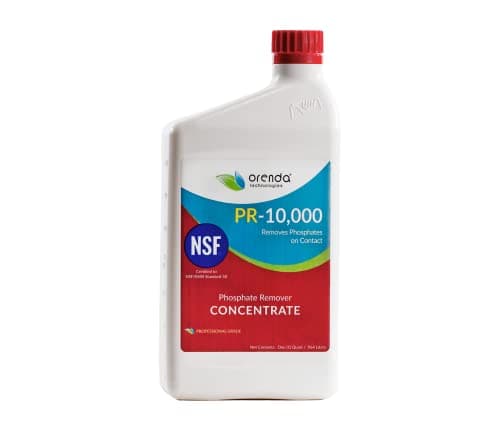 Orenda PR-10000 Phosphate Remover Concentrate, 1 quartTop pickA concentrate aimed at pools with a measured phosphate problem, not a weekly maintenance additive. | High phosphate readings | Lanthanum-based phosphate remover concentrate | |
| 2 | 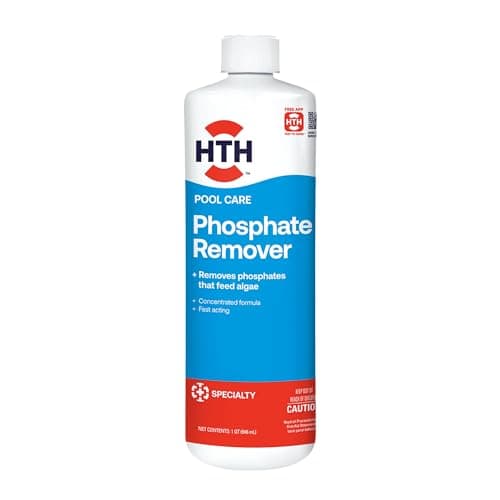 HTH Pool Care Phosphate Remover, 1 quartThe only phosphate remover here whose maker publishes a dose rate you can check before you buy. | A published dose rate | HTH states 2 fl oz per 10,000 gallons for weekly use |
The two mechanisms
- **Chlorine consumption.** Every piece of organic matter in the pool consumes free chlorine as it breaks down. A heavy leaf load creates a chlorine demand that runs alongside the demand from sunlight and swimmers, which is how a pool with an ordinary dosing routine ends up under-sanitized without anything obvious changing.
- **Phosphate release.** As leaves decompose they release phosphate into the water. Chlorine does not remove phosphate, filtration does not remove it, and it does not evaporate. It accumulates.
Neither of those is 'causing algae'. Together they are the conditions algae needs: less of what kills it, and more of what feeds it.
How much phosphate matters
HTH's own phosphate remover product page states that phosphate levels above 200 to 500 ppb make algae harder to control. That is the threshold worth testing against, and it is the only published figure we could source directly from a manufacturer for this question.
Below that band, phosphate is present but not limiting - your chlorine is doing the work. Above it, algae has enough food that a small lapse in sanitizer becomes a bloom rather than a scare.
Where else phosphate comes from
- **Lawn fertilizer in runoff.** The largest single source on many properties, and it arrives with every storm. See green pool after rain.
- **Decomposing leaves and organic debris.** The subject of this page.
- **Some source water**, particularly from municipal supplies that use orthophosphate for corrosion control in the mains.
- **Some pool chemicals**, including certain sequestrants and metal treatments.
- **Swimmers**, in small amounts, from lotions and cosmetics.
What to do about it
- **Remove the leaves promptly.** A floating leaf has not started releasing anything; a sunken one has. This is the free fix and it is the most effective one.
- **Test phosphate if you have had two blooms in a season.** One bloom is bad luck. Two is a cause, and this is the cheapest cause to check.
- **If phosphate is high, remove it before shocking again.** Shocking a pool that is being fed is a treadmill.
- **Keep runoff away from the pool.** Decking that drains toward the water delivers fertilizer every time it rains, and that is a landscaping fix rather than a chemical one.
- **Prevent the debris in the first place** - how to keep leaves out of a pool.
Do not buy a phosphate remover without a test
Phosphate removers work by binding phosphate into a precipitate the filter catches, which clouds the water briefly and loads the filter. That is a reasonable cost when there is a measured problem and pure waste when there is not.
It is also worth saying that phosphate removal is not a substitute for sanitizer. A pool with correct chlorine and high phosphate is usually fine; a pool with low chlorine goes green regardless of how little food is available. Phosphate control is a resilience measure, not a replacement for chemistry.
The picks
Top pick - High phosphate readings
Orenda PR-10000 Phosphate Remover Concentrate, 1 quart
A concentrate aimed at pools with a measured phosphate problem, not a weekly maintenance additive.
The published figure
Lanthanum-based phosphate remover concentrate
Phosphate is algae food. It arrives with leaves, lawn fertilizer run-off and some source water, and chlorine does not remove it.
HTH's own phosphate remover page states that levels above 200-500 ppb make algae harder to control, which is the threshold worth testing against before buying anything.
A remover binds phosphate into a precipitate the filter catches, so the water clouds briefly and then clears. That is the product working.
What it does well
- Concentrated, so a quart treats a large volume
- Attacks the fuel supply rather than the symptom
What it costs you
- Clouds the water while it works
- Pointless without a phosphate test to justify it
- Loads the filter with precipitate
Skip it if you have not measured phosphate. Treating a level you have not seen is how people spend money on a problem they do not have.
#ad · how this is funded · price as of October 18, 2026
Pick 2 - A published dose rate
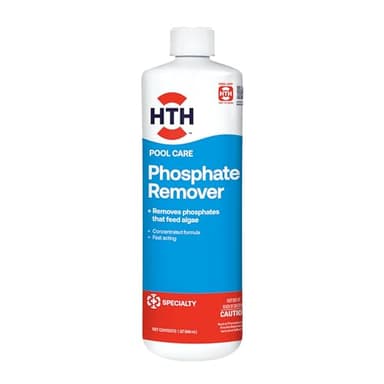
HTH Pool Care Phosphate Remover, 1 quart
The only phosphate remover here whose maker publishes a dose rate you can check before you buy.
The published figure
HTH states 2 fl oz per 10,000 gallons for weekly use
HTH's product page states weekly use at 2 fl oz per 10,000 gallons. That is a real, checkable number, and it lets you work out what a bottle actually costs to run before you own it.
The same page states that phosphate levels above 200-500 ppb make algae harder to control, which is the reading that justifies buying it at all.
At 2 fl oz per 10,000 gallons, a quart is sixteen weekly doses for a 10,000-gallon pool. Do that arithmetic with any competitor that publishes a rate.
What it does well
- Publishes a dose rate, which most of this category does not
- Stated safe for vinyl and saltwater systems
- Weekly maintenance rate rather than shock-dosing only
What it costs you
- Weekly dosing is an ongoing cost
- Still needs a phosphate test to justify
Skip it if your phosphate reading is under about 200 ppb. Below that it is not what is limiting your chlorine.
#ad · how this is funded · price as of October 18, 2026
Questions people actually ask
Do leaves in a pool cause algae?
What phosphate level causes algae in a pool?
Does chlorine remove phosphate?
Should I buy a phosphate remover?
Sources
Every figure on this page traces to one of these. Where a number could not be sourced, the page says so rather than estimating.
- HTH Pool Care Phosphate Remover - product page, states 2 fl oz per 10,000 gallons weekly and that levels above 200-500 ppb make algae harder to control
- HTH Pool Care Algae Guard Advanced - product page, states coverage of green, black and mustard algae
- Michigan EGLE, Maximum Disinfectant Residuals and Operational Ranges: Guidance for Michigan Licensed Pools (December 2025) - quotes CDC MAHC 5.7.3.1.1.5.0, the EPA FIFRA label rule and the NSF 10 ppm application ceiling
- Skim & Soak methodology - the constants, formulas and worked examples behind every dose on this site
- Orenda PR-10000 Phosphate Remover Concentrate - Amazon listing, read 2026-09-02
Read next
Are Phosphates Bad for Your Pool?
Phosphate is algae food. The threshold that matters, where it comes from, and why a test comes before a remover.
Top pick
HTH Pool Care Phosphate Remover, 1 quart
A published dose rate
#ad · how this is funded · price as of October 18, 2026

How to Clear a Green Pool Fast
The ordered fix: test, brush, shock by weight, filter continuously, clear the dead algae, then prevent the next one.
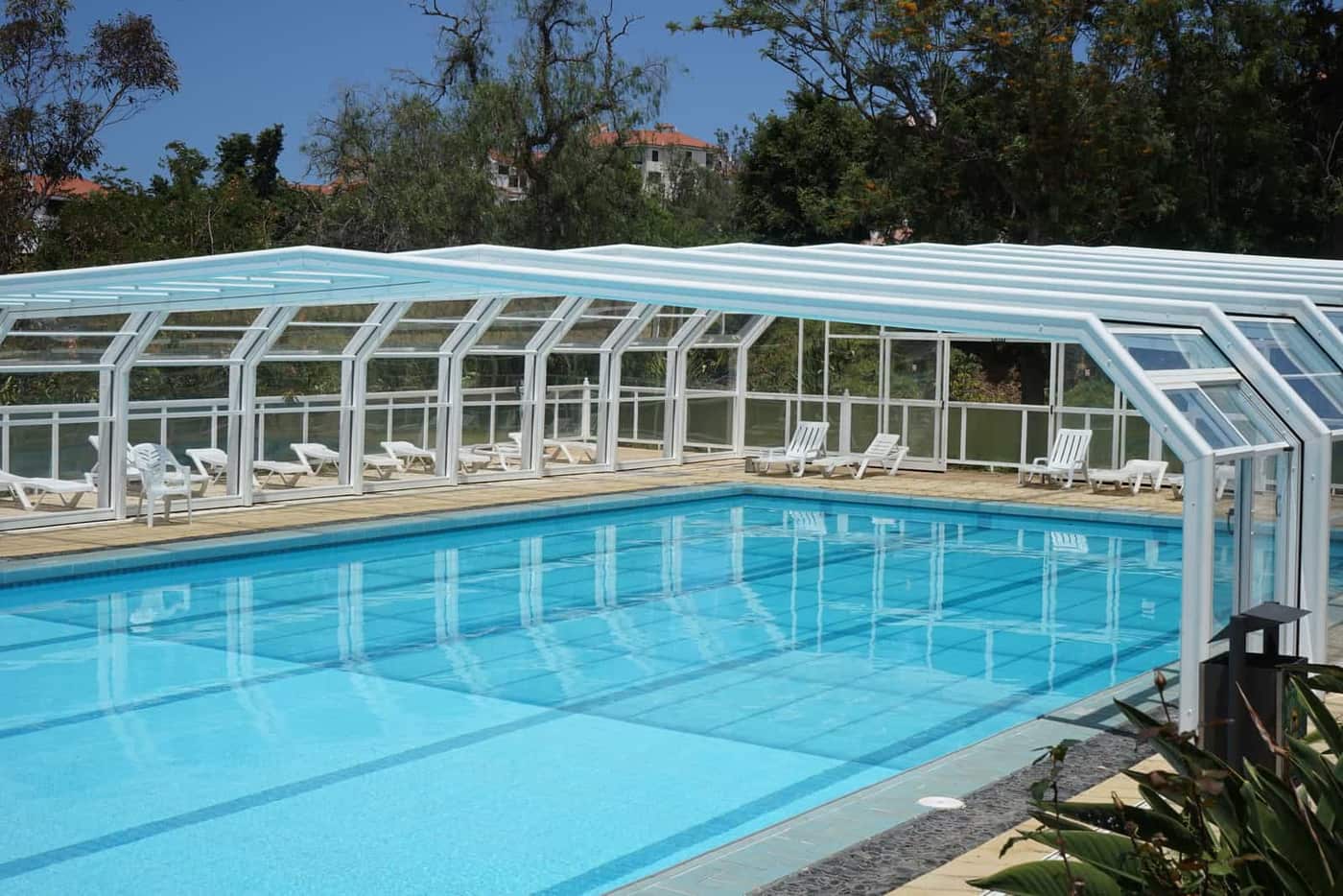
How to Keep Leaves Out of a Pool
Landscaping, covers, skimmer upgrades and automation, ordered by how much work each one genuinely eliminates.
Top pick
Blue Wave BWC564 Rectangular Leaf Net Cover, 20 ft x 40 ft
Sizing over an existing winter cover
#ad · how this is funded · price as of October 18, 2026

Green Pool After Rain
Dilution, phosphate and a pH shift arrive together after rain. Test within 24 hours and the bloom never starts.