Green Water & Algae
Green Water & Algae
Green is not a mystery. It is arithmetic that got away from you, and the arithmetic is how you get it back.
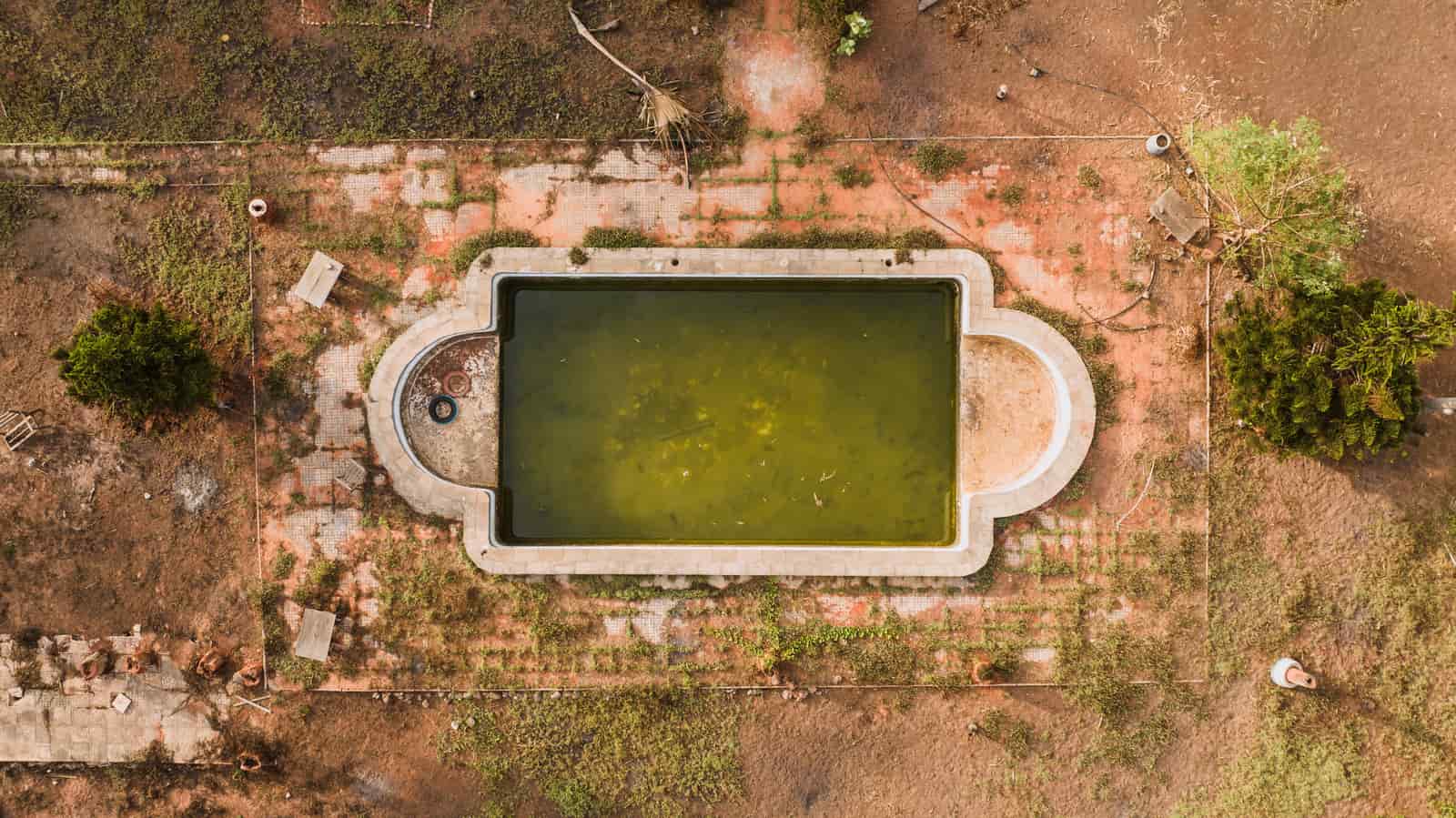
Start here if the pool is green right now
Read How to clear a green pool fast. It is the ordered fix, with a dose table for your pool volume and the arithmetic printed beside it. Everything else in this section is context you can read once the water is moving in the right direction.
If the water is green but you cannot see any algae on the walls, stop before you buy shock and read Green water that is not algae first. Roughly one green pool in five is a metals problem, and shocking a metals problem makes it worse rather than better.
Why pools go green, in one paragraph
Chlorine is consumed continuously by sunlight, by organic matter and by anything living in the water. Algae spores arrive constantly on wind, rain and swimsuits. As long as the free chlorine residual stays ahead of that demand, nothing visible happens. The moment demand exceeds supply for long enough - a hot week, a storm, a failed pump, a holiday - the spores get a foothold, and algae reproduces fast enough that the pool goes from clear to green in about thirty-six hours.
That is why the fix is a large, deliberate chlorine addition rather than a gradual one. You are not topping the residual back up; you are overwhelming a population that is currently winning.
The four things that decide how long this takes
- **Your pool volume.** Every dose on this site is per gallon, because a dose that is right for 10,000 gallons is 50% short in a 15,000-gallon pool. If you do not know your volume, work it out here before you buy anything.
- **Your cyanuric acid level.** Stabilizer protects chlorine from sunlight, and above roughly 50 ppm it also starts blunting it. A pool at 100 ppm CYA needs far more chlorine to reach the same effective sanitizing power. This is the single most common reason a shock dose 'does not work'.
- **Whether you brushed.** Algae on a wall is physically shielded from the water around it. Brushing first is what lets the chlorine reach the organism instead of the film over it.
- **Filter runtime.** Killing algae turns it gray; removing it is the filter's job. A pool that cleared to gray and stopped is a filtration problem, not a chemistry one - see cloudy water after shock.
What we will not tell you
We will not tell you that one pound of shock clears a green pool. That number is only true for a 10,000-gallon pool, a 68% cal-hypo product, and a bloom that has barely started. Change any of those three and it is wrong, sometimes by a factor of four. Every dose table on this site states the volume it assumes and the product percentage it assumes, and shows you the formula so you can redo it for yours.
Everything in this section
- How to clear a green pool fast - the ordered fix with a dose table
- Best pool shock - which chemistry, and how much of it
- Best pool algaecide - prevention, and the one case where it is a rescue product
- Identify your algae - green, mustard and black behave completely differently
- Water bugs in a pool - what they eat, and why that is the fix
- Green water that is not algae - copper, iron and the pools that shocking makes worse
- Liquid chlorine vs shock - the same job, priced and dosed differently
- Cal-hypo vs dichlor vs trichlor - what each one adds besides chlorine
- Green pool after rain - dilution, phosphate and the 48-hour window
- How to get rid of black algae - the one algae chlorine cannot reach
- How to get rid of mustard algae - and why it keeps coming back
- Best pool vacuum for algae - where the dead algae actually ends up
- Best pool brush - bristle material by pool surface, and why steel cuts a liner
- Best pool metal remover - sequestrant or stain lifter, and the order to use them
Every page in this section
How to Clear a Green Pool Fast
The ordered fix: test, brush, shock by weight, filter continuously, clear the dead algae, then prevent the next one.
Best for green water
Best Pool Shock for a Green Pool
Cal-hypo, dichlor and liquid chlorine compared on available chlorine percentage, with a dose table computed for six pool sizes.
Top pick
In The Swim Pool Shock, 68% Cal-Hypo Granular, 25 lb
Clearing an algae bloom
#ad · how this is funded · price as of October 18, 2026
Best for prevention
Best Pool Algaecide
Polyquat 60 for prevention without staining, copper for black algae, and one combination product we would not buy.
Top pick
In The Swim Algaecide 60 Plus, 1 quart
Prevention without staining
How to Identify Pool Algae
Where it grows and whether it brushes off are the two tests that separate green, mustard and black algae.
Green Water That Is Not Algae
Copper and iron turn water green when they oxidize. The bucket test tells you which problem you have in five minutes.
Liquid Chlorine vs Granular Shock
Liquid adds only salt; granular cal-hypo adds calcium; dichlor adds stabilizer. Which matters depends on your water, not your budget.
Top pick
Champion Pool Shock Liquid Chlorine 12.5%, 1 gal, 4-pack
Large blooms and saltwater pools
Cal-Hypo vs Dichlor vs Trichlor
Calcium, cyanuric acid or acid - every chlorine product adds something besides chlorine, and knowing which decides your season.
Top pick
In The Swim Pool Shock, 68% Cal-Hypo Granular, 25 lb
Clearing an algae bloom
#ad · how this is funded · price as of October 18, 2026

Green Pool After Rain
Dilution, phosphate and a pH shift arrive together after rain. Test within 24 hours and the bloom never starts.
Best for black algae
How to Get Rid of Black Algae
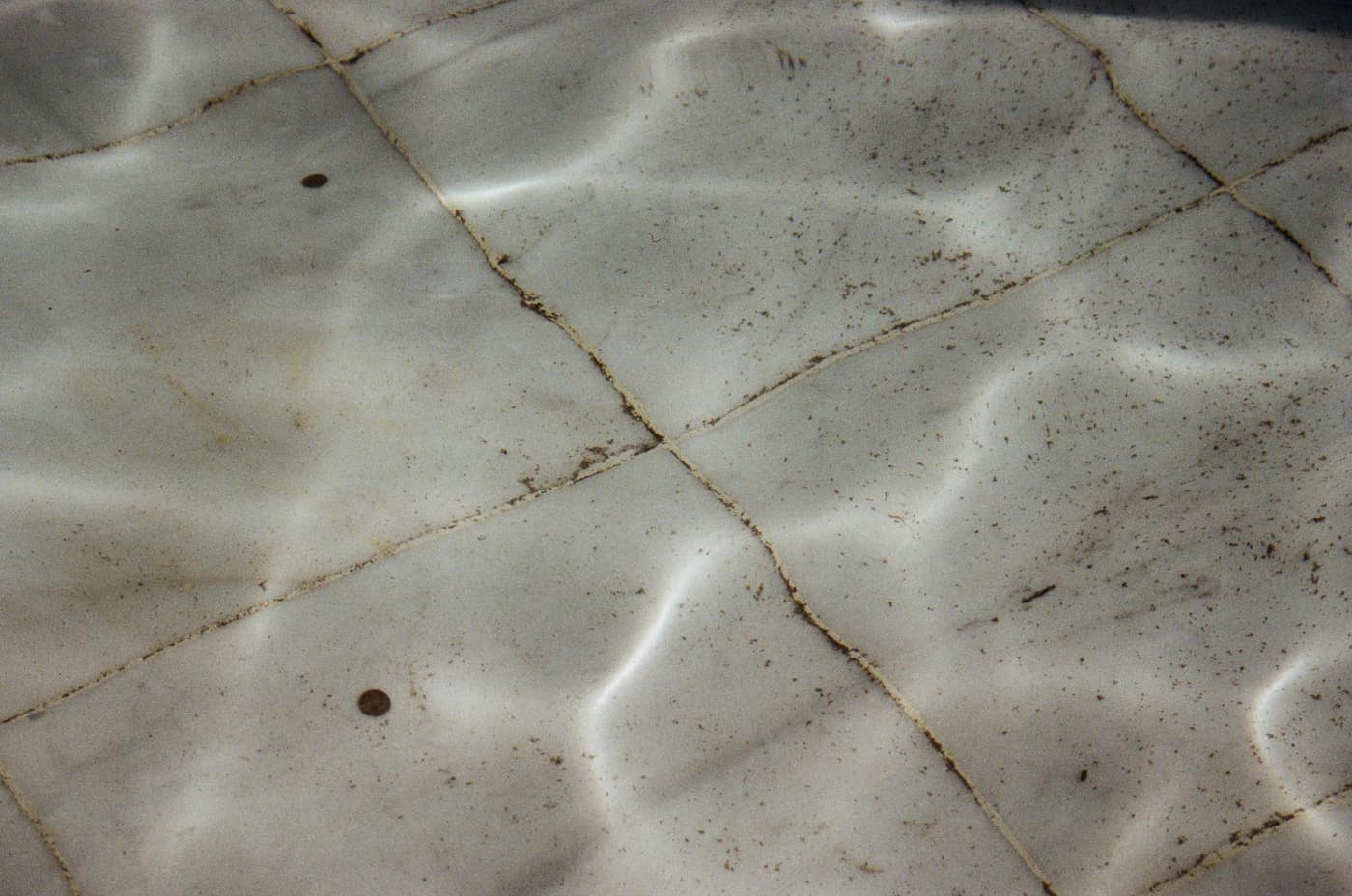
Black algae roots into plaster under a protective crust. Brush hard, treat the brushed spot, repeat for weeks.
Top pick
Poolmaster 5-Inch Stainless Steel Pool Algae Detail Brush
Spot-treating black algae
Best for mustard algae
How to Get Rid of Mustard Algae
Yellow, powdery, shade-loving and chlorine-tolerant. Treating the water without treating the equipment gives you a two-week cycle.
Top pick
United Chemicals YellowTreat Mustard Algaecide, 2 lb
Mustard algae specifically
#ad · how this is funded · price as of October 18, 2026
Best for vacuuming algae
Best Pool Vacuum for Algae
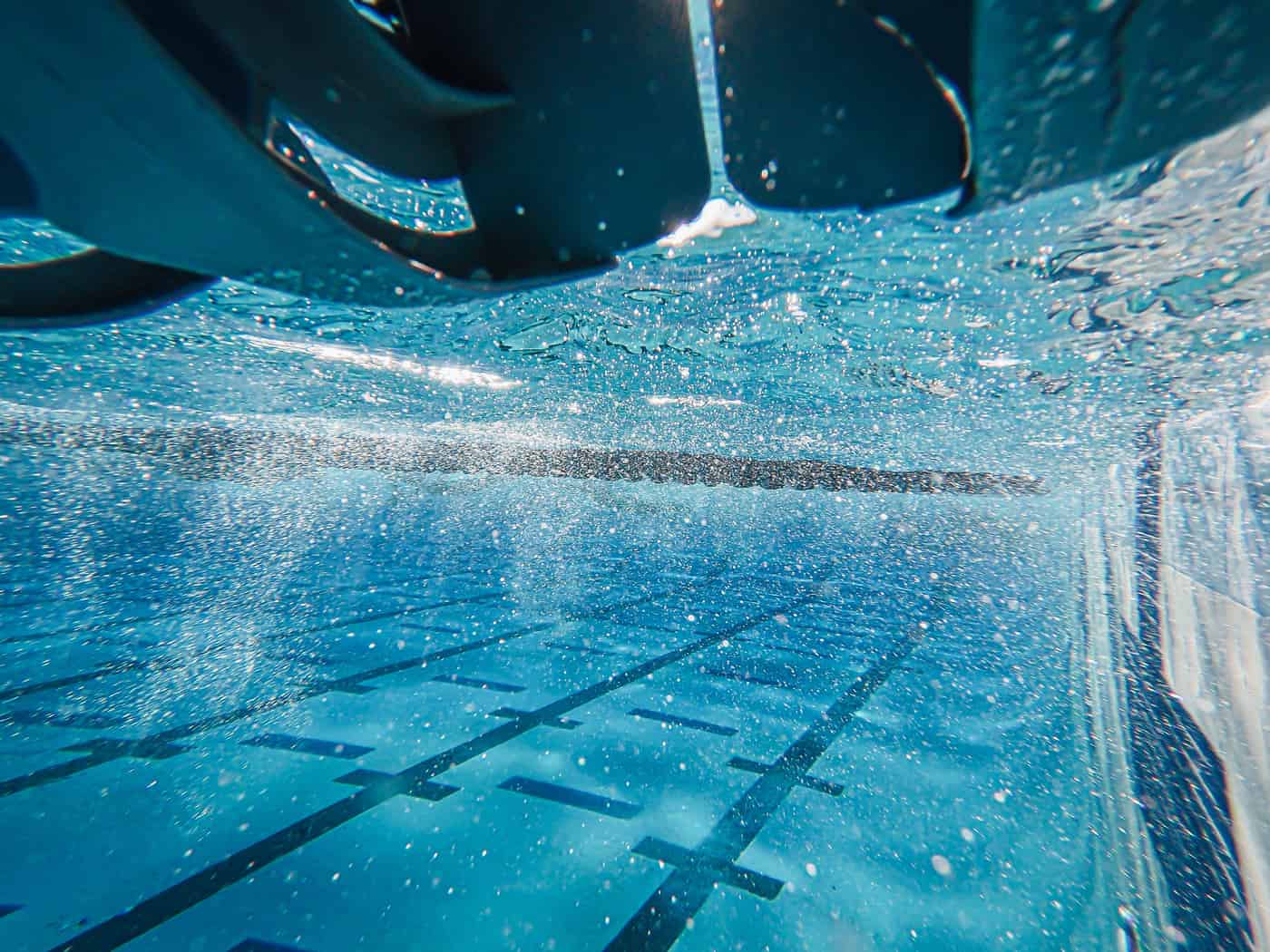
Dead algae is far finer than leaves. What matters is where it ends up, not how hard the vacuum pulls.
Top pick
POOLWHALE Pool Vacuum Head and 36 ft Hose Kit
The complete manual kit
Best pool brush
Best Pool Brush
Bristle material is the entire decision, and it is set by your pool surface rather than your budget. Get it wrong in one direction and you leave the algae; wrong in the other and you cut the liner.
Top pick
Sepetrel 17.5-Inch Hemispherical Pool Brush Head
Most pools, most surfaces
#ad · how this is funded · price as of October 18, 2026
Best pool metal remover
Best Pool Metal Remover
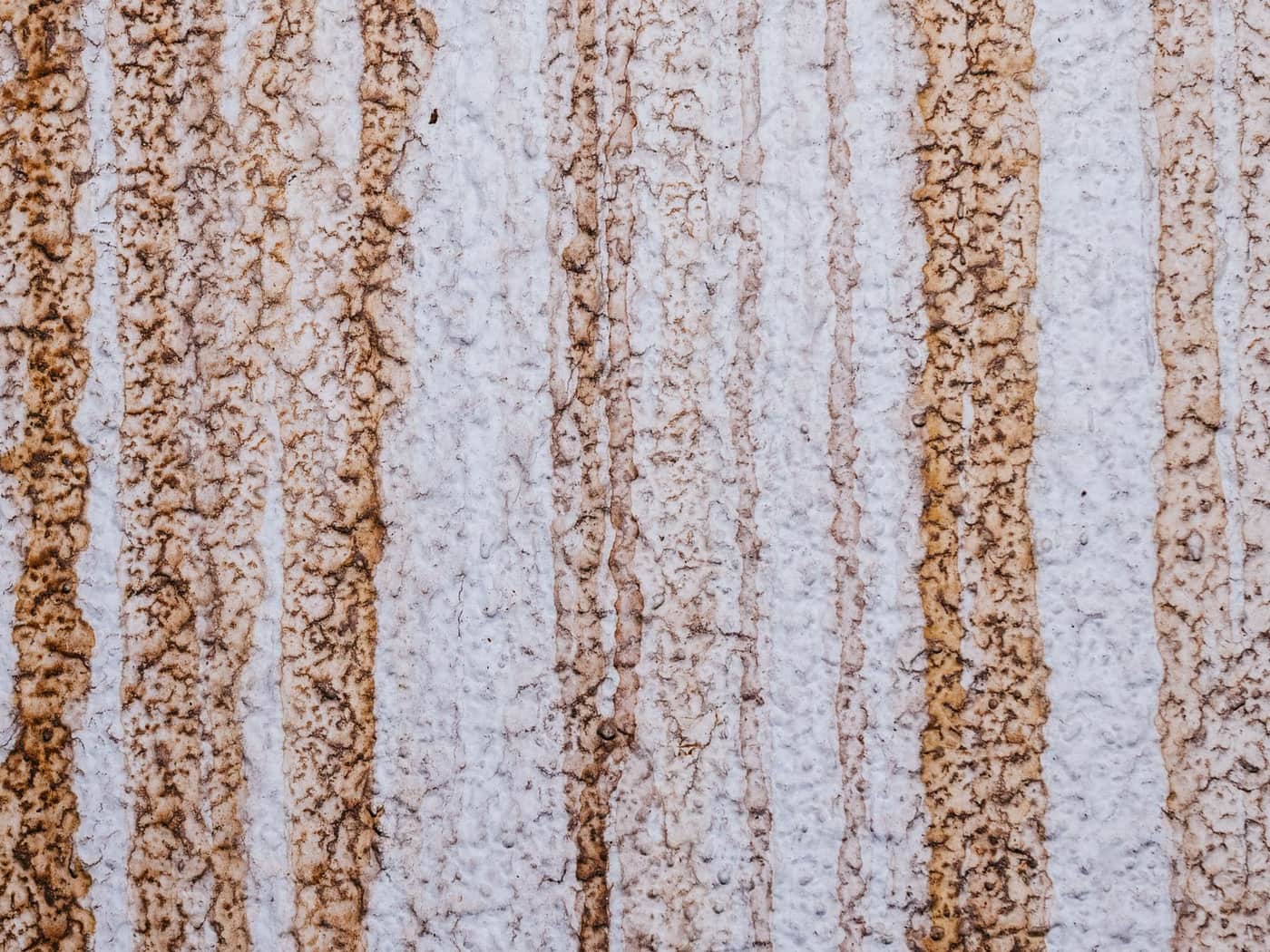
Sequestrants that hold copper and iron in solution, ascorbic acid lifters that take an existing stain off the surface, and the order to use them in.
Top pick
Pool Mate Concentrated Metal Out, 1 quart
A stated dose per volume
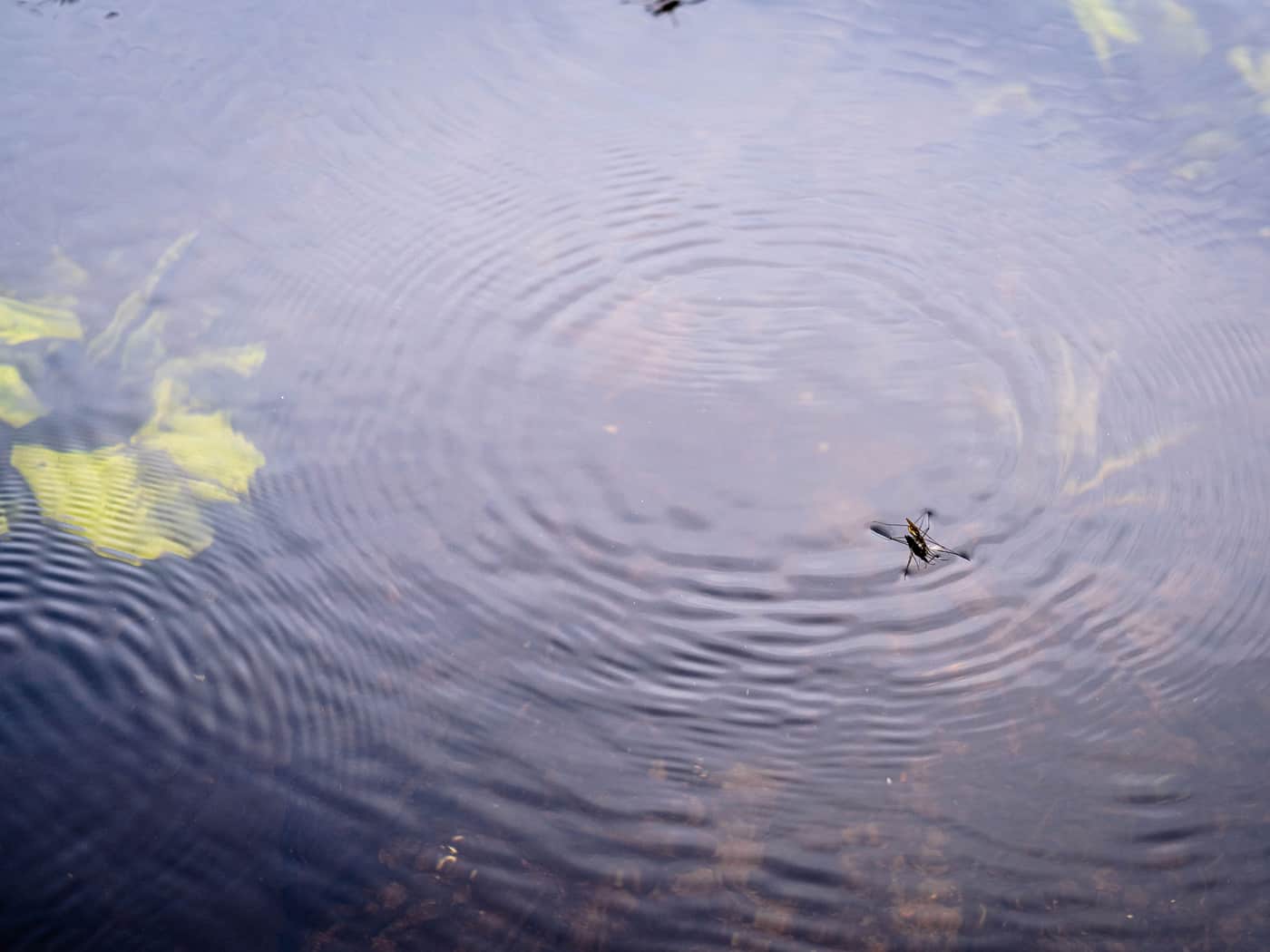
Water Bugs in a Pool
Water boatmen against backswimmers, why an algae bloom brings both, and the shock-brush-filter sequence that clears them without putting insecticide anywhere near a pool.
Top pick
HTH Pool Care Shock Advanced, cal hypo, 12 pack
Weekly maintenance shocking
#ad · how this is funded · price as of October 18, 2026
Questions people actually ask
How long does it take to clear a green pool?
Can I swim in a green pool?
Will shock alone clear it, or do I need algaecide too?
Why did my pool go green again a week later?
Sources
Every figure on this page traces to one of these. Where a number could not be sourced, the page says so rather than estimating.
- Michigan EGLE, Maximum Disinfectant Residuals and Operational Ranges: Guidance for Michigan Licensed Pools (December 2025) - quotes CDC MAHC 5.7.3.1.1.5.0, the EPA FIFRA label rule and the NSF 10 ppm application ceiling
- HTH Pool Care Chlorine Stabilizer - product page, states up to 90% chlorine loss from UV and CYA targets of 30-50 ppm for trichlor and dichlor pools, 60-80 ppm for saltwater
- Pool & Hot Tub Alliance - PHTA standards program, the ANSI-accredited consensus standards for residential and public pools
- Skim & Soak methodology - the constants, formulas and worked examples behind every dose on this site
Why there is nothing to buy here: This is the section's front door rather than a recommendation. Each page below carries the products that suit its specific problem, at the point in the fix where you actually reach for them.