Green Water & Algae
Best Pool Algaecide
Prevention, not rescue - plus the two cases where a specific chemistry genuinely is the answer.
We have not handled these products and we do not pretend to have. Here is what we did instead. Links to Amazon earn us a commission at no extra cost to you, and commission never decides a pick — disclosure.
| # | Product | Best for | The spec it turns on | Price |
|---|---|---|---|---|
| 1 | 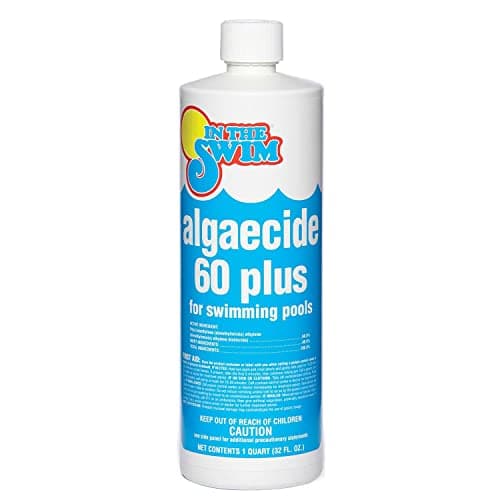 In The Swim Algaecide 60 Plus, 1 quartTop pickPolyquat at 60% concentration and no copper, which is the combination that prevents algae without the stain risk. | Prevention without staining | 60% polyquaternium, non-metallic, non-foaming | |
| 2 | 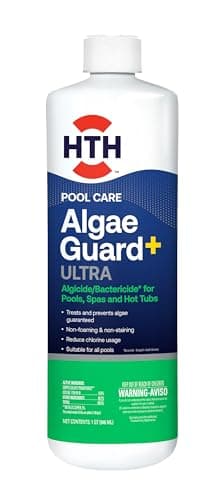 HTH Pool Care Algae Guard Ultra, 32 ozThe one on this page whose maker explicitly names black and mustard algae, which are the two that ordinary polyquat struggles with. | Mustard and black algae | Long-lasting formula; HTH states it targets green, black and mustard algae | |
| 3 | 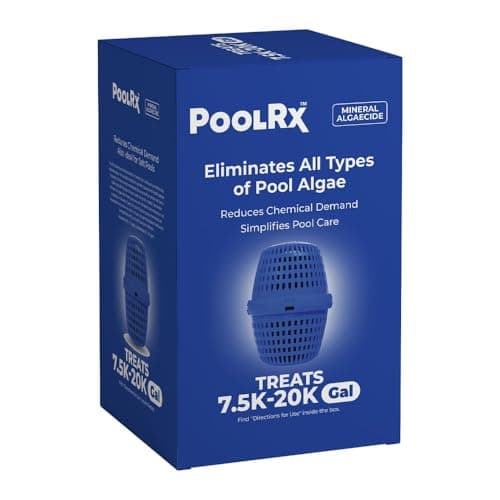 PoolRx PoolRx Blue Unit, 7.5k-20k gallonsA mineral cartridge that sits in the skimmer for a season, which is a genuinely different product category from a liquid you re-dose weekly. | Set-and-forget prevention | Mineral cartridge rated by the maker for up to six months in 7,500-20,000 gallon pools | |
| 4 | 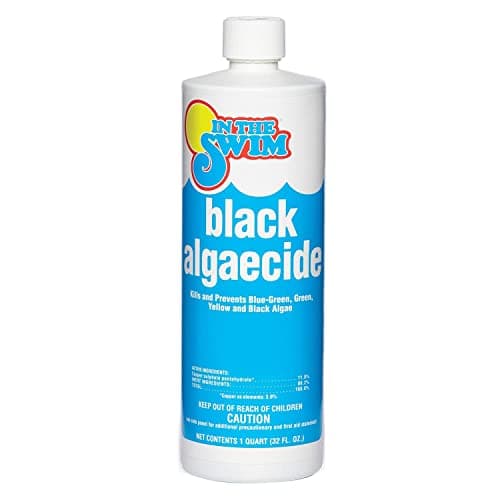 In The Swim Black Algaecide, copper sulfate pentahydrate, 1 quartThe right chemistry for black algae and an actively bad idea for anything else, which is exactly how the maker positions it. | Black algae in plaster | Copper sulfate pentahydrate, sold specifically for black algae | |
| 5 | 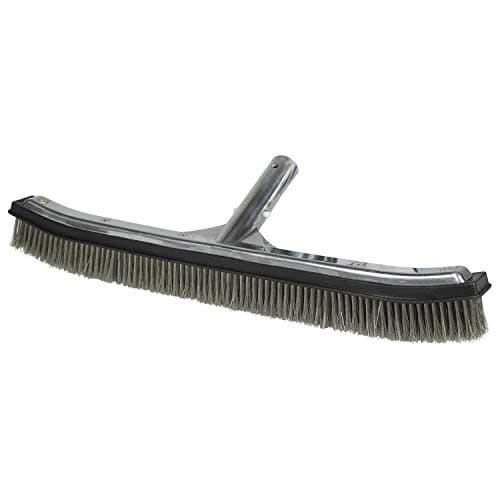 Poolmaster 18-Inch Stainless Steel Pool Algae BrushStainless bristles on a concrete pool are the step that makes the shock work, and the cheapest item in any of these roundups. | Brushing before you shock | 18 in stainless steel bristles on an aluminum back, for gunite and concrete | |
| 6 | 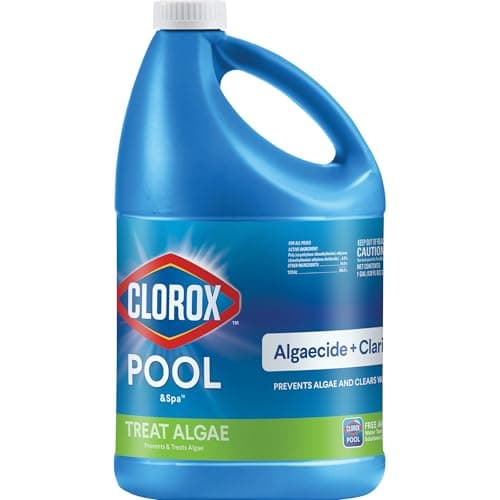 Clorox Pool&Spa Swimming Pool Algaecide and ClarifierThe skip. Combining an algaecide and a clarifier means you cannot dose either one for the problem you actually have. | Nothing we would recommend it for | Combined algaecide and clarifier in one bottle |
The distinction that decides everything
Algaecide prevents algae from establishing. Shock kills algae that has established. Almost every disappointed algaecide review is somebody who bought it for the second job, and the label rarely goes out of its way to correct them.
If your pool is green today, the sequence is shock first, then filter until clear, then dose algaecide once free chlorine is back to normal. Adding algaecide during a heavy shock mostly wastes it, because chlorine consumes it.
The four active ingredients
| Active | Sold as | Prevents | Stains? | Notes |
|---|---|---|---|---|
| Polyquaternium (polyquat) | Algaecide 60, Polyquat 60 | Green and mustard algae | No | The default. Non-foaming, no metal. Concentration is stated in the name. |
| Quaternary ammonium (quats) | Algaecide 10, Algaecide 30 | Green algae | No | Cheaper and foams. The foam is the giveaway you bought the older chemistry. |
| Copper (sulfate or chelated) | Copper algaecide, mineral units | Black, mustard and green algae | Yes, if pH runs high | Effective where chlorine cannot reach. Also the cause of the green-hair complaint. |
| Sodium bromide | Yellow or mustard algae treatments | Mustard algae | No | Converts chlorine to bromine in situ. Complicates a stabilized pool. |
The picks
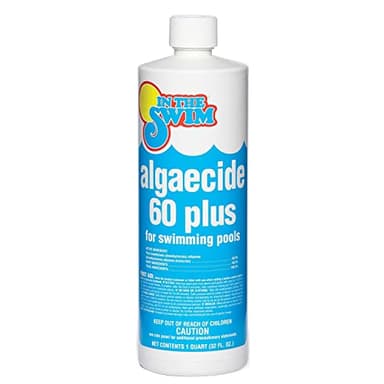
Top pick - Prevention without staining
In The Swim Algaecide 60 Plus, 1 quart
Polyquat at 60% concentration and no copper, which is the combination that prevents algae without the stain risk.
The published figure
60% polyquaternium, non-metallic, non-foaming
Polyquat 60 is the concentration standard in this category. Products sold as 'algaecide 30' or 'algaecide 10' are the same chemistry diluted, so compare the price per unit of active ingredient rather than per bottle.
No metal means no staining, which matters on plaster and on any pool that has already had a copper problem. It is also why polyquat is the algaecide to use after you have shocked, rather than during.
Polyquat prevents. It is not a rescue product for a pool that is already green, and any label that implies otherwise is selling you the wrong step.
What it does well
- 60% active, the top of the retail concentration range
- No copper, so no staining and no green-hair complaints
- Non-foaming, unlike the cheaper quat algaecides
What it costs you
- Prevention only — will not clear an existing bloom on its own
- Chlorine consumes it, so a heavy shock burns off what you just added
Skip it if your pool is green right now. Shock first, vacuum the dead algae, then dose polyquat to stop it coming back.
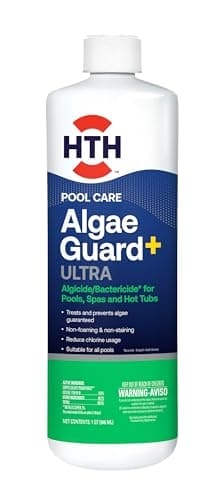
Pick 2 - Mustard and black algae
HTH Pool Care Algae Guard Ultra, 32 oz
The one on this page whose maker explicitly names black and mustard algae, which are the two that ordinary polyquat struggles with.
The published figure
Long-lasting formula; HTH states it targets green, black and mustard algae
HTH's own product page for the Algae Guard line names green, black and mustard algae specifically. Most algaecide labels say 'algae' and leave you to find out which kinds they mean.
Black algae in particular embeds in plaster and is shielded from chlorine by its own protective layer, so it needs brushing before any chemical will reach it. No algaecide fixes black algae on its own.
Treat this as the product for a named, identified problem rather than a general-purpose weekly addition.
What it does well
- Maker names the specific algae types rather than claiming generic coverage
- Swim-immediately formulation per the label
- Stated as compatible with vinyl and saltwater systems
What it costs you
- The active ingredient percentage is not published on the retail listing
- Costs more per treated gallon than a straight polyquat concentrate
Skip it if you have ordinary green algae and a working chlorine residual — a 60% polyquat is the cheaper correct answer.
#ad · how this is funded · price as of October 18, 2026
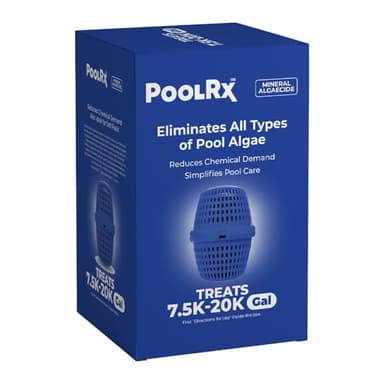
Pick 3 - Set-and-forget prevention
PoolRx PoolRx Blue Unit, 7.5k-20k gallons
A mineral cartridge that sits in the skimmer for a season, which is a genuinely different product category from a liquid you re-dose weekly.
The published figure
Mineral cartridge rated by the maker for up to six months in 7,500-20,000 gallon pools
This is a canister of minerals, not a liquid. It drops into the skimmer basket and the maker rates it for up to six months in the stated volume band, which is why it appears in searches for both algaecide and prevention.
Choose the unit by your pool volume, not by price. The blue unit is rated 7,500-20,000 gallons and the black unit 20,000-30,000; running an undersized unit in a large pool is the most common way people conclude it does not work.
It contains copper. That is the mechanism, and it is also why a pool with high pH or existing metal staining is the wrong home for it.
What it does well
- One placement covers a season, with no weekly dosing to forget
- Reduces the chlorine demand a pool carries between shocks
- Volume-banded units mean the sizing decision is made for you
What it costs you
- Copper-based, so it carries the staining risk polyquat avoids
- High up-front cost versus a bottle of liquid
- Needs the right unit for your volume or it underperforms
Skip it if you have ever had metal staining, or your pH runs high — copper comes out of solution and onto the plaster.
#ad · how this is funded · price as of October 18, 2026
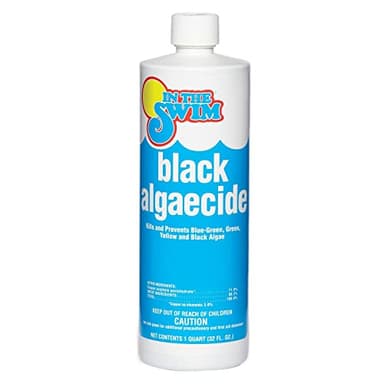
Pick 4 - Black algae in plaster
In The Swim Black Algaecide, copper sulfate pentahydrate, 1 quart
The right chemistry for black algae and an actively bad idea for anything else, which is exactly how the maker positions it.
The published figure
Copper sulfate pentahydrate, sold specifically for black algae
Black algae anchors into plaster and grows a protective layer that ordinary chlorine cannot penetrate. Copper is one of the few actives that reaches it, which is why this product exists as its own SKU rather than a general algaecide.
Brushing is not optional here. A stainless brush breaks the protective layer so the chemical can reach the organism; without that step you are treating a shell.
Copper stains. Use it for the identified problem, then stop.
What it does well
- Purpose-made for the one algae type that resists chlorine
- Named single active ingredient, so you know what you are adding
What it costs you
- Copper staining risk on plaster and on light-colored liners
- Useless against ordinary green algae relative to shock
- Requires aggressive brushing to work at all
Skip it if you have not positively identified black algae. Green spots that brush away easily are ordinary algae and need shock, not copper.
#ad · how this is funded · price as of October 18, 2026
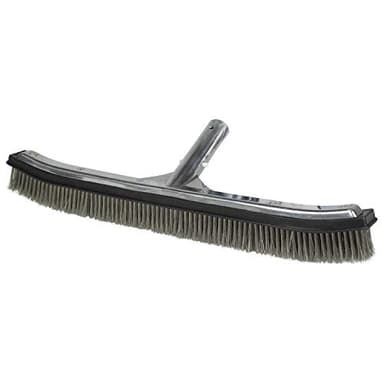
Pick 5 - Brushing before you shock
Poolmaster 18-Inch Stainless Steel Pool Algae Brush
Stainless bristles on a concrete pool are the step that makes the shock work, and the cheapest item in any of these roundups.
The published figure
18 in stainless steel bristles on an aluminum back, for gunite and concrete
Algae clinging to a wall is physically shielded from the water around it. Brushing first is what lets chlorine reach the organism rather than the film over it, which is why every ordered fix on this site puts brushing before dosing.
Stainless is for gunite, concrete and plaster only. On a vinyl liner it will cut, and you want nylon.
18 inches is the size that covers a wall in a reasonable number of passes without being unmanageable on a long pole.
What it does well
- Makes the shock dose that follows it materially more effective
- Costs a fraction of any chemical it improves
- Aluminum back resists the corrosion that kills cheap brushes
What it costs you
- Stainless bristles will damage a vinyl liner
- Pole sold separately
Skip it if your pool has a vinyl liner. Buy the nylon equivalent instead.
#ad · how this is funded · price as of October 18, 2026
Pick 6 - Nothing we would recommend it for
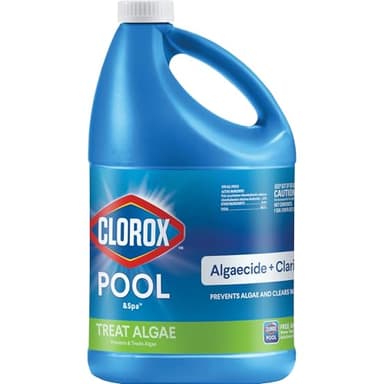
Clorox Pool&Spa Swimming Pool Algaecide and Clarifier
The skip. Combining an algaecide and a clarifier means you cannot dose either one for the problem you actually have.
The published figure
Combined algaecide and clarifier in one bottle
Algaecide and clarifier solve different problems on different timelines. Algaecide is a preventative you dose weekly at a low rate; clarifier is a reactive treatment you dose once when the water goes hazy.
Bundled into one bottle, hitting the clarifier dose overdoses the algaecide and hitting the algaecide dose underdoses the clarifier. There is no setting where both are right.
Two bottles cost slightly more and let you treat the problem in front of you. That is worth the shelf space.
What it does well
- One bottle instead of two
- Widely stocked
What it costs you
- No dose exists that is correct for both functions at once
- Obscures which product was responsible when the water does clear
Skip it if you know which problem you have — which, after reading either of our diagnosis guides, you will. Buy the single-purpose product.
Why a brush is in an algaecide roundup
Because for two of the three algae types, no chemical works until you have brushed. Black algae grows a protective layer that chlorine cannot penetrate, and mustard algae hides in shaded areas and re-establishes from the film left behind. Brushing is not preparation for the treatment; it is part of the treatment, and it costs less than any bottle on this page.
Stainless bristles for gunite, concrete and plaster. Nylon for vinyl - stainless will cut a liner. Which one you need depends on which algae you have, so identify it first. The full breakdown by pool surface, and the brushes that publish which surfaces they are safe on, is on best pool brush.
When to dose, and how often
- **Weekly, as maintenance,** at the label's maintenance rate. This is the normal use and it is what polyquat is designed for.
- **After a bloom has cleared,** once free chlorine is back under about 5 ppm. Dosing while chlorine is high wastes the product.
- **At opening,** before the first algae has a chance. This is the highest-value single dose of the year.
- **Before a stretch you will be away,** because a pool with nobody watching it is exactly when demand outruns supply.
What algaecide will not fix
It will not fix a chlorine residual that is too low, and it is often bought as a substitute for one - the same mistake sits behind most of the chlorine alternatives category. If your pool needs weekly algaecide to stay clear, the actual problem is sanitizer - usually cyanuric acid high enough that your chlorine reading no longer means what it says. Algaecide is a supplement to working chlorine, never a replacement for it.
It also will not fix a phosphate problem, and it will not clear water bugs, which are there for the algae rather than the water. Phosphate is algae food, and a pool that keeps re-blooming despite good chlorine is often being fed - see are phosphates bad for your pool.
Questions people actually ask
What is the best algaecide for a pool?
Is copper-free algaecide better?
Will algaecide clear a green pool?
Can I add algaecide and shock at the same time?
What is the best algaecide for black algae?
Sources
Every figure on this page traces to one of these. Where a number could not be sourced, the page says so rather than estimating.
- HTH Pool Care Algae Guard Advanced - product page, states coverage of green, black and mustard algae
- HTH Pool Care Phosphate Remover - product page, states 2 fl oz per 10,000 gallons weekly and that levels above 200-500 ppb make algae harder to control
- Skim & Soak methodology - the constants, formulas and worked examples behind every dose on this site
- In The Swim Algaecide 60 Plus - Amazon listing, read 2026-09-02
- PoolRx Blue Unit, 7.5k-20k gallons - Amazon listing, read 2026-09-02
Read next
How to Identify Pool Algae
Where it grows and whether it brushes off are the two tests that separate green, mustard and black algae.

How to Clear a Green Pool Fast
The ordered fix: test, brush, shock by weight, filter continuously, clear the dead algae, then prevent the next one.

Best for green water
Best Pool Shock for a Green Pool
Cal-hypo, dichlor and liquid chlorine compared on available chlorine percentage, with a dose table computed for six pool sizes.
Top pick
In The Swim Pool Shock, 68% Cal-Hypo Granular, 25 lb
Clearing an algae bloom
#ad · how this is funded · price as of October 18, 2026
Are Phosphates Bad for Your Pool?
Phosphate is algae food. The threshold that matters, where it comes from, and why a test comes before a remover.
Top pick
HTH Pool Care Phosphate Remover, 1 quart
A published dose rate
#ad · how this is funded · price as of October 18, 2026