Green Water & Algae
How to Get Rid of Mustard Algae
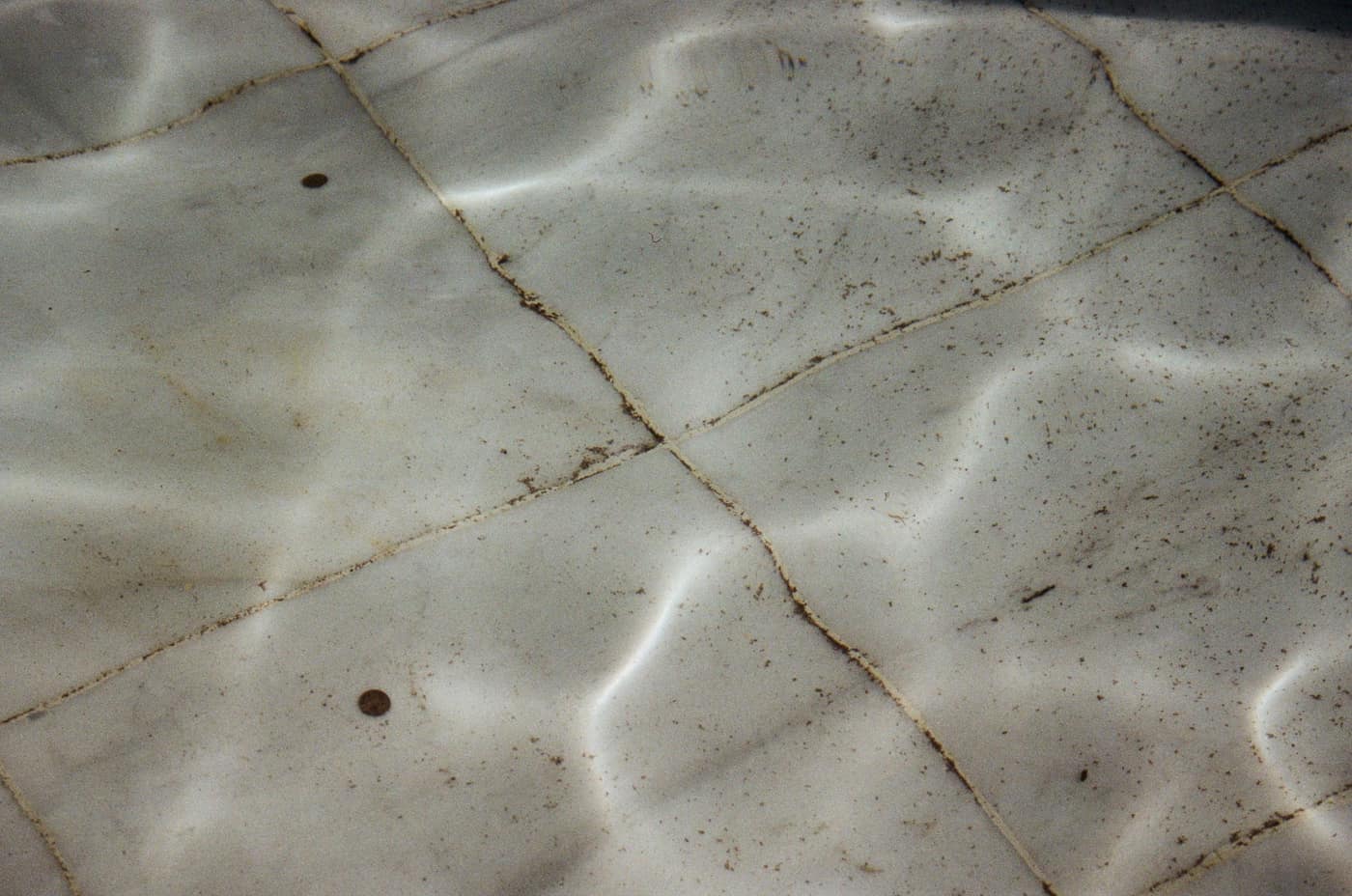
It brushes away completely and it is back tomorrow. That is the diagnosis, and the reason is not in the water.
We have not handled these products and we do not pretend to have. Here is what we did instead. Links to Amazon earn us a commission at no extra cost to you, and commission never decides a pick — disclosure.
| # | Product | Best for | The spec it turns on | Price |
|---|---|---|---|---|
| 1 | 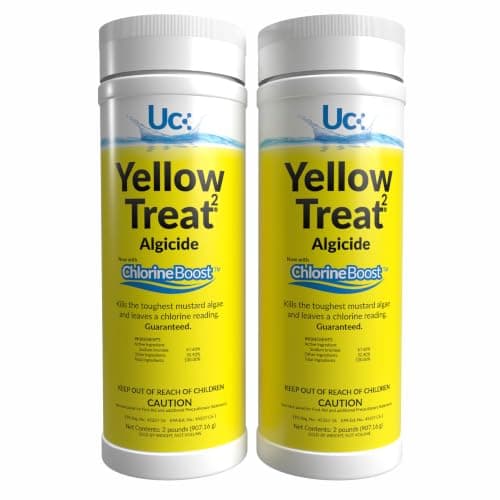 United Chemicals YellowTreat Mustard Algaecide, 2 lbTop pickOne of the few products formulated for mustard algae rather than sold as a general algaecide that mentions it. | Mustard algae specifically | Stated by the maker for mustard and yellow algae in both saltwater and chlorine pools, above ground and in-ground | |
| 2 | 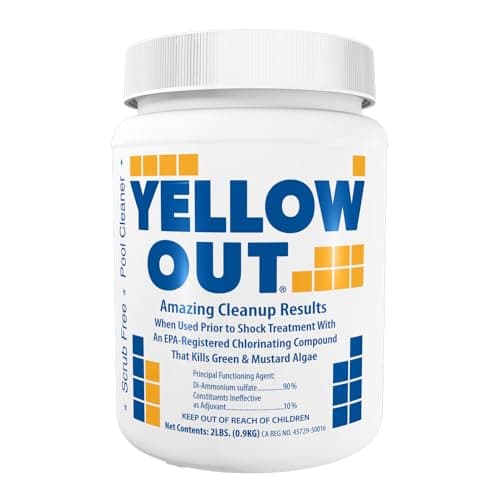 Yellow Out Yellow Out Chlorine Shock Enhancing Treatment, 2 lbNot an algaecide - it is used with your shock, which is a genuinely different mechanism worth understanding before you buy either. | Making your shock work on mustard | Shock-enhancing treatment used alongside a chlorine shock rather than instead of one | |
| 3 | 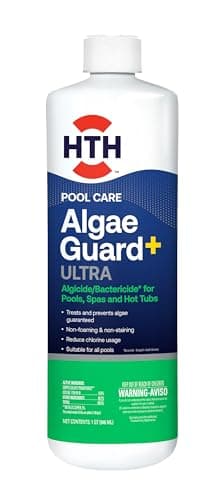 HTH Pool Care Algae Guard Ultra, 32 ozThe one on this page whose maker explicitly names black and mustard algae, which are the two that ordinary polyquat struggles with. | Mustard and black algae | Long-lasting formula; HTH states it targets green, black and mustard algae | |
| 4 | 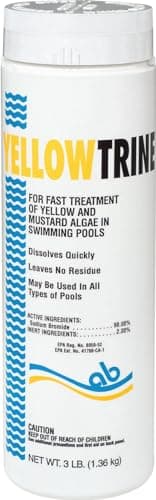 Applied Biochemists Yellowtrine Algaecide Cleanser, 3 lbThe professional-channel option, in a granular format that suits treating a large surface area rather than dosing a volume. | A trade-channel mustard option | Granular algaecide cleanser aimed at yellow and mustard algae, 3 lb | |
| 5 | 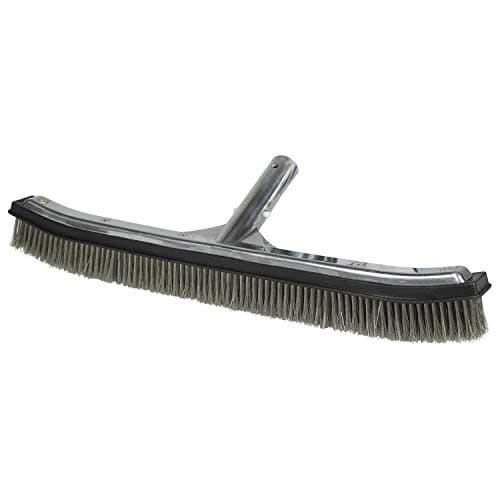 Poolmaster 18-Inch Stainless Steel Pool Algae BrushStainless bristles on a concrete pool are the step that makes the shock work, and the cheapest item in any of these roundups. | Brushing before you shock | 18 in stainless steel bristles on an aluminum back, for gunite and concrete |
How to know it is mustard algae
Mustard algae is the one people mistake for dirt, sand or pollen. It is yellow to tan, it is powdery rather than slimy, it sits on shaded walls and in corners, and it puffs into a cloud when disturbed.
The diagnostic is not appearance, it is behavior: it brushes away completely and effortlessly, and then it is back in exactly the same place the next day. Dirt does not do that. Pollen does not do that.
| Mustard algae | Pollen | Dead algae | Sand or silt | |
|---|---|---|---|---|
| Color | Yellow to tan | Bright yellow | Gray or gray-green | Beige to brown |
| Where | Shaded walls, steps, behind ladders | Surface, then everywhere | Even layer on the floor | Lowest points |
| Brushes off? | Yes, easily | Yes | Yes | Yes |
| Back next day? | Yes, same spot | Only if more falls | No | No |
| On a white cloth | Does not rinse out cleanly | Smears yellow, rinses out | Gray smear | Gritty |
Why ordinary shocking does not finish it
Mustard algae tolerates free chlorine concentrations that kill green algae outright. A shock sized for a green bloom knocks it back, the pool looks clear, and it re-establishes from what survived.
It also prefers shade, which means it lives in exactly the parts of the pool that get the least circulation and the least sunlight - behind the ladder, under the steps, in the corner the return never reaches.
The treatment, in order
- **Balance the water first.** pH into 7.2 to 7.6 - chlorine loses effectiveness above 7.8 and you need every bit of it here.
- **Brush every affected surface,** including the shaded areas you would normally skip. Behind the ladder, under the steps, the corners.
- **Shock higher and hold it longer** than you would for green algae. See the dose tables for your volume, and expect to hold the level rather than let it fall back overnight.
- **Add a mustard-specific treatment** alongside the shock. This is the step that distinguishes the outbreak from an ordinary one - a general algaecide frequently does nothing here.
- **Put every piece of equipment through the treated water.** Brushes, nets, hoses, floats, toys, ladders if removable. Anything that touched the pool.
- **Wash the swimsuits.** Every one that has been in the pool during the outbreak.
- **Brush daily** for the next several days, not once.
- **Run the filter continuously** and clean it thoroughly afterwards - it is holding what you just killed.
Understanding what you are buying
This category has an unusual split, and buying the wrong side of it is the most common complaint.
| Type | How it is used | Works alone? |
|---|---|---|
| Mustard algaecide | Dosed into the water like any algaecide | Yes |
| Shock enhancer | Added alongside a full chlorine shock | No - it is half of a pair |
An enhancer bought expecting an algaecide does nothing, and the label rarely goes out of its way to correct the assumption. Check which one you are holding before you dose, and budget for the shock if it is the second kind.
The picks
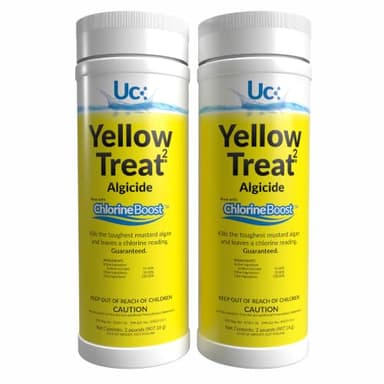
Top pick - Mustard algae specifically
United Chemicals YellowTreat Mustard Algaecide, 2 lb
One of the few products formulated for mustard algae rather than sold as a general algaecide that mentions it.
The published figure
Stated by the maker for mustard and yellow algae in both saltwater and chlorine pools, above ground and in-ground
Mustard algae survives chlorine levels that kill green algae outright, which is why a general algaecide often does nothing to it. A product built for the specific organism is the reason this category exists.
The listing states compatibility with both saltwater and chlorine pools. That matters because several mustard treatments are bromide-based and complicate a stabilized pool.
Treating the water is half the job. Mustard algae survives on brushes, floats, vacuum hoses and swimsuits, so anything that touched the pool goes through the treated water too.
What it does well
- Formulated for one organism rather than marketed at all of them
- Stated for saltwater and chlorine pools alike
- Long-established product in a category with very few real options
What it costs you
- Costs more per treatment than a general-purpose algaecide
- Does nothing useful against green algae, so it is a single-problem purchase
Skip it if you have ordinary green algae. Shock and a 60% polyquat is the cheaper correct answer for that.
#ad · how this is funded · price as of October 10, 2026
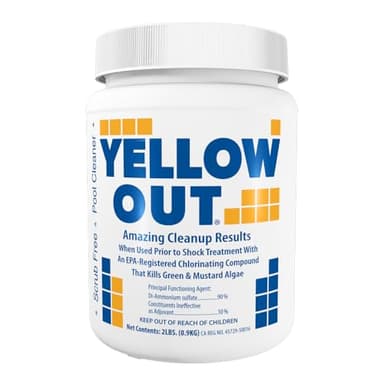
Pick 2 - Making your shock work on mustard
Yellow Out Yellow Out Chlorine Shock Enhancing Treatment, 2 lb
Not an algaecide - it is used with your shock, which is a genuinely different mechanism worth understanding before you buy either.
The published figure
Shock-enhancing treatment used alongside a chlorine shock rather than instead of one
This is an enhancer, not a standalone treatment. It is added alongside a normal chlorine shock, and the pairing is the product. Buying it expecting an algaecide is the most common mistake with it.
The reason the category exists: mustard algae tolerates chlorine concentrations that finish green algae, so raising chlorine alone often fails. An enhancer changes what that same shock achieves.
You still need the shock. Budget for both, and read our dose tables for the chlorine half of it.
What it does well
- Works with the shock you already buy rather than replacing it
- Long-standing product specifically aimed at yellow and mustard algae
What it costs you
- Useless on its own - it is half of a two-product treatment
- The maker does not publish an active-ingredient percentage
Skip it if you were expecting a standalone algaecide. This one only does anything alongside a full chlorine shock.
#ad · how this is funded · price as of October 10, 2026
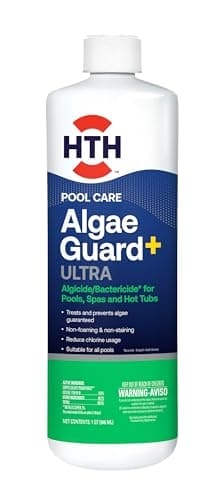
Pick 3 - Mustard and black algae
HTH Pool Care Algae Guard Ultra, 32 oz
The one on this page whose maker explicitly names black and mustard algae, which are the two that ordinary polyquat struggles with.
The published figure
Long-lasting formula; HTH states it targets green, black and mustard algae
HTH's own product page for the Algae Guard line names green, black and mustard algae specifically. Most algaecide labels say 'algae' and leave you to find out which kinds they mean.
Black algae in particular embeds in plaster and is shielded from chlorine by its own protective layer, so it needs brushing before any chemical will reach it. No algaecide fixes black algae on its own.
Treat this as the product for a named, identified problem rather than a general-purpose weekly addition.
What it does well
- Maker names the specific algae types rather than claiming generic coverage
- Swim-immediately formulation per the label
- Stated as compatible with vinyl and saltwater systems
What it costs you
- The active ingredient percentage is not published on the retail listing
- Costs more per treated gallon than a straight polyquat concentrate
Skip it if you have ordinary green algae and a working chlorine residual — a 60% polyquat is the cheaper correct answer.
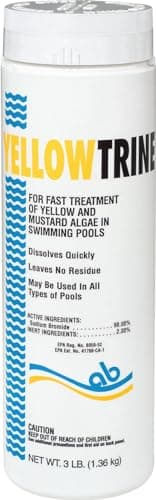
Pick 4 - A trade-channel mustard option
Applied Biochemists Yellowtrine Algaecide Cleanser, 3 lb
The professional-channel option, in a granular format that suits treating a large surface area rather than dosing a volume.
The published figure
Granular algaecide cleanser aimed at yellow and mustard algae, 3 lb
Applied Biochemists is a dealer brand rather than a big-box one, which usually means a higher concentration and a dosing rate written for someone who treats pools regularly.
Granular suits mustard algae reasonably well, because much of the treatment is directed at surfaces and shaded areas rather than distributed through the water column.
As with every product on this page, brushing comes first and the equipment gets treated too.
What it does well
- Trade-channel formulation aimed at the specific organism
- 3 lb covers a full treatment on a large pool
What it costs you
- Harder to find than the retail brands
- Granular means pre-dissolving or careful placement
Skip it if you own a small above-ground pool - 3 lb is far more than one treatment needs.
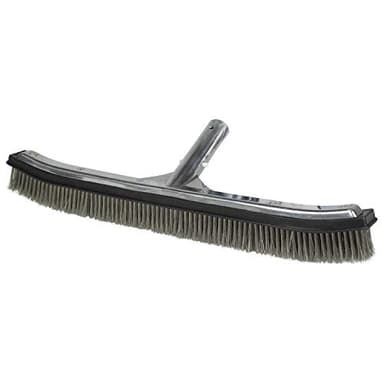
Pick 5 - Brushing before you shock
Poolmaster 18-Inch Stainless Steel Pool Algae Brush
Stainless bristles on a concrete pool are the step that makes the shock work, and the cheapest item in any of these roundups.
The published figure
18 in stainless steel bristles on an aluminum back, for gunite and concrete
Algae clinging to a wall is physically shielded from the water around it. Brushing first is what lets chlorine reach the organism rather than the film over it, which is why every ordered fix on this site puts brushing before dosing.
Stainless is for gunite, concrete and plaster only. On a vinyl liner it will cut, and you want nylon.
18 inches is the size that covers a wall in a reasonable number of passes without being unmanageable on a long pole.
What it does well
- Makes the shock dose that follows it materially more effective
- Costs a fraction of any chemical it improves
- Aluminum back resists the corrosion that kills cheap brushes
What it costs you
- Stainless bristles will damage a vinyl liner
- Pole sold separately
Skip it if your pool has a vinyl liner. Buy the nylon equivalent instead.
#ad · how this is funded · price as of October 10, 2026
Keeping it gone
- **Improve circulation in the shaded areas.** Angling a return toward the dead corner does more than another treatment round.
- **Brush the shaded surfaces weekly** as routine, not just during an outbreak.
- **Keep chlorine steady rather than spiky.** Mustard algae establishes in the troughs.
- **Check cyanuric acid.** High stabilizer means your chlorine reading overstates what it is doing, which is how the troughs appear without you seeing them - see cyanuric acid.
- **Treat equipment when it comes back from another pool.** A borrowed float is a genuine reintroduction route.
If you are also fighting dark, raised spots that resist brushing, that is a different organism and a much longer job - see how to get rid of black algae.
Questions people actually ask
How do I get rid of mustard algae in my pool?
Why does mustard algae keep coming back?
Is mustard algae the same as pollen?
Will normal shock kill mustard algae?
How does mustard algae get in a pool?
Sources
Every figure on this page traces to one of these. Where a number could not be sourced, the page says so rather than estimating.
- HTH Pool Care Algae Guard Advanced - product page, states coverage of green, black and mustard algae
- HTH Pool Care Shock Advanced - product page, cal hypo formulation, adds no cyanuric acid
- Michigan EGLE, Maximum Disinfectant Residuals and Operational Ranges: Guidance for Michigan Licensed Pools (December 2025) - quotes CDC MAHC 5.7.3.1.1.5.0, the EPA FIFRA label rule and the NSF 10 ppm application ceiling
- Skim & Soak methodology - the constants, formulas and worked examples behind every dose on this site
- United Chemicals YellowTreat Mustard Algaecide - Amazon listing, read 2026-09-02
- Yellow Out Chlorine Shock Enhancing Treatment - Amazon listing, read 2026-09-02
Read next
How to Identify Pool Algae
Where it grows and whether it brushes off are the two tests that separate green, mustard and black algae.
Best for black algae
How to Get Rid of Black Algae
Black algae roots into plaster under a protective crust. Brush hard, treat the brushed spot, repeat for weeks.
Top pick
Poolmaster 5-Inch Stainless Steel Pool Algae Detail Brush
Spot-treating black algae
#ad · how this is funded · price as of October 10, 2026
Best for prevention
Best Pool Algaecide
Polyquat 60 for prevention without staining, copper for black algae, and one combination product we would not buy.
Top pick
In The Swim Algaecide 60 Plus, 1 quart
Prevention without staining
#ad · how this is funded · price as of October 10, 2026
Best for green water
Best Pool Shock for a Green Pool
Cal-hypo, dichlor and liquid chlorine compared on available chlorine percentage, with a dose table computed for six pool sizes.
Top pick
In The Swim Pool Shock, 68% Cal-Hypo Granular, 25 lb
Clearing an algae bloom
#ad · how this is funded · price as of October 10, 2026