Cloudy Water
Best Pool Clarifier
Two different chemistries solve two different cloudiness problems, and the labels do very little to tell you which is which.
We have not handled these products and we do not pretend to have. Here is what we did instead. Links to Amazon earn us a commission at no extra cost to you, and commission never decides a pick — disclosure.
| # | Product | Best for | The spec it turns on | Price |
|---|---|---|---|---|
| 1 | 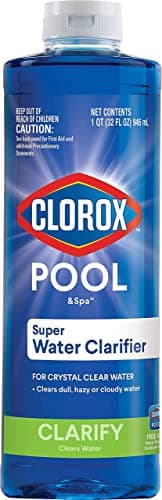 Clorox Pool&Spa Super Water Clarifier, 1 quartTop pickA conventional polymer clarifier from the most widely stocked brand, which matters when the water is cloudy on a Saturday. | Sand filters | Concentrated polymer clarifier, one quart | |
| 2 | 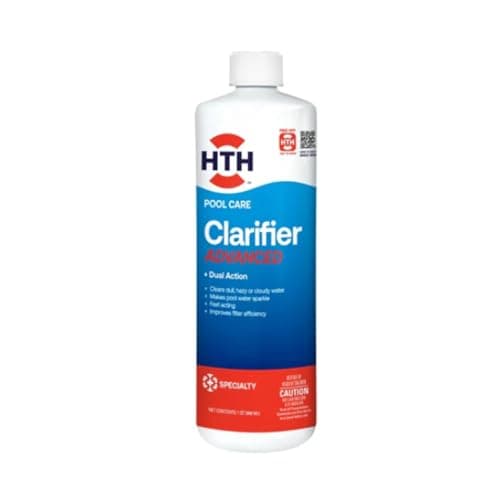 HTH Pool Care Clarifier AdvancedThe one whose maker explicitly states it will not move pH, which is worth something when you have just finished balancing. | Not disturbing pH | HTH states it clears in 24 hours and does not affect pH balance | |
| 3 | 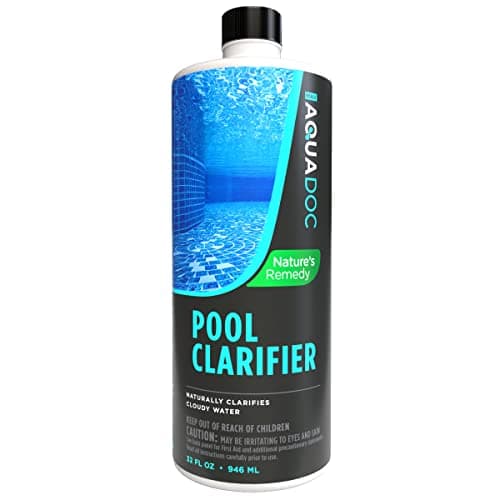 AquaDoc Natural Pool Clarifier, chitosan, 32 ozDifferent chemistry to the rest of this page: chitosan binds oils, which is the cause polymer clarifiers handle worst. | Oils and sunscreen | Chitosan-based clarifier, a shellfish-derived polymer | |
| 4 | 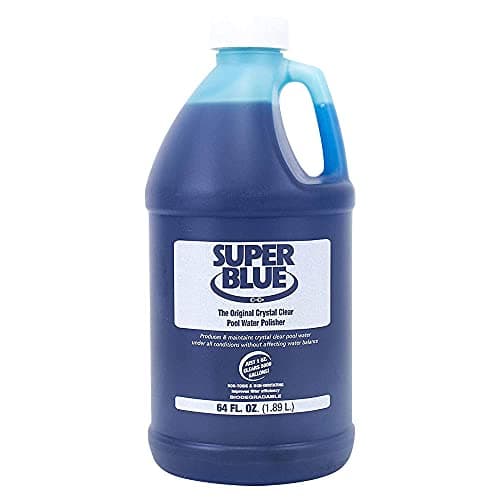 GLB Super Blue Pool Clarifier, 64 ozA concentrate sold in a size that suits a pool you clarify more than once a season. | Cartridge filters | Concentrated clarifier, 64 oz bottle |
Before you buy one at all
A clarifier only fixes one of the six causes of cloudy water: fine particulate too small for your filter to catch. It does nothing for high pH, high calcium hardness, or a filter that is not filtering, and those three between them account for most cloudy pools.
Spend ten minutes on why is my pool cloudy before you spend anything else. If you land back here afterwards, this page is for you.
The two chemistries
| Polymer (PAC and similar) | Chitosan | |
|---|---|---|
| Made from | Synthetic polymer coagulants | Shellfish shells |
| Best against | Silt, fine dead algae, mineral haze | Body oils, sunscreen, lotions |
| Speed | 24-48 hours | Often faster on organic haze |
| Filter load | Moderate | Higher - clogs cartridges quickly |
| Watch out for | Overdosing gums the filter | Shellfish allergies in the household |
| Typical use | The default | The pool-party pool |
Filter type changes the answer too
- **Sand filters** catch down to roughly 20 to 40 microns, so they need the most help. Polymer clarifiers suit them well, and backwashing afterwards is quick.
- **Cartridge filters** catch to about 10 to 20 microns and need less help - but they clog fast once the clarifier works. Expect to clean the cartridge shortly after dosing; that is the product working, not failing. If cleaning stops restoring flow, see best pool filter cartridges.
- **DE filters** already catch to around 5 microns and rarely need a clarifier at all. If a DE-filtered pool is cloudy, look at the grids and the DE charge before you look at a bottle. Choosing between the first two is on sand filter vs cartridge.
The picks
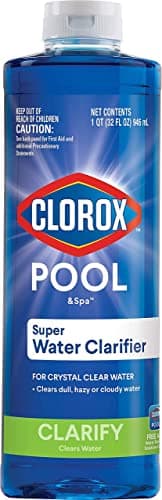
Top pick - Sand filters
Clorox Pool&Spa Super Water Clarifier, 1 quart
A conventional polymer clarifier from the most widely stocked brand, which matters when the water is cloudy on a Saturday.
The published figure
Concentrated polymer clarifier, one quart
A clarifier is a coagulant: it makes fine particles clump until they are large enough for the filter to catch. That means it only works if the filter is running and clean, which is the step people skip before deciding the product failed.
Polymer clarifiers suit sand filters well, because sand catches particles down to roughly 20 microns and the clarifier's job is to lift the haze above that threshold.
Give it a full filter cycle. Clarifier is a 24 to 48 hour product, and re-dosing at hour six because nothing has happened is how people end up over-treating.
What it does well
- Stocked nearly everywhere, which is the whole point in an emergency
- Concentrated, so a quart treats several doses
- Works with the filter you already have rather than requiring vacuum-to-waste
What it costs you
- Needs a clean, running filter to do anything
- Slower than flocculant when the water is badly clouded
Skip it if your water is so cloudy you cannot see the bottom step. That is flocculant territory, not clarifier.
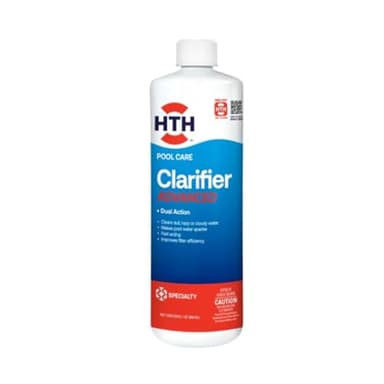
Pick 2 - Not disturbing pH
HTH Pool Care Clarifier Advanced
The one whose maker explicitly states it will not move pH, which is worth something when you have just finished balancing.
The published figure
HTH states it clears in 24 hours and does not affect pH balance
HTH's product page states this formula does not affect pH. That is a specific, checkable claim, and it matters because a clarifier added straight after a pH correction can undo the correction.
It is also stated as safe for vinyl and saltwater systems, which rules out the two most common compatibility questions.
As with any clarifier, the filter does the actual work. This product only makes the debris catchable.
What it does well
- Maker states no pH impact, which most clarifier labels leave vague
- Stated compatible with vinyl-lined and saltwater pools
- 24-hour window stated rather than implied
What it costs you
- Sold in smaller volumes than the concentrated competition
- Still requires a clean filter running continuously
Skip it if your filter is overdue a clean. No clarifier can outperform a clogged cartridge.
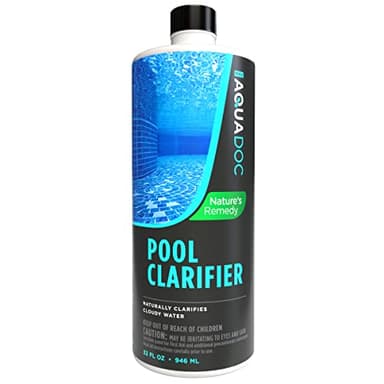
Pick 3 - Oils and sunscreen
AquaDoc Natural Pool Clarifier, chitosan, 32 oz
Different chemistry to the rest of this page: chitosan binds oils, which is the cause polymer clarifiers handle worst.
The published figure
Chitosan-based clarifier, a shellfish-derived polymer
Chitosan is derived from crustacean shells and binds organic material — body oils, sunscreen, lotion — more readily than the synthetic polymers do.
That makes it the specific answer to a pool that goes cloudy after a busy weekend rather than after a storm, which is a distinction almost nobody makes on the shelf.
It is also the one to avoid if anyone using the pool has a shellfish allergy, for obvious reasons.
What it does well
- Binds oils and lotions better than synthetic polymer clarifiers
- Biodegradable active ingredient
What it costs you
- Shellfish-derived, which is a real consideration for some households
- Less effective than a polymer on mineral and dead-algae haze
Skip it if your cloudiness followed a storm or a shock rather than a pool party — the cause is mineral or dead algae and a polymer clarifier suits it better.
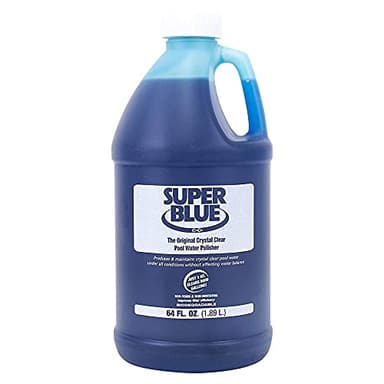
Pick 4 - Cartridge filters
GLB Super Blue Pool Clarifier, 64 oz
A concentrate sold in a size that suits a pool you clarify more than once a season.
The published figure
Concentrated clarifier, 64 oz bottle
Cartridge filters catch finer particles than sand, so they need less help from a clarifier — but they also clog faster once the clarifier does its job.
Expect to clean the cartridge shortly after dosing. That is the product working, not failing.
64 oz is the size that stops being annoying if cloudiness is a recurring problem rather than a one-off.
What it does well
- Bulk size for pools that need it repeatedly
- Long-established formulation in this category
What it costs you
- Will clog a cartridge quickly once it starts working
- Overkill for a pool that clouds once a year
Skip it if this is a one-off haze. Buy the quart and keep the shelf space.
How to dose one properly
- Clean or backwash the filter first. A clarifier's whole job is to hand work to the filter, and a loaded filter cannot take it.
- Correct pH into the 7.2 to 7.6 range. Some clarifiers are pH sensitive, and high pH is a cloudiness cause in its own right.
- Dose at the rate on your bottle for your pool volume. Rates vary by a factor of four across brands, so a rate you remember from another product is not transferable.
- Run the pump continuously. This is not optional; the filter is doing the removal.
- Wait a full 24 hours before judging it. Re-dosing at hour six is how people gum up a filter.
- Clean the filter again afterwards. Everything the clarifier gathered is now in it.
What we could not verify
Dose rates vary widely between these products, and we could not read a published rate for every one of them from the maker's own site. Rather than print an averaged figure that would be wrong for at least three of the four, this page says what it can source and sends you to your own bottle for the rest. HTH publishes a 24-hour clarity claim and states its formula does not affect pH; we have quoted exactly that and nothing more.
Questions people actually ask
What is the best pool clarifier for cloudy water?
What is the best pool clarifier for a sand filter?
How long does pool clarifier take to work?
Can you use too much clarifier?
Sources
Every figure on this page traces to one of these. Where a number could not be sourced, the page says so rather than estimating.
- HTH Pool Care Clarifier Advanced - product page, states clarity within 24 hours and no effect on pH
- HTH Pool Care pH Down - product page, sodium bisulfate, states a 7.2-7.6 target and a 4-6 hour wait after shocking
- Skim & Soak methodology - the constants, formulas and worked examples behind every dose on this site
- Clorox Pool&Spa Super Water Clarifier, 1 quart - Amazon listing, read 2026-09-02
- HTH Pool Care Clarifier Advanced - Amazon listing, read 2026-09-02
Read next
Clarifier vs Flocculant
Clarifier works with your filter over 24 to 48 hours; flocculant bypasses it overnight but needs a waste setting.
Top pick
Clorox Pool&Spa Super Water Clarifier, 1 quart
Sand filters
Best for overnight clearing
Best Pool Flocculant
Four flocculants compared, plus the equipment check that decides whether you can use one at all.
Top pick
HTH Pool Care Drop Out Flocculant, 32 oz
Clearing a pool overnight
#ad · how this is funded · price as of October 18, 2026
Why Is My Pool Cloudy?
Check filtration, then chemistry, then everything else. Two of the six causes get worse if you add a chemical first.
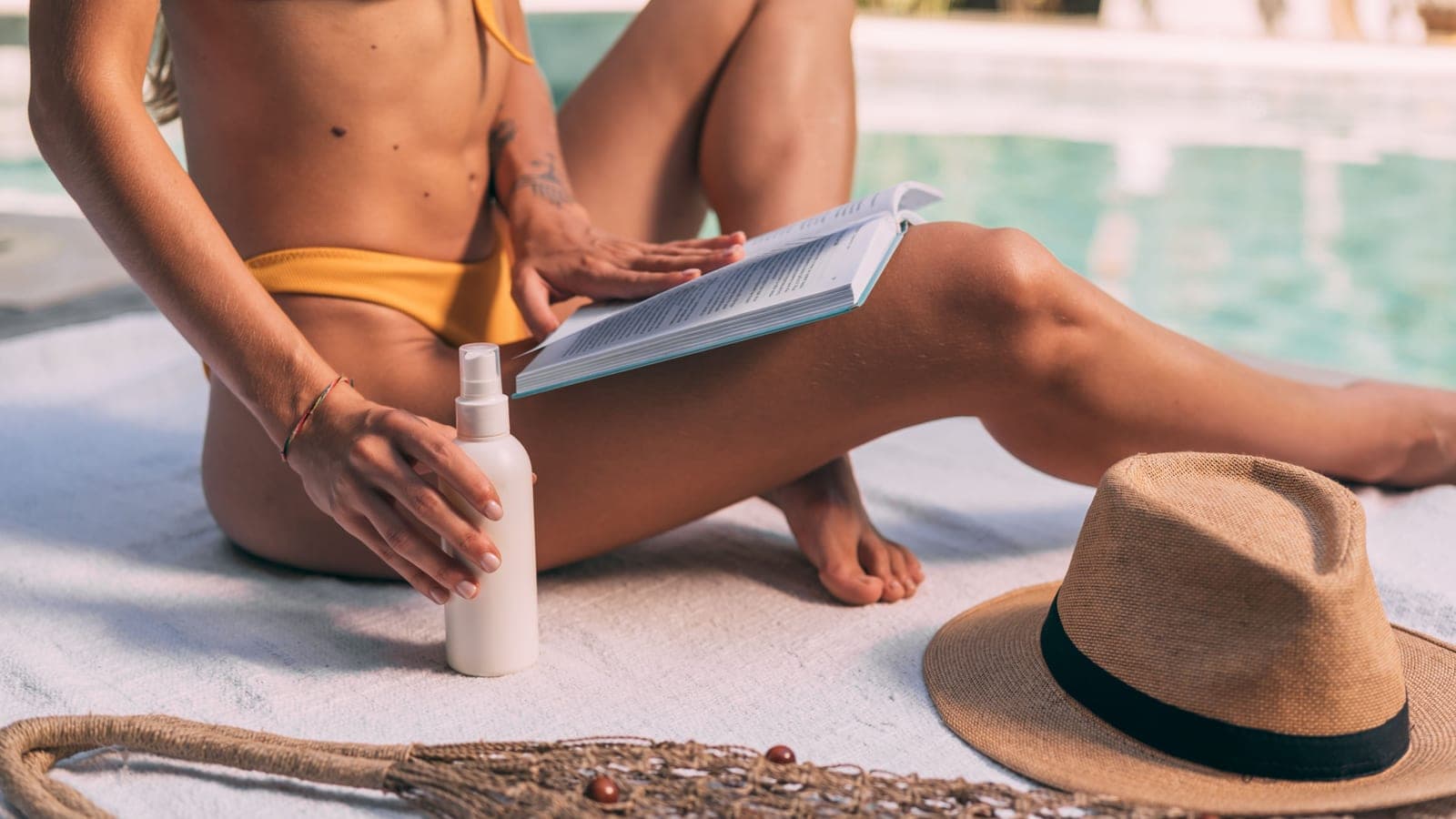
Cloudy From Sunscreen and Swimmers
Body oils, lotion and sunscreen do not filter out easily. Chitosan clarifier and a shock are the pair that clears them.
Top pick
AquaDoc Natural Pool Clarifier, chitosan, 32 oz
Oils and sunscreen