Testing & Chemistry
How to Balance Pool Water
Four readings, corrected in one specific order, with the dose worked out for your volume rather than somebody else's.

We have not handled these products and we do not pretend to have. Here is what we did instead. Links to Amazon earn us a commission at no extra cost to you, and commission never decides a pick — disclosure.
| # | Product | Best for | The spec it turns on | Price |
|---|---|---|---|---|
| 1 | 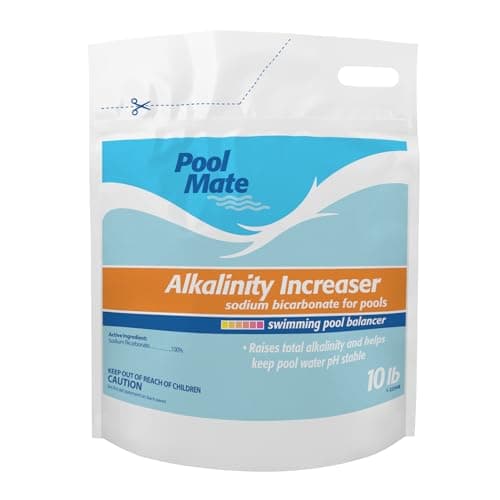 Pool Mate Premium Alkalinity Increaser, 10 lbTop pick100% sodium bicarbonate and it says so, which is the only claim that lets you compute the dose yourself. | Raising total alkalinity | Listing states 100% sodium bicarbonate | |
| 2 | 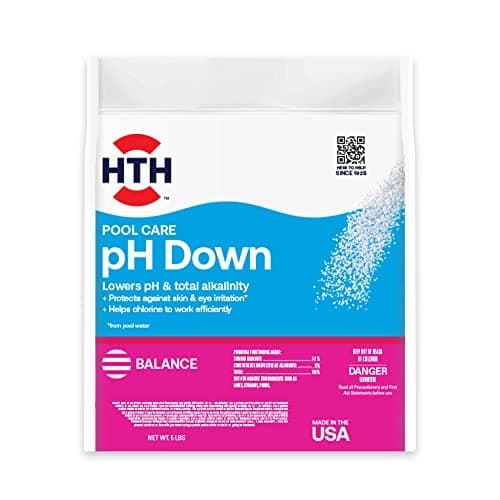 HTH Pool Care pH Down, 5 lbSodium bisulfate with the maker's own target range and timing published, which is more guidance than most balancers give. | Lowering pH | Sodium bisulfate; HTH states a 7.2-7.6 target and a 4-6 hour wait after shocking | |
| 3 | 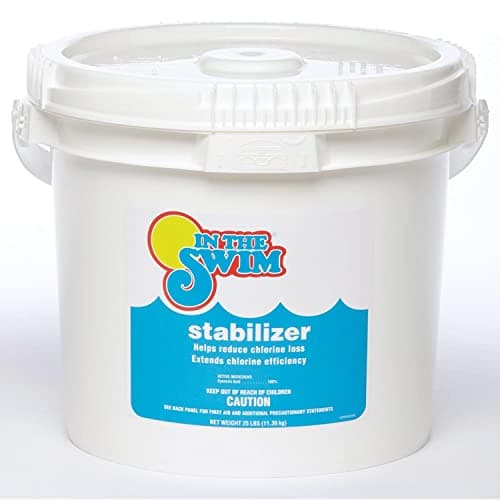 In The Swim Pool Stabilizer, 100% Cyanuric Acid, 25 lb100% cyanuric acid at a purity that lets you compute the dose, for pools whose chlorine source does not supply its own. | Stabilizing a liquid-chlorine or salt pool | 100% cyanuric acid, granular | |
| 4 | 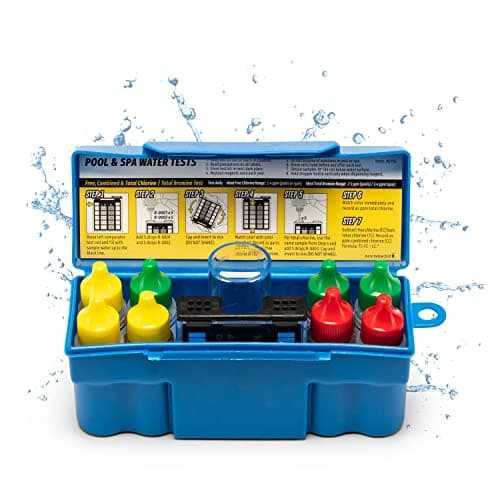 Taylor Technologies K-1004 DPD 6-in-1 Pool Test KitIncludes an acid demand test, which is the only honest way to know how much pH reducer your pool needs. | The acid demand test | DPD kit including acid and base demand titrations | |
| 5 | 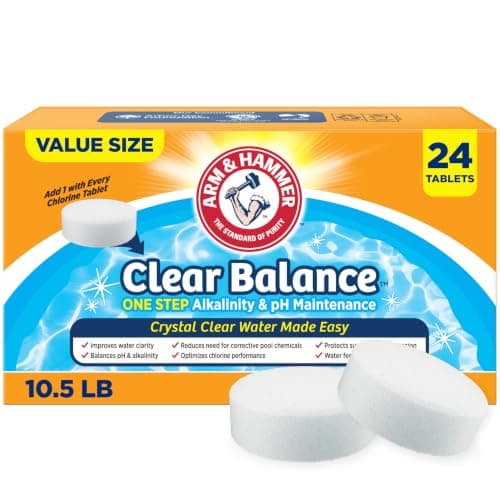 ARM & HAMMER Clear Balance pH Maintenance Tablets, 24 countThe skip. pH and alkalinity move in different directions for different reasons, and one tablet cannot correct both. | Nothing we would recommend it for | Dissolving tablets marketed as one-step pH and alkalinity maintenance |
First, know your volume
Every dose on this site is per gallon, so a wrong volume makes every subsequent number wrong by the same proportion. It takes five minutes with a tape measure.
Step 1: total alkalinity
Target 80 to 120 ppm, per HTH's own Alkalinity Up product page. Alkalinity is a buffer: it resists changes in pH. Low alkalinity is why a pool's pH bounces around and will not stay where you put it, so this correction has to come first or you will make the pH correction twice.
Alkalinity increaser is sodium bicarbonate, and how to raise alkalinity works through the brands, the grocery-aisle alternative and the soda ash mix-up. Every brand sells the same compound, and the only thing worth checking is whether the label admits 100% purity - because that is what lets you compute the dose.
| Pool volume | How much |
|---|---|
| 5,000 gal | 11 oz |
| 10,000 gal | 1.4 lb |
| 15,000 gal | 2.1 lb |
| 20,000 gal | 2.8 lb |
| 25,000 gal | 3.5 lb |
| 30,000 gal | 4.2 lb |
Step 2: pH
Target 7.2 to 7.6, per HTH's pH Down product page. High pH blunts chlorine and clouds water; low pH corrodes surfaces, dissolves metal from heaters and irritates skin - the corrections are on pool pH too high and pool pH too low.
Two practical rules from HTH's own page: broadcast dry acid over the deep end with the pump running and do not pre-dissolve it, and wait four to six hours after shocking before adding acid so the two do not fight each other.
Step 3: cyanuric acid
Calcium hardness sits alongside these, on a longer timescale: it moves slowly, it is the one reading no chemical lowers, and how to raise calcium hardness covers the dose and the 200 to 400 ppm target.
HTH's stabilizer page gives the targets: 30 to 50 ppm on trichlor and dichlor pools, 60 to 80 ppm on saltwater. It also states that stabilizer prevents up to 90% of chlorine loss to sunlight, which is why an unstabilized outdoor pool is a losing proposition.
| Pool volume | How much |
|---|---|
| 5,000 gal | 1.3 lb |
| 10,000 gal | 2.5 lb |
| 15,000 gal | 3.8 lb |
| 20,000 gal | 5 lb |
| 25,000 gal | 6.3 lb |
| 30,000 gal | 7.5 lb |
Under-dose deliberately. Cyanuric acid does not leave the pool except by dilution, so too much is a mistake you fix by draining water. Too little is a mistake you fix by adding more. See cyanuric acid.
Step 4: chlorine
Last, because how much you need depends on the three readings above. HTH states that one 3 inch tablet per 10,000 gallons per week holds free chlorine at 1 to 4 ppm, which is the routine sanitizing case.
For a correction or a shock, the dose tables and the arithmetic are on best pool shock. The ceiling is whatever your product's label states; Michigan's guidance notes that many pool chlorine products carry an NSF-listed maximum application rate of 10 ppm.
Calcium hardness, and why it is last
Roughly 200 to 400 ppm is the range generally worked to. We could not source that figure from a manufacturer's own page, so it is stated here as general industry practice rather than as a cited target - which is a distinction worth making, since everything else on this page has a source.
Low calcium is corrosive and pulls minerals out of plaster and grout. High calcium scales and clouds. It changes very slowly, so it is a seasonal check rather than a weekly one, and the only way down is dilution.
The picks
Top pick - Raising total alkalinity
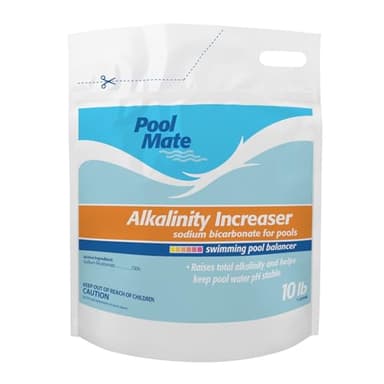
Pool Mate Premium Alkalinity Increaser, 10 lb
100% sodium bicarbonate and it says so, which is the only claim that lets you compute the dose yourself.
The published figure
Listing states 100% sodium bicarbonate
Alkalinity increaser is sodium bicarbonate. Every brand sells the same compound, and the only thing worth checking is whether the label admits it.
Because this one states 100% purity, the arithmetic below applies exactly: 1.4 lb raises 10,000 gallons by 10 ppm.
Raise alkalinity before pH. Alkalinity is what stops pH bouncing, so correcting pH first means correcting it again.
What it does well
- States 100% purity, so the dose is computable
- Sold in a size that matches a real correction
- Cheapest per ppm of the balancers here
What it costs you
- Raises pH slightly as a side effect
- Needs a full circulation cycle before retesting
Skip it if your alkalinity is already above 120 ppm — you need acid, not bicarbonate.
#ad · how this is funded · price as of October 18, 2026
Pick 2 - Lowering pH
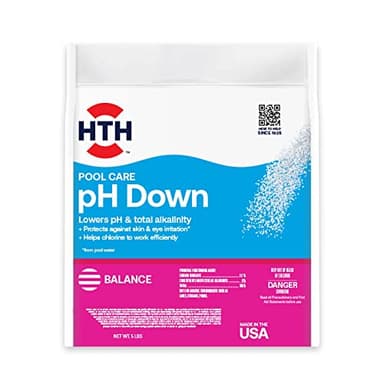
HTH Pool Care pH Down, 5 lb
Sodium bisulfate with the maker's own target range and timing published, which is more guidance than most balancers give.
The published figure
Sodium bisulfate; HTH states a 7.2-7.6 target and a 4-6 hour wait after shocking
HTH's page states the target range as 7.2 to 7.6 and tells you to wait four to six hours after shocking before adding it. Both are the kind of instruction people get wrong and no label usually gives.
How much you need depends on your total alkalinity, not on a chart. That is what an acid demand test measures, and why we recommend a kit that includes one.
Broadcast over the deep end with the pump running, and do not pre-dissolve — that instruction is on the label for a reason.
What it does well
- Maker publishes the target range and the post-shock wait
- Dry acid is far safer to store and handle than muriatic
- Stated safe for vinyl, fiberglass, concrete and saltwater
What it costs you
- Adds sulfate, which accumulates over many seasons
- Dose depends on your alkalinity, so it needs an acid demand test
Skip it if your pH is high because your alkalinity is high. Fix the alkalinity and the pH usually follows.
Pick 3 - Stabilizing a liquid-chlorine or salt pool
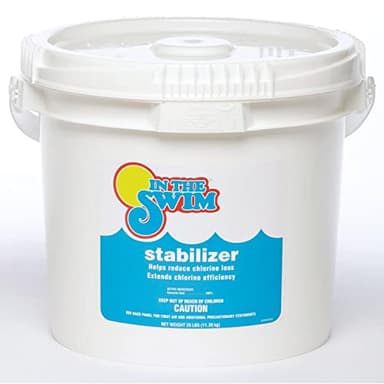
In The Swim Pool Stabilizer, 100% Cyanuric Acid, 25 lb
100% cyanuric acid at a purity that lets you compute the dose, for pools whose chlorine source does not supply its own.
The published figure
100% cyanuric acid, granular
Trichlor tablets and dichlor shock both add cyanuric acid as they dissolve. Liquid chlorine, cal-hypo and salt systems do not, so those pools need it added deliberately.
At 100% purity, 1 lb raises 10,000 gallons by 12 ppm. HTH's own stabilizer page states the useful targets: 30-50 ppm for trichlor and dichlor pools, 60-80 ppm for saltwater.
Cyanuric acid does not leave except by dilution. Adding too much is a mistake you fix by draining water, so under-dose and retest.
What it does well
- 100% purity means the arithmetic is exact
- Protects chlorine from UV loss, which HTH puts at up to 90%
- One correction lasts until you dilute the water
What it costs you
- Dissolves very slowly — 24 to 48 hours before a retest means anything
- Cannot be removed except by draining and refilling
Skip it if you sanitize with trichlor tablets. Those already add stabilizer, and your problem is more likely too much of it.
#ad · how this is funded · price as of October 18, 2026
Pick 4 - The acid demand test
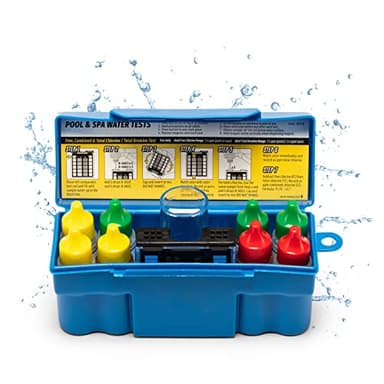
Taylor Technologies K-1004 DPD 6-in-1 Pool Test Kit
Includes an acid demand test, which is the only honest way to know how much pH reducer your pool needs.
The published figure
DPD kit including acid and base demand titrations
How much acid a pool needs to move pH from 8.0 to 7.5 depends on its total alkalinity, and no chart can tell you without knowing it. An acid demand test measures it directly.
That is why this site does not print a pH-down dose table: the number is a property of your water, not of the product, and the test costs a few dollars.
Six parameters rather than nine, so it does not cover cyanuric acid or salt.
What it does well
- Acid and base demand titrations, which most kits omit
- Cheaper than the nine-parameter kits
What it costs you
- No cyanuric acid test
- No salt test
Skip it if you need a cyanuric acid reading — that is a common problem this kit cannot see.
Pick 5 - Nothing we would recommend it for
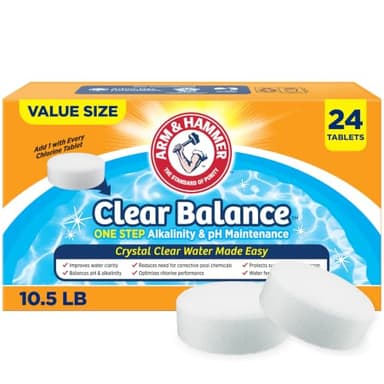
ARM & HAMMER Clear Balance pH Maintenance Tablets, 24 count
The skip. pH and alkalinity move in different directions for different reasons, and one tablet cannot correct both.
The published figure
Dissolving tablets marketed as one-step pH and alkalinity maintenance
Alkalinity is a buffer and pH is a reading. Raising alkalinity nudges pH up; lowering pH pulls alkalinity down. They are coupled, which is exactly why they need separate corrections.
A maintenance tablet can hold a pool that is already balanced. It cannot correct one that is not, and the pools that buy it are usually the second kind.
Buy sodium bicarbonate and dry acid separately. Between them they cost less and they can actually reach a target.
What it does well
- Convenient if the water is already in range
- No measuring
What it costs you
- Cannot correct an out-of-range pool in either direction
- Obscures which parameter you actually moved
Skip it if your alkalinity or pH is currently out of range — which is the reason people go looking for this product.
#ad · how this is funded · price as of October 18, 2026
Questions people actually ask
What order do I add pool chemicals in?
How do I calculate my pool volume?
How much baking soda do I need to raise alkalinity?
How much acid do I need to lower pool pH?
How long should I wait between adding pool chemicals?
Sources
Every figure on this page traces to one of these. Where a number could not be sourced, the page says so rather than estimating.
- HTH Pool Care Alkalinity Up - product page, states the 80-120 ppm total alkalinity target and a 6-8 hour circulation wait
- HTH Pool Care pH Down - product page, sodium bisulfate, states a 7.2-7.6 target and a 4-6 hour wait after shocking
- HTH Pool Care Chlorine Stabilizer - product page, states up to 90% chlorine loss from UV and CYA targets of 30-50 ppm for trichlor and dichlor pools, 60-80 ppm for saltwater
- HTH Pool Care 3" Chlorine Tabs Advanced - product page, states one tablet per 10,000 gallons lasts up to 7 days and holds free chlorine at 1-4 ppm
- Michigan EGLE, Maximum Disinfectant Residuals and Operational Ranges: Guidance for Michigan Licensed Pools (December 2025) - quotes CDC MAHC 5.7.3.1.1.5.0, the EPA FIFRA label rule and the NSF 10 ppm application ceiling
- Skim & Soak methodology - the constants, formulas and worked examples behind every dose on this site
- Pool Mate Premium Alkalinity Increaser, 100% sodium bicarbonate - Amazon listing, read 2026-09-02
- Taylor K-1004 with acid demand test - Amazon listing, read 2026-09-02
Read next
Best test kit
Best Pool Test Kits
Titration kits, color comparators, strips and a photometer compared on precision, speed and what each one cannot see.
Top pick
AquaChek Select Connect 7-Way Test Strips, complete kit
Weekly testing you will actually do
#ad · how this is funded · price as of October 18, 2026
How to Lower Your Pool's Alkalinity
Acid lowers both alkalinity and pH; aeration raises pH alone. Alternating the two is how you separate them.
Top pick
HTH Pool Care pH Down, 5 lb
Lowering pH
Cyanuric Acid: Stabilizer, and Its Limit
How stabilizer works, the targets HTH publishes, and why the only way down is dilution.
Top pick
In The Swim Pool Stabilizer, 100% Cyanuric Acid, 25 lb
Stabilizing a liquid-chlorine or salt pool
#ad · how this is funded · price as of October 18, 2026
Why Is My Pool Cloudy?
Check filtration, then chemistry, then everything else. Two of the six causes get worse if you add a chemical first.