Testing & Chemistry
How to Lower Your Pool's Alkalinity
The one correction with no clean formula, because the chemical that lowers alkalinity lowers pH at the same time.

We have not handled these products and we do not pretend to have. Here is what we did instead. Links to Amazon earn us a commission at no extra cost to you, and commission never decides a pick — disclosure.
| # | Product | Best for | The spec it turns on | Price |
|---|---|---|---|---|
| 1 | 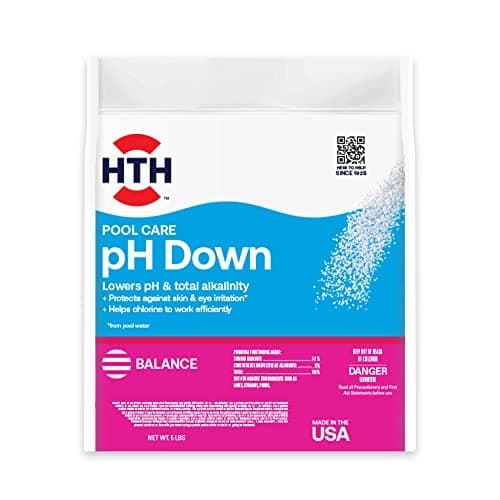 HTH Pool Care pH Down, 5 lbTop pickSodium bisulfate with the maker's own target range and timing published, which is more guidance than most balancers give. | Lowering pH | Sodium bisulfate; HTH states a 7.2-7.6 target and a 4-6 hour wait after shocking | |
| 2 | 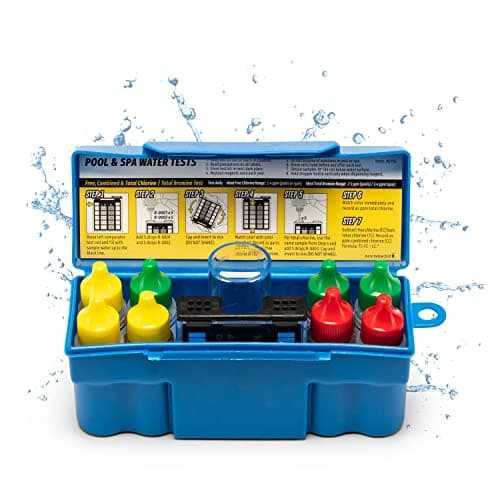 Taylor Technologies K-1004 DPD 6-in-1 Pool Test KitIncludes an acid demand test, which is the only honest way to know how much pH reducer your pool needs. | The acid demand test | DPD kit including acid and base demand titrations | |
| 3 | 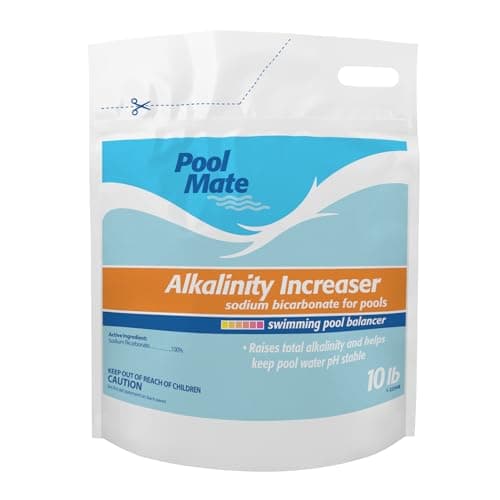 Pool Mate Premium Alkalinity Increaser, 10 lb100% sodium bicarbonate and it says so, which is the only claim that lets you compute the dose yourself. | Raising total alkalinity | Listing states 100% sodium bicarbonate |
Why there is no simple dose table for this
Every other correction on this site has a formula because the target moves in one direction with one chemical. This one does not: the acid that lowers total alkalinity lowers pH at exactly the same time, and usually pushes pH out of range before alkalinity has come far enough.
So the correction is a sequence rather than a dose, and how much acid your specific water needs depends on where alkalinity currently sits - which is what an acid demand test measures.
The aerate-and-repeat method
- **Test both alkalinity and pH, and write them down.** You need the starting point to know whether a cycle worked.
- **Add acid to bring pH to about 7.0 to 7.2.** Do not aim for the middle of the range - you are going to raise pH again deliberately in the next step, and starting low means each cycle moves alkalinity further.
- **Aerate the water.** Point the returns upward to break the surface, run a fountain or a waterfall, or run the spa jets. Aeration drives off dissolved carbon dioxide, which raises pH without touching alkalinity.
- **Retest.** pH will have climbed back toward 7.4 to 7.6; alkalinity will have stayed near where the acid left it.
- **Repeat from step 2** until alkalinity is in the 80 to 120 ppm range that HTH's own Alkalinity Up page gives.
- **Finish by settling pH into 7.2 to 7.6** and leaving it alone for a few days before judging the result.
That is genuinely the method. It takes days rather than an afternoon, and there is no product that shortcuts it - the chemistry does not allow one.
Why aeration works
Total alkalinity in pool water is largely carbonate and bicarbonate. Acid converts some of it to dissolved carbon dioxide, which lowers alkalinity, and lowers pH along the way.
Agitating the surface lets that dissolved carbon dioxide leave the water. As it goes, pH rises - but the alkalinity it took with it does not come back. That asymmetry is the entire mechanism, and it is why pointing your returns up is a chemical intervention rather than a cosmetic one.
Dry acid or muriatic acid?
| Dry acid (sodium bisulfate) | Muriatic acid (hydrochloric) | |
|---|---|---|
| Form | Granular | Liquid, strong fumes |
| Handling | Much safer to store and carry | Requires care, ventilation and protection |
| Side effect | Adds sulfate, which accumulates over seasons | Adds chloride, which is largely inert |
| Speed | Slower to dissolve and act | Immediate |
| Best for | Most residential owners | Large corrections, or where sulfate is already high |
For a residential pool, dry acid is the sensible default. HTH's pH Down page states it is sodium bisulfate, gives 7.2 to 7.6 as the target, and tells you to broadcast over the deep end with the pump running and never to pre-dissolve.
Do not overshoot
Alkalinity below about 80 ppm means pH stops being buffered and starts bouncing on its own, which is a more annoying problem than high alkalinity ever was. Low alkalinity water is also corrosive to plaster, grout and metal.
If you go too far, sodium bicarbonate brings it back - about 1.4 lb per 10 ppm per 10,000 gallons, computed in full on how to balance pool water, with the products and the dosing sequence on how to raise alkalinity.
The picks
Top pick - Lowering pH
HTH Pool Care pH Down, 5 lb
Sodium bisulfate with the maker's own target range and timing published, which is more guidance than most balancers give.
The published figure
Sodium bisulfate; HTH states a 7.2-7.6 target and a 4-6 hour wait after shocking
HTH's page states the target range as 7.2 to 7.6 and tells you to wait four to six hours after shocking before adding it. Both are the kind of instruction people get wrong and no label usually gives.
How much you need depends on your total alkalinity, not on a chart. That is what an acid demand test measures, and why we recommend a kit that includes one.
Broadcast over the deep end with the pump running, and do not pre-dissolve — that instruction is on the label for a reason.
What it does well
- Maker publishes the target range and the post-shock wait
- Dry acid is far safer to store and handle than muriatic
- Stated safe for vinyl, fiberglass, concrete and saltwater
What it costs you
- Adds sulfate, which accumulates over many seasons
- Dose depends on your alkalinity, so it needs an acid demand test
Skip it if your pH is high because your alkalinity is high. Fix the alkalinity and the pH usually follows.
Pick 2 - The acid demand test
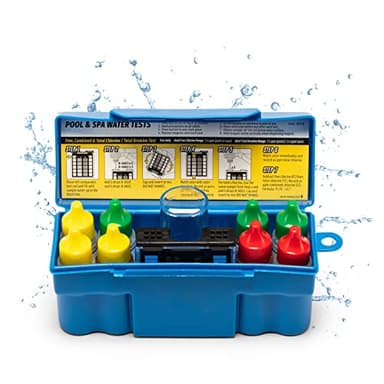
Taylor Technologies K-1004 DPD 6-in-1 Pool Test Kit
Includes an acid demand test, which is the only honest way to know how much pH reducer your pool needs.
The published figure
DPD kit including acid and base demand titrations
How much acid a pool needs to move pH from 8.0 to 7.5 depends on its total alkalinity, and no chart can tell you without knowing it. An acid demand test measures it directly.
That is why this site does not print a pH-down dose table: the number is a property of your water, not of the product, and the test costs a few dollars.
Six parameters rather than nine, so it does not cover cyanuric acid or salt.
What it does well
- Acid and base demand titrations, which most kits omit
- Cheaper than the nine-parameter kits
What it costs you
- No cyanuric acid test
- No salt test
Skip it if you need a cyanuric acid reading — that is a common problem this kit cannot see.
Pick 3 - Raising total alkalinity
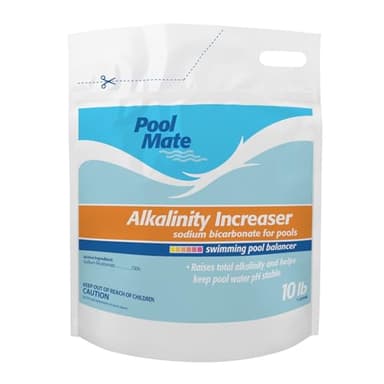
Pool Mate Premium Alkalinity Increaser, 10 lb
100% sodium bicarbonate and it says so, which is the only claim that lets you compute the dose yourself.
The published figure
Listing states 100% sodium bicarbonate
Alkalinity increaser is sodium bicarbonate. Every brand sells the same compound, and the only thing worth checking is whether the label admits it.
Because this one states 100% purity, the arithmetic below applies exactly: 1.4 lb raises 10,000 gallons by 10 ppm.
Raise alkalinity before pH. Alkalinity is what stops pH bouncing, so correcting pH first means correcting it again.
What it does well
- States 100% purity, so the dose is computable
- Sold in a size that matches a real correction
- Cheapest per ppm of the balancers here
What it costs you
- Raises pH slightly as a side effect
- Needs a full circulation cycle before retesting
Skip it if your alkalinity is already above 120 ppm — you need acid, not bicarbonate.
#ad · how this is funded · price as of October 18, 2026
Questions people actually ask
How do I lower my pool's alkalinity?
Does lowering alkalinity lower pH?
How long does it take to lower pool alkalinity?
What is the target alkalinity for a pool?
Sources
Every figure on this page traces to one of these. Where a number could not be sourced, the page says so rather than estimating.
- HTH Pool Care pH Down - product page, sodium bisulfate, states a 7.2-7.6 target and a 4-6 hour wait after shocking
- HTH Pool Care Alkalinity Up - product page, states the 80-120 ppm total alkalinity target and a 6-8 hour circulation wait
- Pool & Hot Tub Alliance - PHTA standards program, the ANSI-accredited consensus standards for residential and public pools
- Skim & Soak methodology - the constants, formulas and worked examples behind every dose on this site
- HTH Pool Care pH Down, sodium bisulfate - Amazon listing, read 2026-09-02
Read next
How to Balance Pool Water
The correction order that stops you doing the same job twice, with computed dose tables and the formulas behind them.
Top pick
Pool Mate Premium Alkalinity Increaser, 10 lb
Raising total alkalinity
#ad · how this is funded · price as of October 18, 2026
Best test kit
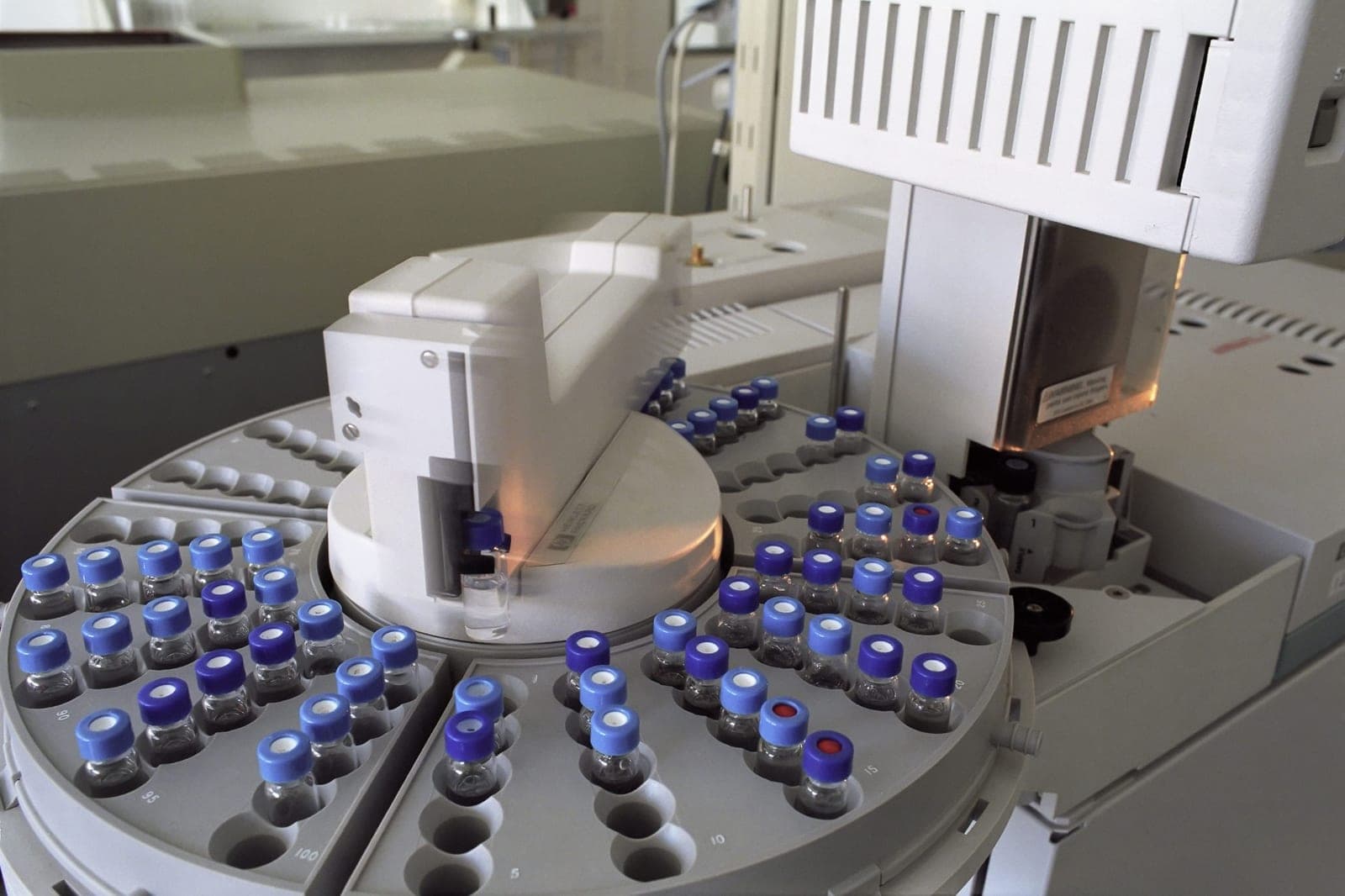
Best Pool Test Kits
Titration kits, color comparators, strips and a photometer compared on precision, speed and what each one cannot see.
Top pick
AquaChek Select Connect 7-Way Test Strips, complete kit
Weekly testing you will actually do
#ad · how this is funded · price as of October 18, 2026
Why Is My Pool Cloudy?
Check filtration, then chemistry, then everything else. Two of the six causes get worse if you add a chemical first.
Cyanuric Acid: Stabilizer, and Its Limit
How stabilizer works, the targets HTH publishes, and why the only way down is dilution.
Top pick
In The Swim Pool Stabilizer, 100% Cyanuric Acid, 25 lb
Stabilizing a liquid-chlorine or salt pool
#ad · how this is funded · price as of October 18, 2026