Testing & Chemistry
How to Raise Your Pool's Alkalinity
One compound fixes this, it costs very little, and the only hard part is not reaching for the other one by mistake.
We have not handled these products and we do not pretend to have. Here is what we did instead. Links to Amazon earn us a commission at no extra cost to you, and commission never decides a pick — disclosure.
| # | Product | Best for | The spec it turns on | Price |
|---|---|---|---|---|
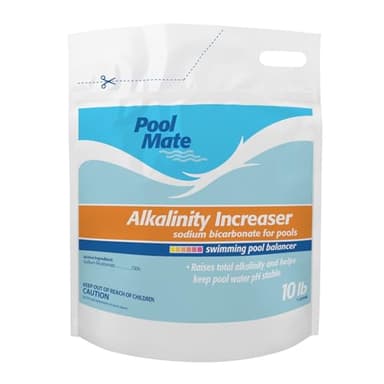
| 1 | 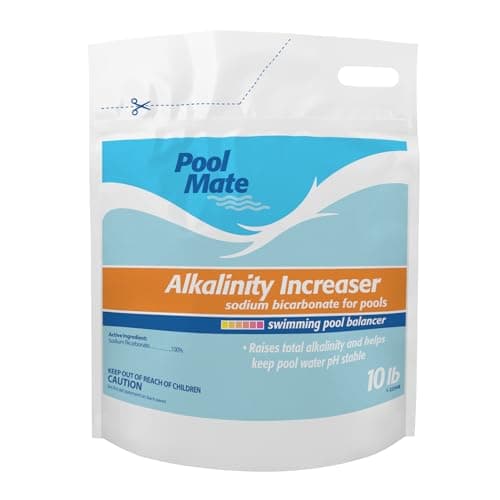 Pool Mate Premium Alkalinity Increaser, 10 lbTop pick100% sodium bicarbonate and it says so, which is the only claim that lets you compute the dose yourself. | Raising total alkalinity | Listing states 100% sodium bicarbonate | |
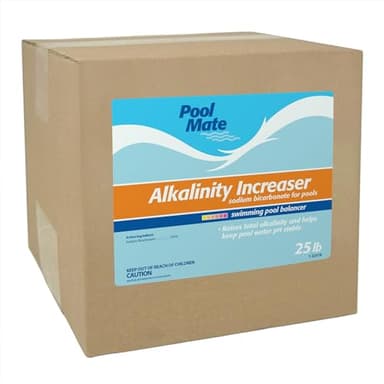
| 2 | 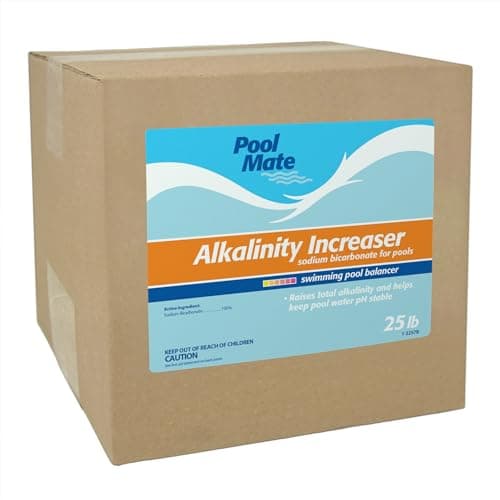 Pool Mate Premium Alkalinity Increaser, 25 lbThe same product as the 10 lb tub in a size that survives a whole season. Check the price per pound before assuming the bigger tub is cheaper - it is not always. | A large pool, or a season of corrections | Listing states 100% sodium bicarbonate and 11 oz per 5,000 gallons per 10 ppm | |
| 3 | 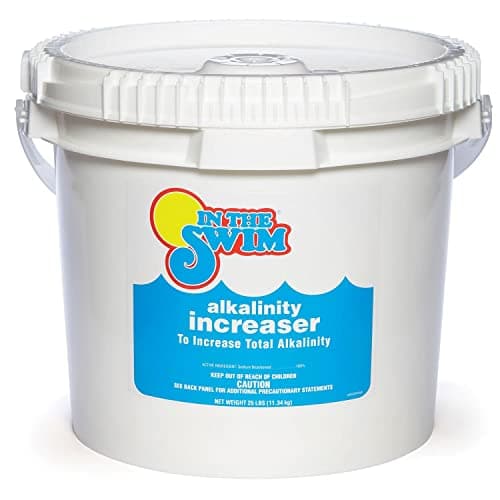 In The Swim Alkalinity Increaser, 25 lbStates its purity, its target range and its dose - the three things a balancer label should say. Its dose runs slightly heavier than the chemistry requires. | A published dose you can check | Listing states 100% sodium bicarbonate, a 90-120 ppm range and 1.5 lb per 10,000 gallons per 10 ppm | |
| 4 | 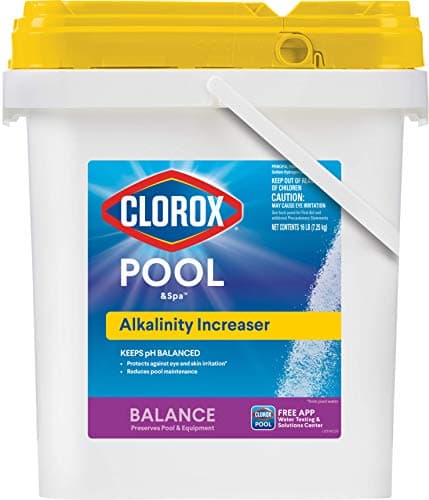 Clorox Pool&Spa Swimming Pool Alkalinity Increaser, 16 lbThe bulk size of a brand most people already recognize. It states less on the label than the others here, which is the whole reason it is not the top pick. | Buying a familiar brand in bulk | Granulated alkalinity increaser; the listing states no purity figure and no dose | |
| 5 | 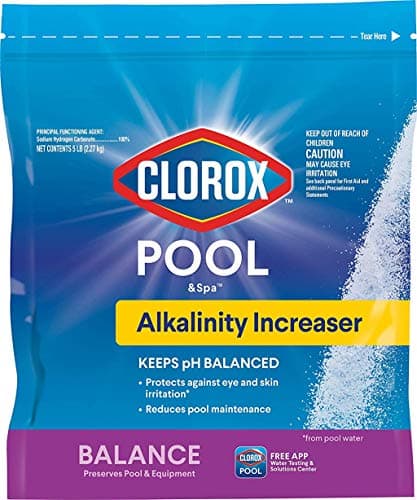 Clorox Pool&Spa Swimming Pool Alkalinity Increaser, 5 lbThe same chemistry in a smaller tub, from a brand you can buy without a trip to a pool store. | A small top-up | Sodium bicarbonate alkalinity increaser, 5 lb | |
| 6 | 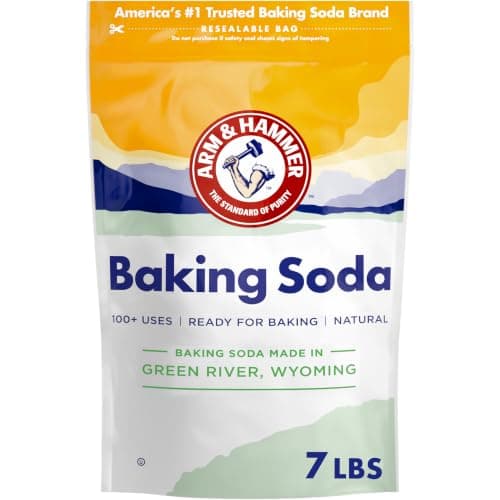 Arm & Hammer Baking Soda, 100% Pure Sodium Bicarbonate, 7 lbChemically identical to any pool alkalinity increaser, and the listing says so. Whether it is the cheaper way to buy bicarbonate depends entirely on the price per pound on the day. | The grocery-aisle route | Listing states 100% pure sodium bicarbonate, USP grade 1, in a 7 lb resealable bag | |
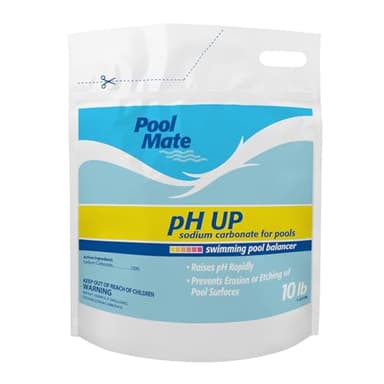
| 7 | 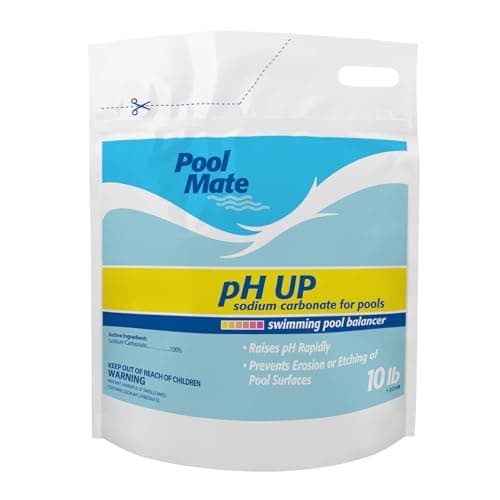 Pool Mate Premium pH Up, 10 lbThe other chemical. Soda ash is for pH, not for alkalinity, and buying it by mistake is the most common way to end up correcting twice. | Low pH when alkalinity is already fine | Listing states 100% sodium carbonate (soda ash) and a 7.2-7.6 pH target | |
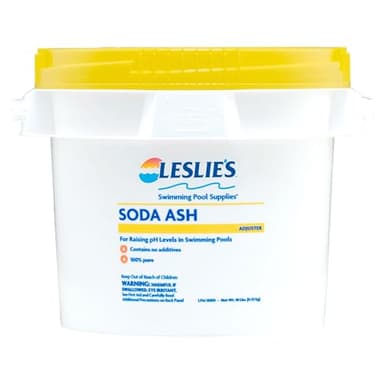
| 8 | 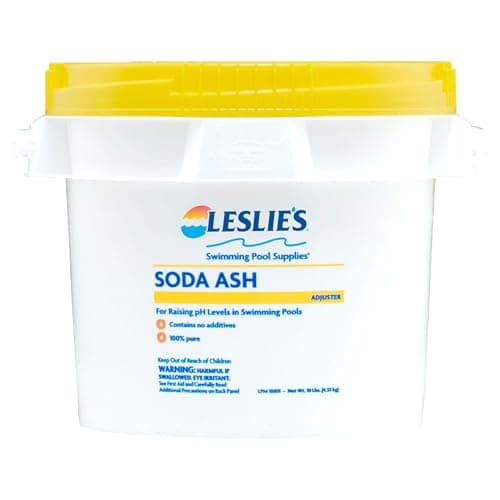 Leslie's Soda Ash pH Up, 100% Sodium Carbonate, 10 lbThe only soda ash here that publishes both a dose and a maximum single addition, which is the number that keeps you from overshooting pH. | Soda ash with a published dose and a cap | Listing states 100% sodium carbonate, 1 lb per 10,000 gallons below pH 7.2, and no more than 4 lb per 10,000 gallons at once | |
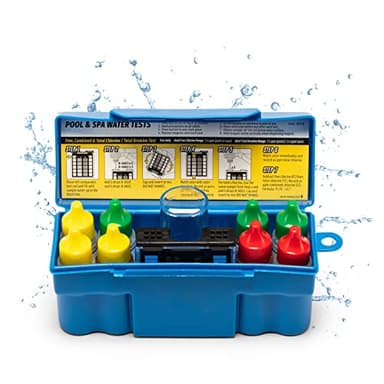
| 9 | 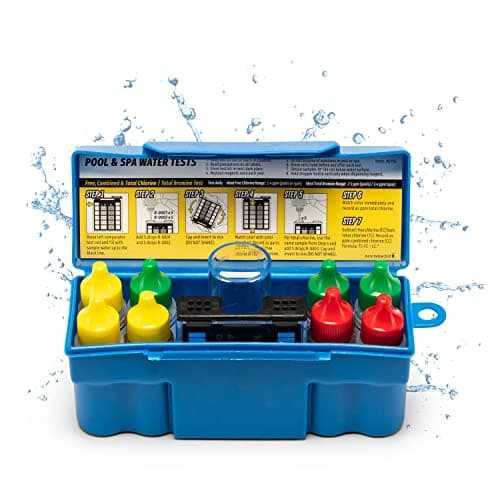 Taylor Technologies K-1004 DPD 6-in-1 Pool Test KitIncludes an acid demand test, which is the only honest way to know how much pH reducer your pool needs. | The acid demand test | DPD kit including acid and base demand titrations |
Low alkalinity is a pH problem you have not had yet
Total alkalinity is the water's buffer: the reserve that absorbs anything trying to push pH around. When it is in range, pH sits where you put it. When it is low, pH stops being anchored - it climbs after aeration, drops after rain, swings when you shock, and no amount of correcting pH directly makes it stay.
That is why alkalinity is corrected before pH, every time. Chasing pH on a pool with low alkalinity means correcting the same reading next week, and the week after.
Water low in alkalinity is also aggressive. It etches plaster, attacks grout, and corrodes the metal inside heaters and fittings - the same argument for fixing it that applies to low pH, because the two travel together.
Two chemicals, and the one that costs you a second correction
Almost every mistake on this subject comes from the same place: two white granular products sold side by side, with similar names, that do different jobs.
| Sodium bicarbonate | Sodium carbonate | |
|---|---|---|
| Sold as | Alkalinity Increaser, Alkalinity Up, baking soda | pH Up, pH Increaser, soda ash |
| Raises | Total alkalinity, with a slight pH nudge | pH sharply, and alkalinity as well |
| Use it when | Alkalinity is below 80 ppm | pH is low and alkalinity already tests in range |
| Published dose | 11 oz per 5,000 gal per 10 ppm (Pool Mate); 1.5 lb per 10,000 gal per 10 ppm (In The Swim) | 1 lb per 10,000 gal below pH 7.2 (Leslie's) |
| Published cap | None stated on any label here | 4 lb per 10,000 gal in one addition (Leslie's) |
The row that matters is the second one. Leslie's states plainly that its soda ash raises pH and total alkalinity together, which sounds like a shortcut and is not: it moves pH much faster than it moves alkalinity, so a pool dosed into range on alkalinity has usually sailed past 7.6 on pH by the time it gets there.
Bicarbonate has the opposite bias. It moves alkalinity, and pH drifts up a little as a side effect. When both readings are low, that side effect is a feature: correct alkalinity first, retest, and pH is often back in range on its own with no second product involved.
How much bicarbonate, and where the figure comes from
The dose is computable because alkalinity increaser is one compound at one purity, and the good labels say so. Pool Mate, In The Swim and Arm & Hammer all state 100% sodium bicarbonate on the listings we read.
| Pool volume | How much |
|---|---|
| 5,000 gal | 11 oz |
| 10,000 gal | 1.4 lb |
| 15,000 gal | 2.1 lb |
| 20,000 gal | 2.8 lb |
| 25,000 gal | 3.5 lb |
| 30,000 gal | 4.2 lb |
Two makers publish their own figure for the same move, and both land within an ounce or two of the arithmetic. That is a rare piece of independent confirmation in pool chemistry, where labels more often publish nothing at all.
| Source | Dose | Difference from the arithmetic |
|---|---|---|
| This site's calculation | 1.40 lb | - |
| Pool Mate label (11 oz per 5,000 gal) | 1.38 lb | About half an ounce lighter |
| In The Swim label (1.5 lb per 10,000 gal) | 1.50 lb | About 7 percent heavier |
In The Swim's margin is sensible rather than wrong. Bicarbonate dissolves slowly, some of it settles before it acts, and a label that doses a little heavy gets more pools into range in one pass. Over a single correction the difference is a few ounces.
How to add it
- Test alkalinity and pH, and write both down. A drop kit reads alkalinity by counting drops to a color change, which is more precise than matching a strip pad against a chart.
- Work out your pool's volume if you do not already know it. The shape formulas are on how to balance pool water, and every dose on this page is wrong without that number.
- Compute the dose from the table above, or read it off your tub's label. Both are fine; they agree to within a couple of ounces.
- Broadcast it over the deep end with the pump running. Bicarbonate dissolves slowly, and a heap of it on the floor is not in the water yet.
- Wait six to eight hours of circulation, per HTH's guidance, then retest. Retesting sooner reads a pool that is still mixing.
- Repeat once if you are still below 80 ppm, then leave pH alone for a day and retest it. It will often have come up on its own.
Baking soda from the grocery aisle
Pool alkalinity increaser is sodium bicarbonate. Grocery baking soda is sodium bicarbonate. Arm & Hammer's 7 lb bag states 100% pure sodium bicarbonate at USP grade 1, with no additives, no cornstarch and no fragrance - which is the same thing the pool tubs state about themselves.
So the choice is a purchasing decision, not a chemistry one. The pool tub gives you a dose figure and a target range on the label; the grocery bag gives you neither, because it is written for baking. If you dose from the arithmetic on this page, that difference does not matter.
When you actually need soda ash
There is one clear case: pH is low, and total alkalinity has already tested in range. Bicarbonate would push alkalinity above 120 ppm to move pH the distance you need, so soda ash is the right tool - and pool pH too low works through that correction, the published dose and the borax question.
Leslie's publishes the most useful numbers here: 1 lb per 10,000 gallons when pH is below 7.2, and no more than 4 lb per 10,000 gallons in a single addition. A stated maximum is unusual on a balancer label and it is the figure worth respecting, because soda ash overshoots easily. Pool Mate's pH Up states 100% sodium carbonate and a 7.2 to 7.6 target, but publishes no cap.
If both readings are low, do not start here. Bicarbonate first, retest, and only then decide whether pH still needs its own correction. If pH is high rather than low, the pool pH too high page covers the six causes and the one that makes it recur.
Why it keeps falling
A pool that needs bicarbonate twice a season is usually being pulled down by something specific, and it is worth naming rather than re-dosing forever.
- Trichlor tablets. They are strongly acidic, so a tablet-fed pool drifts down on both pH and alkalinity all season. That is the running cost nobody prices in - see best chlorine tablets.
- Acid corrections. Every time you add acid to bring pH down, alkalinity comes down with it. If you are fighting high pH monthly, the acid is what is emptying your buffer.
- Dilution. Rain, splash-out and topping up with soft fill water all dilute alkalinity. A pool refilled after a winter drain starts from whatever the tap water gives it.
- Salt chlorination. A salt pool's pH drifts upward structurally, which means regular acid, which means alkalinity heading down - the pattern is on salt water vs chlorine.
What we could not verify
How long any of these take to dissolve fully - no label states it, which is why the six-to-eight hour circulation wait comes from HTH's guidance rather than from a product. No bicarbonate label here publishes a maximum single dose. And the target ranges genuinely disagree between makers, from a 60 ppm floor to a 90 ppm one, which is a reminder that a label is marketing as well as instruction.
The picks
Top pick - Raising total alkalinity
Pool Mate Premium Alkalinity Increaser, 10 lb
100% sodium bicarbonate and it says so, which is the only claim that lets you compute the dose yourself.
The published figure
Listing states 100% sodium bicarbonate
Alkalinity increaser is sodium bicarbonate. Every brand sells the same compound, and the only thing worth checking is whether the label admits it.
Because this one states 100% purity, the arithmetic below applies exactly: 1.4 lb raises 10,000 gallons by 10 ppm.
Raise alkalinity before pH. Alkalinity is what stops pH bouncing, so correcting pH first means correcting it again.
What it does well
- States 100% purity, so the dose is computable
- Sold in a size that matches a real correction
- Cheapest per ppm of the balancers here
What it costs you
- Raises pH slightly as a side effect
- Needs a full circulation cycle before retesting
Skip it if your alkalinity is already above 120 ppm — you need acid, not bicarbonate.
#ad · how this is funded · price as of October 9, 2026
Pick 2 - A large pool, or a season of corrections
Pool Mate Premium Alkalinity Increaser, 25 lb
The same product as the 10 lb tub in a size that survives a whole season. Check the price per pound before assuming the bigger tub is cheaper - it is not always.
The published figure
Listing states 100% sodium bicarbonate and 11 oz per 5,000 gallons per 10 ppm
Pool Mate states 100% sodium bicarbonate and publishes its own dose: 11 ounces raises alkalinity 10 ppm per 5,000 gallons. That works out at 1.38 lb per 10,000 gallons, which is within an ounce of the figure the arithmetic on this page produces.
A 20,000 gallon pool 30 ppm low needs about 8.4 lb in one correction. At that rate a 10 lb tub is a single fix and this one is a season.
Pool Mate states a maintenance range of 60 to 120 ppm on this label, which is wider at the bottom than the 80 to 120 ppm HTH publishes. We use 80 as the floor.
What it does well
- States 100% purity, so the dose is computable
- Publishes its own dose figure, which matches the arithmetic
- One tub covers several corrections on a large pool
What it costs you
- Not always cheaper per pound than the 10 lb tub
- A 25 lb tub is a lot of product to store dry for a small pool
- Raises pH slightly as a side effect, like all bicarbonate
Skip it if your pool is under about 15,000 gallons and your alkalinity is only slightly low. The 10 lb tub is the honest size.
#ad · how this is funded · price as of October 9, 2026
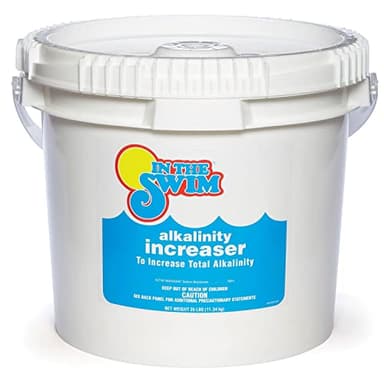
Pick 3 - A published dose you can check
In The Swim Alkalinity Increaser, 25 lb
States its purity, its target range and its dose - the three things a balancer label should say. Its dose runs slightly heavier than the chemistry requires.
The published figure
Listing states 100% sodium bicarbonate, a 90-120 ppm range and 1.5 lb per 10,000 gallons per 10 ppm
In The Swim states 1.5 lb per 10,000 gallons to raise alkalinity by 10 ppm. The chemistry gives 1.40 lb for the same move, so the label is about 7 percent heavy - a sensible margin on a product that dissolves slowly, and not enough to matter over one correction.
It also states a 90 to 120 ppm working range, which is tighter at the bottom than the 80 to 120 ppm HTH publishes and the 60 to 120 ppm on the Pool Mate label. The labels genuinely disagree; 80 to 120 is the overlap we use.
Sold by a pool specialist rather than by Amazon, so check the delivery estimate if you need it this weekend.
What it does well
- States purity, target range and dose
- 25 lb is a season's supply for most pools
- The stated dose is close to the computed figure
What it costs you
- The stated dose is slightly heavier than the chemistry requires
- Its stated 90 ppm floor is higher than other labels give
- Third-party seller, so shipping time varies
Skip it if you need it in a hurry and a local pool store has any tub of bicarbonate on the shelf. They are the same compound.
#ad · how this is funded · price as of October 9, 2026
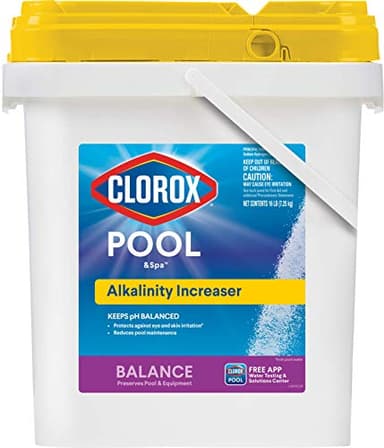
Pick 4 - Buying a familiar brand in bulk
Clorox Pool&Spa Swimming Pool Alkalinity Increaser, 16 lb
The bulk size of a brand most people already recognize. It states less on the label than the others here, which is the whole reason it is not the top pick.
The published figure
Granulated alkalinity increaser; the listing states no purity figure and no dose
Clorox describes a granulated formula for raising total alkalinity and states that it is easy to apply and dissolves easily. What it does not state anywhere on the listing is a purity percentage or a dose figure.
Alkalinity increaser is sodium bicarbonate whoever sells it. The practical consequence of an unstated purity is that you are following the bag's scoop instructions rather than computing a dose from your own test reading.
One of Clorox's own feature bullets on this listing describes the product as a chlorine stabilizer, which it is not. Read the label on the tub rather than the bullet list.
What it does well
- A widely stocked brand, easy to replace mid-season
- 16 lb covers several corrections on a mid-sized pool
- Granulated formula, stated as easy to apply and quick to dissolve
What it costs you
- No purity figure published, so the dose is not computable from the listing
- No dose guidance in the listing text either
- A feature bullet on the listing contradicts the product
Skip it if you want to dose from your own test result. Buy a tub that states 100% sodium bicarbonate instead.
#ad · how this is funded · price as of October 9, 2026
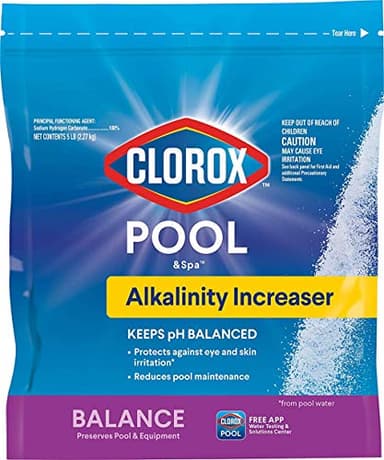
Pick 5 - A small top-up
Clorox Pool&Spa Swimming Pool Alkalinity Increaser, 5 lb
The same chemistry in a smaller tub, from a brand you can buy without a trip to a pool store.
The published figure
Sodium bicarbonate alkalinity increaser, 5 lb
5 lb corrects roughly 35 ppm in a 10,000-gallon pool, which is a typical single top-up rather than a season's supply.
It is the same sodium bicarbonate as the larger tubs. Sizing is the only decision.
Baking soda from a grocery store is chemically identical, and at these quantities the pool product is usually cheaper per pound anyway.
What it does well
- Right size for a single correction
- General retail availability
What it costs you
- More expensive per pound than the 10 lb tubs
- Same slow dissolution as any bicarbonate
Skip it if your alkalinity is far off target — buy the larger tub and save the second trip.
#ad · how this is funded · price as of October 9, 2026
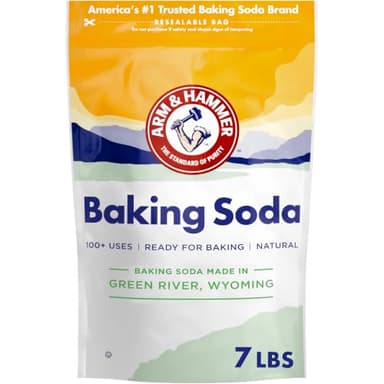
Pick 6 - The grocery-aisle route
Arm & Hammer Baking Soda, 100% Pure Sodium Bicarbonate, 7 lb
Chemically identical to any pool alkalinity increaser, and the listing says so. Whether it is the cheaper way to buy bicarbonate depends entirely on the price per pound on the day.
The published figure
Listing states 100% pure sodium bicarbonate, USP grade 1, in a 7 lb resealable bag
The listing states 100% pure sodium bicarbonate with no additives, no cornstarch and no fragrance, at USP grade 1. That is the same compound sold as pool alkalinity increaser, so it moves total alkalinity by the same arithmetic.
What you give up is the pool dose on the bag. Arm & Hammer's listing is written for baking and cleaning and makes no pool claim at all, so the figure you dose from has to come from the arithmetic on this page.
Grocery bicarbonate is not automatically cheaper. Small bags often cost more per pound than a 10 or 25 lb pool tub, so compare price per pound before deciding this is the frugal option.
What it does well
- States 100% pure sodium bicarbonate, so the dose is computable
- Resealable bag stores well between corrections
- Easy to buy anywhere, including in a hurry
What it costs you
- No pool dose or target range on the label
- Often more expensive per pound than a pool-sized tub
- 7 lb is a small quantity for a large correction
Skip it if your pool is large or far off target. Pool tubs are sold in 10 and 25 lb sizes for a reason.
#ad · how this is funded · price as of October 9, 2026
Pick 7 - Low pH when alkalinity is already fine
Pool Mate Premium pH Up, 10 lb
The other chemical. Soda ash is for pH, not for alkalinity, and buying it by mistake is the most common way to end up correcting twice.
The published figure
Listing states 100% sodium carbonate (soda ash) and a 7.2-7.6 pH target
Pool Mate states 100% sodium carbonate and that it raises pH rapidly, with a 7.2 to 7.6 target. Sodium carbonate is a different compound from the sodium bicarbonate in alkalinity increaser, and it behaves differently in the water.
Reach for it when pH is low and total alkalinity has already tested in range. If both are low, bicarbonate first: raising alkalinity nudges pH up on its own, and you may need no soda ash at all.
It is stated to prevent erosion and etching of pool surfaces, which is what low pH does to plaster over time.
What it does well
- States 100% sodium carbonate
- Raises pH quickly when alkalinity is already in range
- Sold by Amazon, so delivery is predictable
What it costs you
- Wrong product if what you actually need is alkalinity
- Raises pH sharply, so it is easy to overshoot
- Publishes no maximum single dose, unlike the Leslie's label
Skip it if your total alkalinity is below 80 ppm. Fix that first with bicarbonate and retest pH afterwards.
Pick 8 - Soda ash with a published dose and a cap
Leslie's Soda Ash pH Up, 100% Sodium Carbonate, 10 lb
The only soda ash here that publishes both a dose and a maximum single addition, which is the number that keeps you from overshooting pH.
The published figure
Listing states 100% sodium carbonate, 1 lb per 10,000 gallons below pH 7.2, and no more than 4 lb per 10,000 gallons at once
Leslie's states 1 lb per 10,000 gallons when pH is below 7.2, and explicitly caps a single addition at 4 lb per 10,000 gallons. A cap is unusual on a balancer label and it is the more useful of the two figures.
The listing states it raises pH and total alkalinity together, and gives its ranges as 7.4 to 7.6 pH and 80 to 140 ppm alkalinity. That dual effect is exactly why soda ash is the wrong tool when only alkalinity is low - it drags pH up with it.
It is stated to dissolve rapidly, which is worth having: a balancer still sitting on the floor has not moved your reading yet.
What it does well
- States 100% sodium carbonate
- Publishes a dose and a maximum single addition
- Stated to dissolve rapidly
What it costs you
- Raises alkalinity as well as pH, so it is easy to overshoot both
- Third-party seller, so shipping time varies
- Its stated 140 ppm alkalinity ceiling is higher than most labels give
Skip it if your pH is fine and only alkalinity is low. That is a bicarbonate job.
#ad · how this is funded · price as of October 9, 2026
Pick 9 - The acid demand test
Taylor Technologies K-1004 DPD 6-in-1 Pool Test Kit
Includes an acid demand test, which is the only honest way to know how much pH reducer your pool needs.
The published figure
DPD kit including acid and base demand titrations
How much acid a pool needs to move pH from 8.0 to 7.5 depends on its total alkalinity, and no chart can tell you without knowing it. An acid demand test measures it directly.
That is why this site does not print a pH-down dose table: the number is a property of your water, not of the product, and the test costs a few dollars.
Six parameters rather than nine, so it does not cover cyanuric acid or salt.
What it does well
- Acid and base demand titrations, which most kits omit
- Cheaper than the nine-parameter kits
What it costs you
- No cyanuric acid test
- No salt test
Skip it if you need a cyanuric acid reading — that is a common problem this kit cannot see.
Five ways this goes wrong
- Correcting pH first. It will not hold, and you will correct it again once alkalinity is right.
- Reaching for pH Up to fix alkalinity. Soda ash moves pH far faster than alkalinity, so you overshoot pH and still have the original problem.
- Dosing from the scoop without knowing your pool's volume. Every figure on every label is per 10,000 gallons or per 5,000 gallons.
- Retesting an hour later. The reading is of a pool that has not finished mixing, and the second dose that follows is the one that overshoots.
- Overshooting past 120 ppm. Coming back down is the one correction with no clean formula: acid, aeration, repeat.
Questions people actually ask
How much baking soda do I need to raise alkalinity?
Is baking soda the same as pool alkalinity increaser?
What is the difference between soda ash and baking soda for a pool?
Will alkalinity increaser raise my pH too?
How long after adding alkalinity increaser can I retest?
What should my pool's total alkalinity be?
Can I add too much alkalinity increaser?
Sources
Every figure on this page traces to one of these. Where a number could not be sourced, the page says so rather than estimating.
- HTH Pool Care Alkalinity Up - product page, states the 80-120 ppm total alkalinity target and a 6-8 hour circulation wait
- Pool & Hot Tub Alliance - PHTA standards program, the ANSI-accredited consensus standards for residential and public pools
- Skim & Soak methodology - the constants, formulas and worked examples behind every dose on this site
- Pool Mate Premium Alkalinity Increaser, 10 lb, 100% sodium bicarbonate, 11 oz per 5,000 gal per 10 ppm - Amazon listing, read 2026-09-19
- Pool Mate Premium Alkalinity Increaser, 25 lb, 100% sodium bicarbonate - Amazon listing, read 2026-09-19
- In The Swim Alkalinity Increaser, 25 lb, 100% sodium bicarbonate, 1.5 lb per 10,000 gal per 10 ppm - Amazon listing, read 2026-09-19
- Clorox Pool&Spa Alkalinity Increaser, 16 lb - Amazon listing, read 2026-09-19
- Clorox Pool&Spa Alkalinity Increaser, 5 lb - Amazon listing, read 2026-09-19
- Arm & Hammer Baking Soda, 7 lb, 100% pure sodium bicarbonate, USP grade 1 - Amazon listing, read 2026-09-19
- Pool Mate Premium pH Up, 10 lb, 100% sodium carbonate - Amazon listing, read 2026-09-19
- Leslie's Soda Ash pH Up, 10 lb, 100% sodium carbonate, 1 lb per 10,000 gal, 4 lb single-dose cap - Amazon listing, read 2026-09-19
Read next
How to Balance Pool Water
The correction order that stops you doing the same job twice, with computed dose tables and the formulas behind them.
Top pick
Pool Mate Premium Alkalinity Increaser, 10 lb
Raising total alkalinity
#ad · how this is funded · price as of October 9, 2026
How to Lower Your Pool's Alkalinity
Acid lowers both alkalinity and pH; aeration raises pH alone. Alternating the two is how you separate them.
Top pick
HTH Pool Care pH Down, 5 lb
Lowering pH
Pool pH Too High
High pH blunts chlorine and clouds water. Correct it with acid, then find the cause - usually alkalinity or aeration.
Top pick
HTH Pool Care pH Down, 5 lb
Lowering pH
Best test kit
Best Pool Test Kits
Titration kits, color comparators, strips and a photometer compared on precision, speed and what each one cannot see.
Top pick
AquaChek Select Connect 7-Way Test Strips, complete kit
Weekly testing you will actually do
#ad · how this is funded · price as of October 9, 2026
Best for routine sanitizing
Best Pool Chlorine Tablets
Four trichlor tablets compared, with the cyanuric acid and pH arithmetic that decides whether they suit your pool.
Top pick
In The Swim 3 Inch Stabilized Chlorine Tablets, 50 lb
Season-long sanitizing
#ad · how this is funded · price as of October 9, 2026