Robotic Cleaners & Vacuums
Best Robotic Pool Cleaners
Seven models, four published numbers, and no claim that we have run any of them.
We have not handled these products and we do not pretend to have. Here is what we did instead. Links to Amazon earn us a commission at no extra cost to you, and commission never decides a pick — disclosure.
| # | Product | Best for | The spec it turns on | Price |
|---|---|---|---|---|
| 1 | 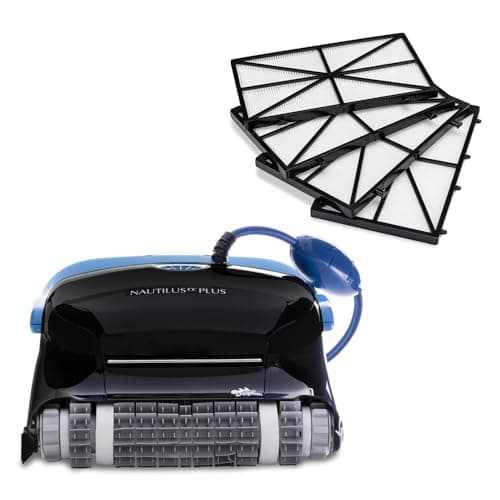 Dolphin Nautilus CC Plus Wi-Fi Robotic Pool VacuumTop pickThe corded default. Mains power means runtime is not a specification you have to think about. | In-ground pools up to 50 ft | Corded, wall-climbing with waterline scrubbing, ultra-fine top-load filter cartridges | |
| 2 | 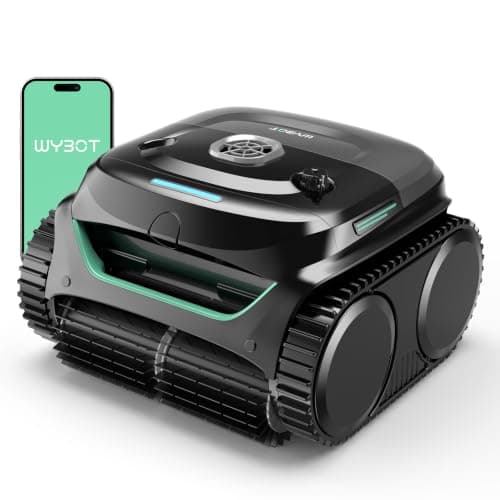 Wybot C2 Cordless Pool Vacuum for In-ground PoolsA 10 micron secondary filter is the finest figure published by any robot here, and it is the one that decides whether the water looks clean afterwards. | Finest published filtration | 180 min runtime, up to 2,152 sq ft per cycle, 10 micron ultra-fine plus 180 micron primary filter | |
| 3 | 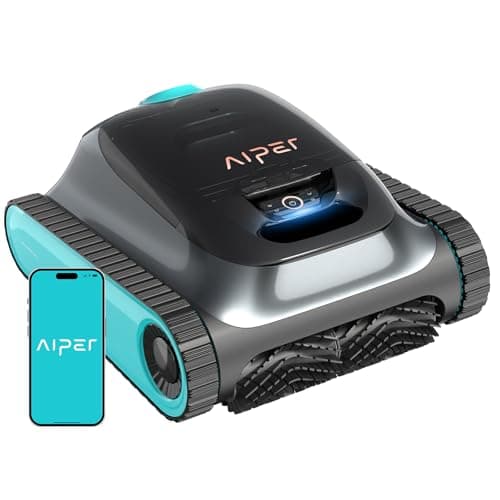 Aiper Scuba S1 Robotic Pool CleanerThe longest published runtime in this roundup, which is the specification that decides whether a cordless unit finishes a large pool in one charge. | Longest published runtime | Up to 270 minutes in Eco mode and up to 180 in Auto, Floor, Wall and Scheduled; floor, wall, waterline and shallow areas above 12 in; 180 plus 3 micron dual filtration | |
| 4 | 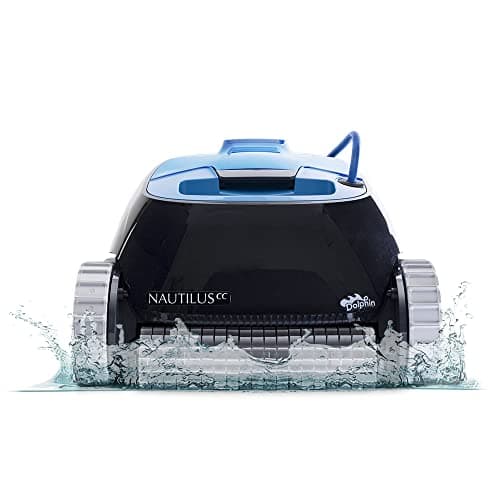 Dolphin Nautilus CC Robotic Pool VacuumThe entry point to the Dolphin line, without the app and without the finer filtration, and still a genuine climbing robot. | The cheapest way into a real robot | Corded, wall-climbing scrubber brush, top-load filter | |
| 5 | 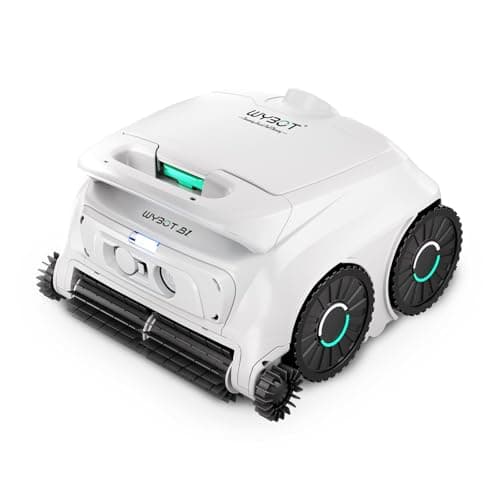 Wybot B1 Cordless Robotic Pool CleanerExplicitly rated for pools up to 1,150 sq ft, which is a more useful number than a runtime figure with no area attached. | Small pools | Rated by the maker for pools up to 1,150 sq ft, 120 min runtime, 180 micron filter | |
| 6 | 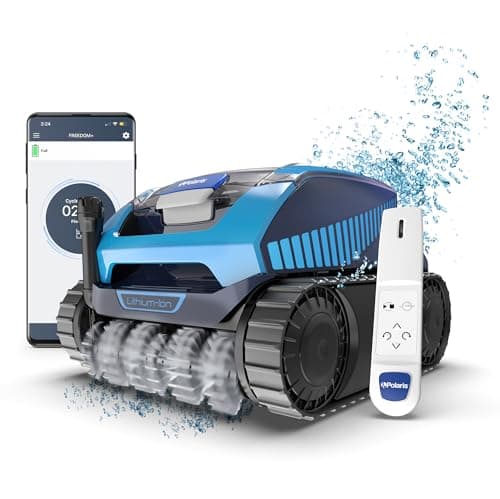 Polaris Freedom Plus Cordless Robotic Pool CleanerPolaris's cordless entry, rated to 50 ft, from the brand that built the pressure-side category it is replacing. | In-ground pools up to 50 ft, cordless | Cordless, rated by the maker for in-ground pools up to 50 ft | |
| 7 | 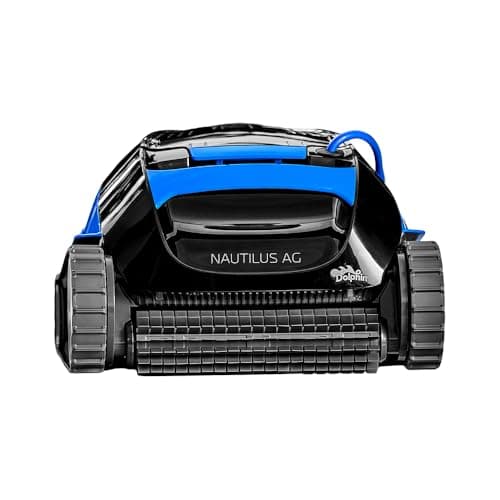 Dolphin Nautilus AG Robotic Pool Vacuum, above groundBuilt for above-ground pools specifically, which matters because a wall-climbing robot on a soft-sided pool is the wrong tool. | Above-ground pools | Purpose-built for above-ground pools, active scrubber brush, top-load filter | |
| 8 | No image Wybot S3 Robotic Pool CleanerDocks, recharges and empties itself, which the maker states cuts hands-on maintenance to roughly once a month. | Hands-off ownership | 3D mapping navigation, auto-docking with self-emptying to a shore bin; maker states around monthly maintenance | Check price#ad |
How we picked, and what we did not do
We have not run any of these robots. There is no test pool here, no fleet, no tank. The sites that rank above us in this category claim forty and seventy tested units respectively, and we are not going to pretend to match that.
What we did was compile the specifications each maker publishes, note where a maker publishes a number its competitors do not, and compute what each one costs to run from its own stated figures. The ranking below is built from that, plus the sizing arithmetic against a real pool.
The picks
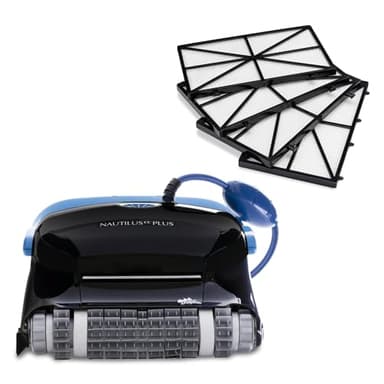
Top pick - In-ground pools up to 50 ft
Dolphin Nautilus CC Plus Wi-Fi Robotic Pool Vacuum
The corded default. Mains power means runtime is not a specification you have to think about.
The published figure
Corded, wall-climbing with waterline scrubbing, ultra-fine top-load filter cartridges
A corded robot has no battery to degrade and no runtime ceiling. That single fact removes the constraint every cordless unit on this page is designed around.
Wall climbing and waterline scrubbing are the two features that separate a robot from a floor vacuum, because the waterline is where the oily scum line forms and no floor-only unit touches it.
The cable is the cost: it tangles, and you have to lift a wet robot with a cord attached out of the pool.
What it does well
- No runtime limit and no battery to degrade
- Climbs walls and scrubs the waterline, not just the floor
- Top-load filter cartridges, which are the easiest kind to empty
What it costs you
- Cable tangling on pools with a lot of steps and features
- Heavier to lift out than a cordless unit
Skip it if your pool has no convenient power outlet, or you want to drop a cleaner in and walk away without managing a cord.
#ad · how this is funded · price as of October 18, 2026
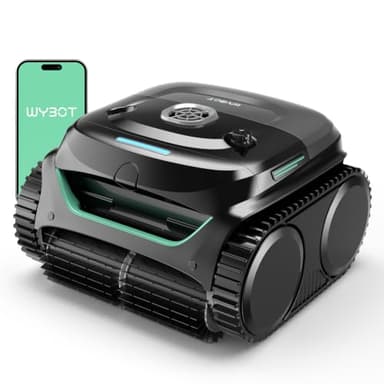
Pick 2 - Finest published filtration
Wybot C2 Cordless Pool Vacuum for In-ground Pools
A 10 micron secondary filter is the finest figure published by any robot here, and it is the one that decides whether the water looks clean afterwards.
The published figure
180 min runtime, up to 2,152 sq ft per cycle, 10 micron ultra-fine plus 180 micron primary filter
Wybot's own product page states a 10 micron ultra-fine filter behind a 180 micron primary. Most robots publish one number or none at all.
That matters because 180 micron catches leaves and grit while fine silt, pollen and dead algae pass straight through and go back into the water. The second stage is what stops that.
Wybot also publishes coverage per cycle — 2,152 sq ft — which is the honest way to compare against your own pool rather than against a runtime number in isolation.
What it does well
- 10 micron secondary filtration, the finest published figure in this roundup
- Coverage published per cycle, not just runtime
- Three brushless motors driving suction
What it costs you
- Fine filtration means more frequent filter cleaning
- 180 minutes is shorter than the longest-running units here
Skip it if your pool only ever collects leaves. You would be paying for filtration you never use.
#ad · how this is funded · price as of October 18, 2026
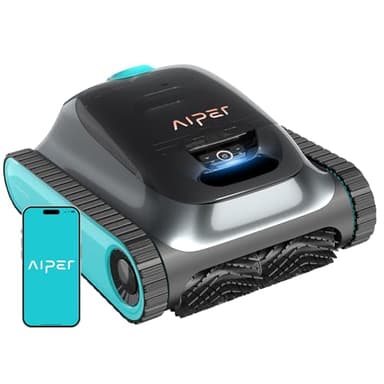
Pick 3 - Longest published runtime
Aiper Scuba S1 Robotic Pool Cleaner
The longest published runtime in this roundup, which is the specification that decides whether a cordless unit finishes a large pool in one charge.
The published figure
Up to 270 minutes in Eco mode and up to 180 in Auto, Floor, Wall and Scheduled; floor, wall, waterline and shallow areas above 12 in; 180 plus 3 micron dual filtration
Runtime is the whole cordless argument. A 90-minute unit in a large pool means two cycles and a recharge between them, which is not what anyone buys a robot for.
270 minutes in Eco mode is at the top of the published range across the brands here. Compare it against your pool's area, not against other robots in the abstract.
Cordless means the battery is the wear part. Every cordless robot on this page will need a battery before it needs anything else.
What it does well
- 270 minutes in Eco mode is the longest published runtime of the cordless units here
- Covers floor, walls and waterline rather than floor only
- No cord to tangle or lift
What it costs you
- Battery is a consumable with a finite cycle life
- Recharge time between cycles on very large pools
Skip it if you have mains power at the pool edge and no cord objection — a corded unit removes the runtime question entirely.
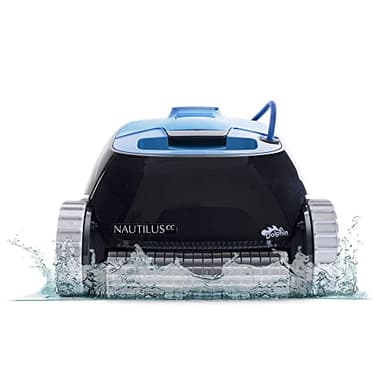
Pick 4 - The cheapest way into a real robot
Dolphin Nautilus CC Robotic Pool Vacuum
The entry point to the Dolphin line, without the app and without the finer filtration, and still a genuine climbing robot.
The published figure
Corded, wall-climbing scrubber brush, top-load filter
The difference between this and the CC Plus is app control and filter fineness, not the drive system or the climbing.
For a simple rectangular pool with no steps to negotiate and no interest in scheduling from a phone, that difference is worth less than the price gap.
Corded, so the same runtime advantage and the same cable nuisance as its more expensive sibling.
What it does well
- Climbs walls, which floor-only cleaners at this price do not
- No battery to degrade
- Top-load filter access
What it costs you
- No app scheduling
- Coarser filtration than the Plus
Skip it if you want scheduling or fine-silt filtration. Those are exactly what the price step buys.
#ad · how this is funded · price as of October 18, 2026
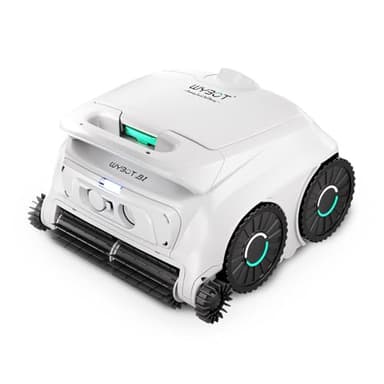
Pick 5 - Small pools
Wybot B1 Cordless Robotic Pool Cleaner
Explicitly rated for pools up to 1,150 sq ft, which is a more useful number than a runtime figure with no area attached.
The published figure
Rated by the maker for pools up to 1,150 sq ft, 120 min runtime, 180 micron filter
Wybot publishes a coverage area for this unit rather than leaving you to infer it. 1,150 sq ft is roughly a 16 x 32 pool including the walls.
Buying a unit rated well above your pool wastes money; buying one rated below it means the cycle ends before the pool is done. The published area is how you avoid both.
180 micron single-stage filtration here, not the dual stage of the C2. That is the trade at this size and price.
What it does well
- Coverage area published, so sizing is a decision rather than a guess
- Compact and light to lift out
- Quad roller brushes for edge work
What it costs you
- Single-stage 180 micron filter passes fine silt
- 120 minutes is short for anything above its rated area
Skip it if your pool is larger than about 1,150 sq ft. The maker's own rating is telling you not to.
#ad · how this is funded · price as of October 18, 2026
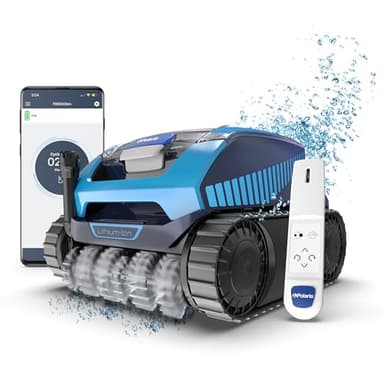
Pick 6 - In-ground pools up to 50 ft, cordless
Polaris Freedom Plus Cordless Robotic Pool Cleaner
Polaris's cordless entry, rated to 50 ft, from the brand that built the pressure-side category it is replacing.
The published figure
Cordless, rated by the maker for in-ground pools up to 50 ft
Polaris spent decades on pressure-side cleaners that ran off a booster pump. Freedom Plus is the company's answer to the cordless robots that made that category obsolete for most owners.
A 50 ft length rating is a straightforward sizing figure: measure the long axis of your pool and compare.
Polaris parts and dealer support are widely available in a way that the newer direct-to-consumer brands are not, which matters more in year three than year one.
What it does well
- Length rating published in a directly checkable form
- Long-established dealer and parts network
- No booster pump, unlike the brand's pressure-side range
What it costs you
- Fewer published filtration and coverage specs than the Wybot units
- Cordless battery is still the wear part
Skip it if your pool is longer than 50 ft. The maker's rating is the limit, not a suggestion.
#ad · how this is funded · price as of October 18, 2026
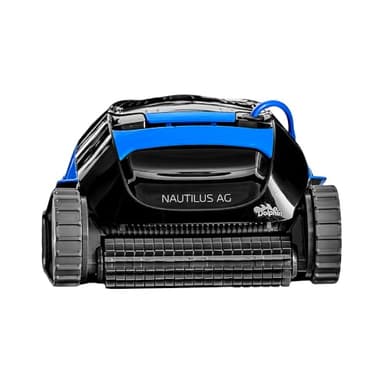
Pick 7 - Above-ground pools
Dolphin Nautilus AG Robotic Pool Vacuum, above ground
Built for above-ground pools specifically, which matters because a wall-climbing robot on a soft-sided pool is the wrong tool.
The published figure
Purpose-built for above-ground pools, active scrubber brush, top-load filter
Above-ground pools have flat floors, shallow uniform depth and walls that a climbing robot has no business climbing. A unit designed for them is simpler and cheaper for good reasons.
Buying an in-ground robot for an above-ground pool means paying for climbing you cannot use and, on a soft-sided pool, do not want.
Top-load filter access is the same convenience as the rest of the Dolphin line.
What it does well
- Designed around the actual geometry of an above-ground pool
- Cheaper than the in-ground units for the same brand quality
- No battery to degrade
What it costs you
- Will not climb walls, by design
- Corded
Skip it if you own an in-ground pool — you would be giving up the wall and waterline cleaning.
#ad · how this is funded · price as of October 18, 2026
Pick 8 - Hands-off ownership
Wybot S3 Robotic Pool Cleaner
Docks, recharges and empties itself, which the maker states cuts hands-on maintenance to roughly once a month.
The published figure
3D mapping navigation, auto-docking with self-emptying to a shore bin; maker states around monthly maintenance
Every other robot here is a device you carry to the pool, drop in, retrieve and empty. This one docks and empties into a shore-based bin, which changes the ownership model rather than the cleaning.
Wybot's own page describes 3D mapping on the first run and route planning from that map on later runs, plus a 10 L self-emptying debris bin.
That is a lot of mechanism to go wrong, and it is the most expensive item on this page. Both facts are the same fact.
What it does well
- Self-docking and self-emptying, so the routine chore mostly disappears
- Maps the pool rather than running a fixed pattern
- Largest debris capacity here at 10 L
What it costs you
- The most complex and most expensive unit in this roundup
- Requires shore-side space for the dock
Skip it if you are happy to lift a robot out once a week. That habit is what this price premium replaces.
Corded against cordless, honestly
| Corded | Cordless | |
|---|---|---|
| Runtime limit | None | Published, 90-270 min depending on model |
| Wear part | Brushes and impeller | The battery, before anything else |
| Setup | Find an outlet; manage the cable | Drop it in |
| Retrieval | Lift a wet robot with a cord attached | Lift a wet robot |
| Long pools | Needs a cable longer than the pool - Polaris publishes 70 ft on a 60 ft rating | Needs coverage to match |
| Cost in year 4 | Brushes | A replacement battery, if one is still sold |
Filtration is the spec people ignore
A 180 micron filter catches leaves, grit and insects. Silt, pollen, fine dead algae and the dust that settles after a storm all pass straight through and go back into the water - so the pool is leaf-free and still hazy.
Wybot publishes a 10 micron ultra-fine filter behind a 180 micron primary on the C2, and Aiper publishes 3 micron on the Scuba V3 and, per its 2026 listing, on the Scuba S1 - see the Aiper range. Most makers publish one number or none. If your complaint about your pool is haze rather than leaves, this is the specification to buy on.
The cost is maintenance: finer filtration means more frequent cleaning, because the filter fills faster with material it is now catching.
Debris capacity decides whether it survives autumn
A robot with a full bin is a robot pushing debris around. On a leaf-heavy pool, capacity matters more than runtime and more than filtration, because the cycle effectively ends when the bin fills regardless of how long the battery lasts.
Very few makers publish bin volume. Wybot states 10 L on the self-emptying S3, which is the outlier here in both directions - it is the largest published capacity and the most complex machine on the page.
What we would skip
A pressure-side cleaner, unless your pool already has the booster pump plumbed in. It is cheap to buy and expensive to install, and the retrofit costs more than the difference between it and a robot - plus a second pump's electricity on every cycle. See robot vs manual vacuum for the full comparison.
We would also skip any robot whose listing publishes a mode count and a marketing name but no coverage area, no micron rating and no debris capacity. In a category where several makers publish all three, silence on all three is a choice.
Sizing your pool in one calculation
Questions people actually ask
What is the best robotic pool cleaner?
How do I choose the right size robotic pool cleaner?
Do robotic pool cleaners really work?
What micron rating do I need in a pool robot?
Is a cordless robotic pool cleaner better than a corded one?
Sources
Every figure on this page traces to one of these. Where a number could not be sourced, the page says so rather than estimating.
- WYBOT C2 - maker's product page, 180 minute runtime, up to 2,152 sq ft per cycle, 10 micron ultra-fine plus 180 micron primary filtration
- WYBOT B1 - maker's product page, rated for pools up to 1,150 sq ft with 120 minutes of runtime and 180 micron filtration
- WYBOT S2 - maker's product page, up to 210 minutes of runtime and coverage up to 3,230 sq ft
- WYBOT S3 - maker's product page, 3D mapping navigation, auto-docking and a 10 L self-emptying debris bin
- Skim & Soak methodology - the constants, formulas and worked examples behind every dose on this site
- Dolphin Nautilus CC Plus Wi-Fi Robotic Pool Vacuum - Amazon listing, read 2026-09-02
- Aiper Scuba S1, 270 min Eco runtime - Amazon listing, read 2026-10-03
- Wybot C2 Cordless Pool Vacuum - Amazon listing, read 2026-10-03
Read next

Are Robotic Pool Cleaners Worth It?
The payback case, worked from hours saved and electricity used, plus the two situations where a robot is the wrong purchase.
Top pick
Dolphin Nautilus CC Plus Wi-Fi Robotic Pool Vacuum
In-ground pools up to 50 ft
#ad · how this is funded · price as of October 18, 2026
What a Robotic Pool Cleaner Costs to Run
Electricity per cycle and per season, computed from published power draw, plus the consumables that cost more than the power does.
Top pick
Dolphin Nautilus CC Plus Wi-Fi Robotic Pool Vacuum
In-ground pools up to 50 ft
#ad · how this is funded · price as of October 18, 2026
Dolphin vs Polaris
Dolphin's robot-only range against Polaris's pressure-side heritage and cordless present, and which suits your plumbing.
Top pick
Dolphin Nautilus CC Plus Wi-Fi Robotic Pool Vacuum
In-ground pools up to 50 ft
#ad · how this is funded · price as of October 18, 2026
Choosing a Robot by Pool Type
Above-ground, vinyl, fiberglass and gunite each change which robot specs matter and which are irrelevant.
Top pick
Dolphin Nautilus AG Robotic Pool Vacuum, above ground
Above-ground pools
#ad · how this is funded · price as of October 18, 2026