Robotic Cleaners & Vacuums
Are Robotic Pool Cleaners Worth It?
For some pools, obviously. For others, obviously not. Here is the calculation that tells you which one you have.

We have not handled these products and we do not pretend to have. Here is what we did instead. Links to Amazon earn us a commission at no extra cost to you, and commission never decides a pick — disclosure.
| # | Product | Best for | The spec it turns on | Price |
|---|---|---|---|---|
| 1 | 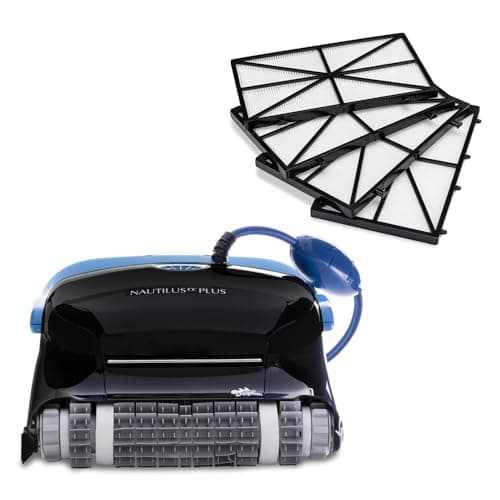 Dolphin Nautilus CC Plus Wi-Fi Robotic Pool VacuumTop pickThe corded default. Mains power means runtime is not a specification you have to think about. | In-ground pools up to 50 ft | Corded, wall-climbing with waterline scrubbing, ultra-fine top-load filter cartridges | |
| 2 | 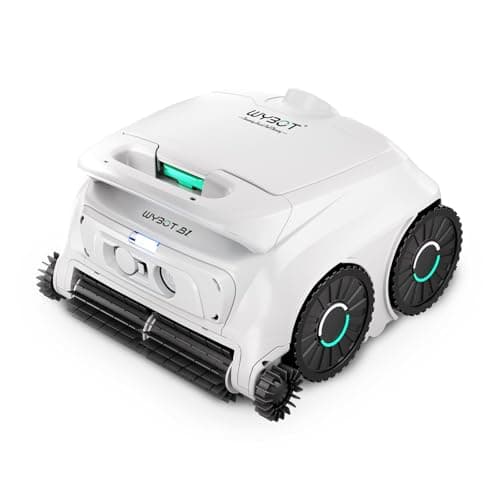 Wybot B1 Cordless Robotic Pool CleanerExplicitly rated for pools up to 1,150 sq ft, which is a more useful number than a runtime figure with no area attached. | Small pools | Rated by the maker for pools up to 1,150 sq ft, 120 min runtime, 180 micron filter | |
| 3 | 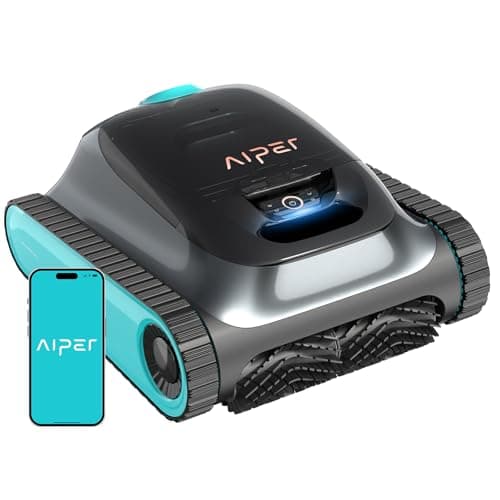 Aiper Scuba S1 Robotic Pool CleanerThe longest published runtime in this roundup, which is the specification that decides whether a cordless unit finishes a large pool in one charge. | Longest published runtime | Up to 270 minutes in Eco mode and up to 180 in Auto, Floor, Wall and Scheduled; floor, wall, waterline and shallow areas above 12 in; 180 plus 3 micron dual filtration |
Start with what you actually do now
The honest way to answer this is not a feature comparison. It is to write down how much time you currently spend, and what you currently do not do at all.
- How many times a week do you vacuum, and how long does each session take?
- How many months a year does that happen?
- Do you brush the walls? Do you clean the waterline? Be honest - most people do neither.
- How often do you clean the filter, and would less debris going through it change that?
What it costs to own, beyond the purchase
| Cost | How predictable | Notes |
|---|---|---|
| Electricity | Very - it is arithmetic | Computed in full on cost to run |
| Filter cartridges or bags | Predictable | Consumable. Finer filtration means more frequent replacement. |
| Brushes and tracks | Every few seasons | Wear items on any brand |
| Battery (cordless only) | The big one | Finite cycle life, and availability depends on the brand still supporting the model |
| Repairs out of warranty | Unpredictable | Wybot publishes a 2-year warranty on the S2 and 1 year on the B1; check what yours states |
What it saves that is not time
- **Filter load.** A robot filters independently, so the debris it collects never reaches your sand or cartridge. Fewer backwashes means less water and less media wear.
- **Chemistry.** Debris removed is chlorine demand removed, and organic matter on the floor is phosphate waiting to happen.
- **Circulation.** Several thousand gallons per hour of extra movement helps distribute chemistry into the corners the returns never reach.
- **The walls and waterline you are not currently cleaning.** This is the honest big one for most owners - it is not time saved, it is a job that starts getting done.
When the answer is genuinely no
- **A small above-ground pool.** If a full vacuum takes ten minutes, a robot is buying convenience rather than time, and the entry-level units aimed at these pools are the ones with the least capability.
- **A pool whose real problem is chemistry.** A robot will not fix cloudy water, will not fix algae and will not fix a filter that is not filtering. If your complaint is how the water looks rather than what is on the floor, spend the money on testing first.
- **A pool with a genuinely severe leaf load.** A robot with a small canister on a pool under mature trees fills mid-cycle and stops. A leaf net over the winter cover plus a jet vacuum is a better answer for that pool.
- **A pool you swim in twice a season.** The maths is about frequency of use, and a rarely used pool rarely gets dirty enough to justify it.
If you are buying one
Size it against your pool's coverage area rather than its runtime, check the filtration micron rating against whether your complaint is debris or haze, and check the debris capacity if you have trees. Those three checks are on best robotic pool cleaners, with the models that publish the figures.
The picks
Top pick - In-ground pools up to 50 ft
Dolphin Nautilus CC Plus Wi-Fi Robotic Pool Vacuum
The corded default. Mains power means runtime is not a specification you have to think about.
The published figure
Corded, wall-climbing with waterline scrubbing, ultra-fine top-load filter cartridges
A corded robot has no battery to degrade and no runtime ceiling. That single fact removes the constraint every cordless unit on this page is designed around.
Wall climbing and waterline scrubbing are the two features that separate a robot from a floor vacuum, because the waterline is where the oily scum line forms and no floor-only unit touches it.
The cable is the cost: it tangles, and you have to lift a wet robot with a cord attached out of the pool.
What it does well
- No runtime limit and no battery to degrade
- Climbs walls and scrubs the waterline, not just the floor
- Top-load filter cartridges, which are the easiest kind to empty
What it costs you
- Cable tangling on pools with a lot of steps and features
- Heavier to lift out than a cordless unit
Skip it if your pool has no convenient power outlet, or you want to drop a cleaner in and walk away without managing a cord.
#ad · how this is funded · price as of October 18, 2026
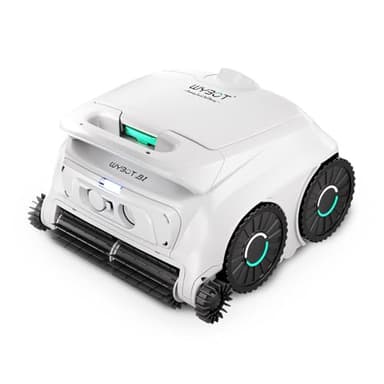
Pick 2 - Small pools
Wybot B1 Cordless Robotic Pool Cleaner
Explicitly rated for pools up to 1,150 sq ft, which is a more useful number than a runtime figure with no area attached.
The published figure
Rated by the maker for pools up to 1,150 sq ft, 120 min runtime, 180 micron filter
Wybot publishes a coverage area for this unit rather than leaving you to infer it. 1,150 sq ft is roughly a 16 x 32 pool including the walls.
Buying a unit rated well above your pool wastes money; buying one rated below it means the cycle ends before the pool is done. The published area is how you avoid both.
180 micron single-stage filtration here, not the dual stage of the C2. That is the trade at this size and price.
What it does well
- Coverage area published, so sizing is a decision rather than a guess
- Compact and light to lift out
- Quad roller brushes for edge work
What it costs you
- Single-stage 180 micron filter passes fine silt
- 120 minutes is short for anything above its rated area
Skip it if your pool is larger than about 1,150 sq ft. The maker's own rating is telling you not to.
#ad · how this is funded · price as of October 18, 2026
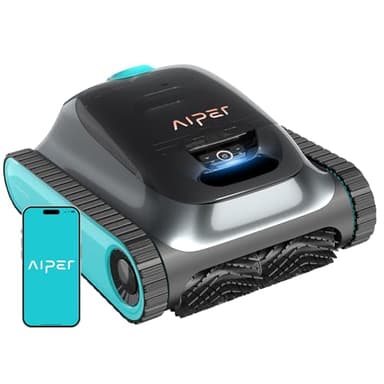
Pick 3 - Longest published runtime
Aiper Scuba S1 Robotic Pool Cleaner
The longest published runtime in this roundup, which is the specification that decides whether a cordless unit finishes a large pool in one charge.
The published figure
Up to 270 minutes in Eco mode and up to 180 in Auto, Floor, Wall and Scheduled; floor, wall, waterline and shallow areas above 12 in; 180 plus 3 micron dual filtration
Runtime is the whole cordless argument. A 90-minute unit in a large pool means two cycles and a recharge between them, which is not what anyone buys a robot for.
270 minutes in Eco mode is at the top of the published range across the brands here. Compare it against your pool's area, not against other robots in the abstract.
Cordless means the battery is the wear part. Every cordless robot on this page will need a battery before it needs anything else.
What it does well
- 270 minutes in Eco mode is the longest published runtime of the cordless units here
- Covers floor, walls and waterline rather than floor only
- No cord to tangle or lift
What it costs you
- Battery is a consumable with a finite cycle life
- Recharge time between cycles on very large pools
Skip it if you have mains power at the pool edge and no cord objection — a corded unit removes the runtime question entirely.
Questions people actually ask
Are robotic pool cleaners worth the money?
How much time does a robotic pool cleaner save?
Do robotic pool cleaners reduce chemical use?
Will a robot replace my pool filter?
Sources
Every figure on this page traces to one of these. Where a number could not be sourced, the page says so rather than estimating.
- WYBOT S2 - maker's product page, up to 210 minutes of runtime and coverage up to 3,230 sq ft
- WYBOT B1 - maker's product page, rated for pools up to 1,150 sq ft with 120 minutes of runtime and 180 micron filtration
- WYBOT C2 - maker's product page, 180 minute runtime, up to 2,152 sq ft per cycle, 10 micron ultra-fine plus 180 micron primary filtration
- Skim & Soak methodology - the constants, formulas and worked examples behind every dose on this site
Read next
What a Robotic Pool Cleaner Costs to Run
Electricity per cycle and per season, computed from published power draw, plus the consumables that cost more than the power does.
Top pick
Dolphin Nautilus CC Plus Wi-Fi Robotic Pool Vacuum
In-ground pools up to 50 ft
#ad · how this is funded · price as of October 18, 2026
Best robotic cleaner
Best Robotic Pool Cleaners
Corded and cordless robots compared on coverage per cycle, micron rating and runtime, with the sizing rule that decides it.
Top pick
Dolphin Nautilus CC Plus Wi-Fi Robotic Pool Vacuum
In-ground pools up to 50 ft
#ad · how this is funded · price as of October 18, 2026
Robot vs Manual Pool Vacuum
Manual, suction-side, pressure-side and robotic compared on cost, filter load and what each one actually cleans.
Top pick
POOLWHALE Pool Vacuum Head and 36 ft Hose Kit
The complete manual kit
How Long Do Robotic Pool Cleaners Last?
What wears out and when, why the battery is the real lifespan limit, and the maintenance that genuinely extends it.
Top pick
Dolphin Nautilus CC Plus Wi-Fi Robotic Pool Vacuum
In-ground pools up to 50 ft
#ad · how this is funded · price as of October 18, 2026