Green Water & Algae
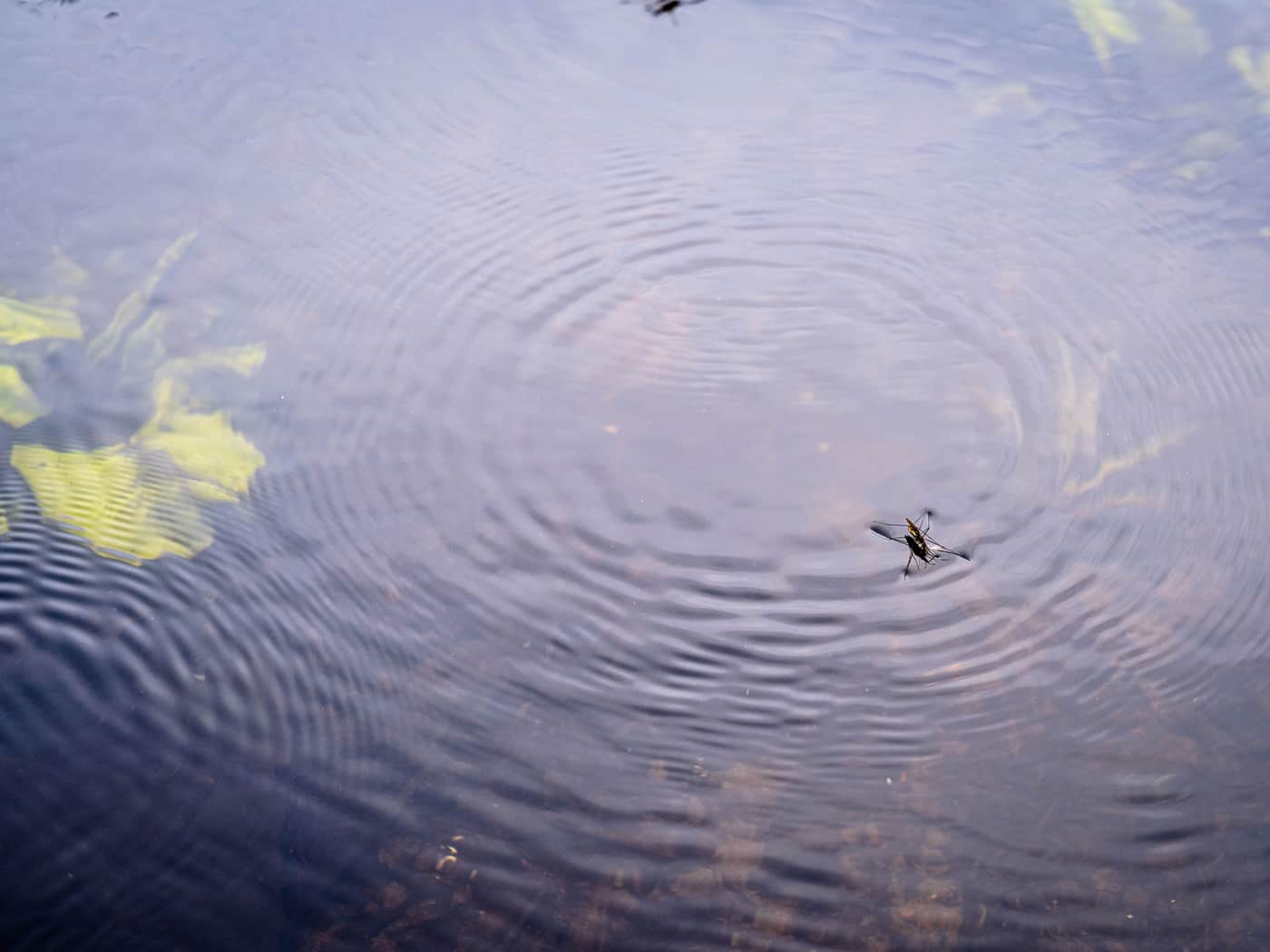
Water Bugs in a Pool
They are not the problem. They are the symptom, and the thing they came for is already in your water.
We have not handled these products and we do not pretend to have. Here is what we did instead. Links to Amazon earn us a commission at no extra cost to you, and commission never decides a pick — disclosure.
| # | Product | Best for | The spec it turns on | Price |
|---|---|---|---|---|
| 1 | 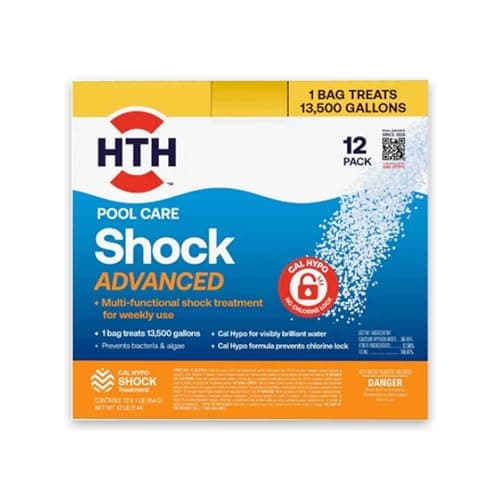 HTH Pool Care Shock Advanced, cal hypo, 12 packTop pickPre-measured bags sized to the weekly dose, from the only maker in this list that publishes its target ranges on the product page. | Weekly maintenance shocking | Calcium hypochlorite in pre-measured 1 lb bags; adds no cyanuric acid | |
| 2 | 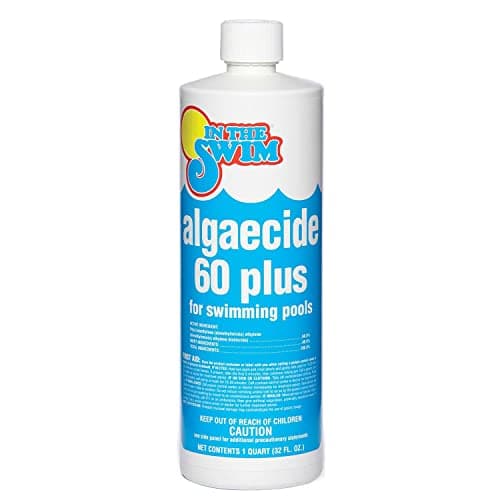 In The Swim Algaecide 60 Plus, 1 quartPolyquat at 60% concentration and no copper, which is the combination that prevents algae without the stain risk. | Prevention without staining | 60% polyquaternium, non-metallic, non-foaming | |
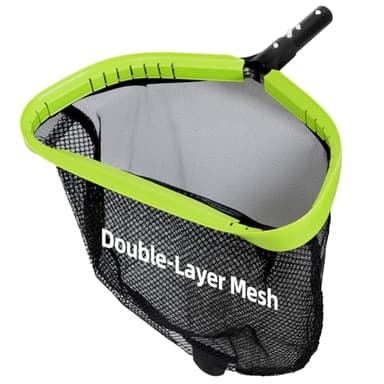
| 3 | 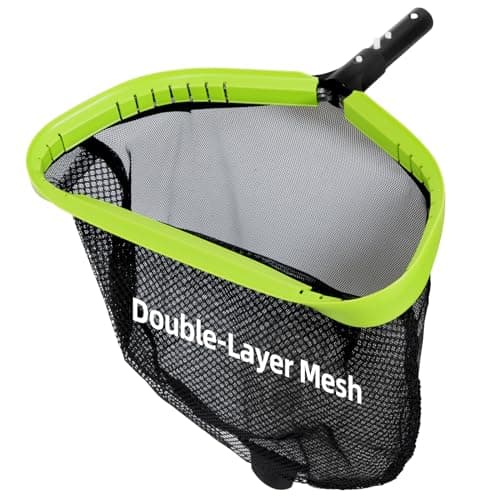 Sepetrel Professional Pool Leaf Skimmer Net, double-layer deep bagDouble-layer mesh catches the pollen and fine grit that a single coarse net drives straight through. | Fine debris and pollen | Double-layer mesh on a reinforced frame | |
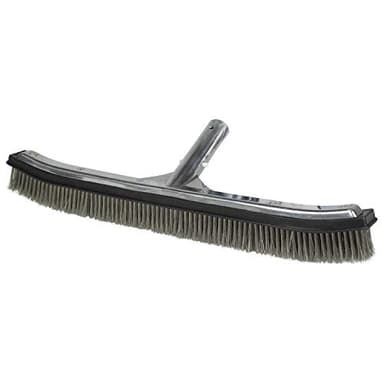
| 4 | 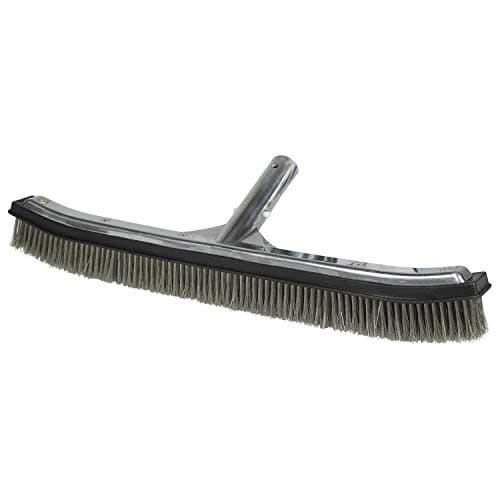 Poolmaster 18-Inch Stainless Steel Pool Algae BrushStainless bristles on a concrete pool are the step that makes the shock work, and the cheapest item in any of these roundups. | Brushing before you shock | 18 in stainless steel bristles on an aluminum back, for gunite and concrete | |
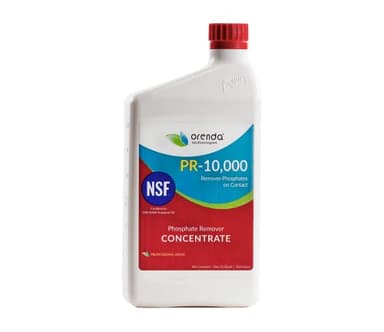
| 5 | 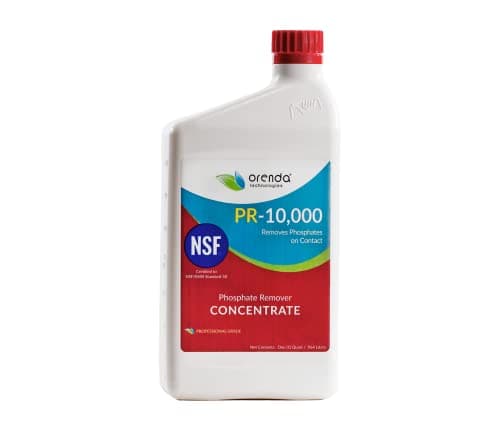 Orenda PR-10000 Phosphate Remover Concentrate, 1 quartA concentrate aimed at pools with a measured phosphate problem, not a weekly maintenance additive. | High phosphate readings | Lanthanum-based phosphate remover concentrate |
Identify which bug you have
Two insects account for nearly every 'bugs in my pool' complaint, and telling them apart matters because one bites and the other does not.
| Water boatman | Backswimmer | |
|---|---|---|
| Swims | Right side up | Upside down, on its back |
| Eats | Algae and organic debris | Other insects - including water boatmen |
| Bites | No | Yes, and it stings |
| Why it is here | Your pool is growing algae | Your pool is growing water boatmen |
| Numbers | Often dozens to hundreds | Usually a handful |
| Clears when | The algae is gone | The boatmen are gone |
The order matters. Boatmen arrive first because there is something to eat. Backswimmers arrive second because the boatmen are something to eat. Clear the algae and the chain collapses from the bottom.
Why they are here at all
Water boatmen fly. They find water, land on it, and stay if there is algae to eat. A pool that has been sitting with low chlorine - after a storm, during a holiday, or under a cover that was not properly closed - is exactly the habitat they are looking for.
That makes them useful, in a way. A sudden population of water boatmen is an early warning that your pool is growing algae you may not have noticed yet, often on shaded walls or behind the ladder rather than in the open water.
If the water is visibly green, start on how to clear a green pool fast instead - the bugs will resolve as part of that job.
The sequence that clears them
- Test first. Free chlorine, pH and cyanuric acid. A pool growing enough algae to feed insects usually has chlorine at or near zero, and the dose tables assume a measured starting point.
- Brush every surface, including the waterline, the steps and behind the ladder. Algae that is attached is protected; brushing puts it into the water where chlorine can reach it.
- Shock the pool to a proper dose for its volume. Calcium hypochlorite adds no cyanuric acid, which matters if your stabilizer is already high - the dose arithmetic is on best pool shock.
- Run the filter continuously, not on a timer, until the water clears. Dead algae has to leave through the filter rather than settling back down.
- Net the surface daily while this is happening. Boatmen come up for air and are easy to lift off in numbers with a deep bag net.
- Add a polyquat algaecide once free chlorine has dropped back toward normal. High chlorine destroys most algaecides, so adding it with the shock wastes it.
- Keep chlorine in range for a fortnight afterwards. Bugs return to water that goes back to being habitable.
Most pools clear in two to four days on that sequence. The bugs leave before the water finishes clearing, because the food goes first.
Do not put insecticide in a pool
This is the one thing worth stating plainly. Nothing sold to kill insects is labeled for use in a swimming pool. Pool water is a body of water people swim in, and a surfactant or pyrethroid poured into it does not filter out on a cycle.
The dish-soap advice circulating online is the same mistake in a cheaper bottle. Soap breaks the surface tension so boatmen cannot stay afloat, which does kill some of them - and it also foams the pool, coats the filter media and leaves a surfactant your sanitizer then has to oxidize. Foam in a pool covers what that costs to undo.
The insects are not the target. The algae is, and the products for that job are labeled for pools and dosed by volume.
Stopping them coming back
- Hold a free chlorine residual. A pool with chlorine in range does not grow the algae that feeds them, which ends the problem at the source.
- Brush weekly, especially shaded walls. Algae starts where the water moves least and the sun reaches least.
- Run the pump long enough. Under-circulation is the most common reason a chemically correct pool still grows algae in corners.
- Test phosphate if blooms keep recurring. Phosphate is algae food, and above the threshold on are phosphates bad for your pool it makes algae harder to hold down.
- Cover the pool when it is out of use for a stretch. A covered pool is a pool that flying insects do not land on.
The picks
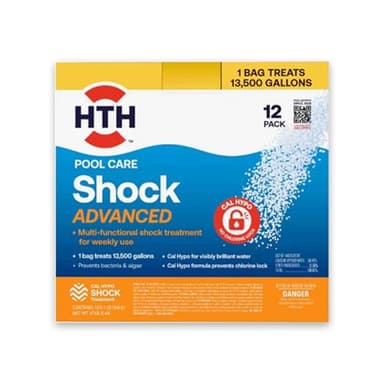
Top pick - Weekly maintenance shocking
HTH Pool Care Shock Advanced, cal hypo, 12 pack
Pre-measured bags sized to the weekly dose, from the only maker in this list that publishes its target ranges on the product page.
The published figure
Calcium hypochlorite in pre-measured 1 lb bags; adds no cyanuric acid
HTH sells this in 1 lb sachets designed around a 10,000-gallon weekly dose, which is exactly the case where a packet is more convenient than a scale.
HTH's own product page states the Shock Advanced line is cal hypo and adds no cyanuric acid, which is what makes weekly shocking sustainable — dichlor at the same cadence walks CYA up until chlorine stops working.
Packets are the wrong format for an emergency. A bloom in a 15,000-gallon pool wants a weighed dose, not four bags and a guess.
What it does well
- Pre-measured for a weekly maintenance dose, no scale needed
- Cal hypo, so weekly use does not accumulate cyanuric acid
- HTH publishes its target chemistry ranges, which most brands do not
What it costs you
- Packet sizing forces rounding on any pool that is not near 10,000 gallons
- Costs more per pound of available chlorine than a loose bucket
Skip it if you are clearing a bloom rather than maintaining — buy loose granular and weigh it.
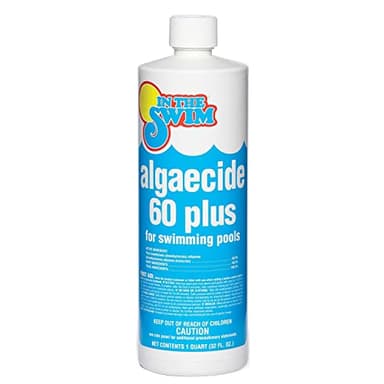
Pick 2 - Prevention without staining
In The Swim Algaecide 60 Plus, 1 quart
Polyquat at 60% concentration and no copper, which is the combination that prevents algae without the stain risk.
The published figure
60% polyquaternium, non-metallic, non-foaming
Polyquat 60 is the concentration standard in this category. Products sold as 'algaecide 30' or 'algaecide 10' are the same chemistry diluted, so compare the price per unit of active ingredient rather than per bottle.
No metal means no staining, which matters on plaster and on any pool that has already had a copper problem. It is also why polyquat is the algaecide to use after you have shocked, rather than during.
Polyquat prevents. It is not a rescue product for a pool that is already green, and any label that implies otherwise is selling you the wrong step.
What it does well
- 60% active, the top of the retail concentration range
- No copper, so no staining and no green-hair complaints
- Non-foaming, unlike the cheaper quat algaecides
What it costs you
- Prevention only — will not clear an existing bloom on its own
- Chlorine consumes it, so a heavy shock burns off what you just added
Skip it if your pool is green right now. Shock first, vacuum the dead algae, then dose polyquat to stop it coming back.
#ad · how this is funded · price as of October 9, 2026
Pick 3 - Fine debris and pollen
Sepetrel Professional Pool Leaf Skimmer Net, double-layer deep bag
Double-layer mesh catches the pollen and fine grit that a single coarse net drives straight through.
The published figure
Double-layer mesh on a reinforced frame
Mesh aperture is the specification nobody prints and everybody needs. A coarse net passes pollen, fine sand and the dust that settles after a storm, so you sweep the pool and it still looks dirty.
A double-layer construction is the retail workaround: a coarse outer layer takes the leaves, a finer inner layer takes what the outer layer misses.
The trade is drag. A fine net pushes more water and is heavier to sweep, so this is a spring-pollen and post-storm tool rather than an everyday one.
What it does well
- Catches pollen and fine grit a single-layer net passes through
- Reinforced frame rather than molded plastic
What it costs you
- Noticeably more drag through the water than a coarse net
- Fine mesh clogs and needs rinsing more often
Skip it if your problem is leaves rather than dust. Fine mesh is slower for no benefit in that job.
#ad · how this is funded · price as of October 9, 2026
Pick 4 - Brushing before you shock
Poolmaster 18-Inch Stainless Steel Pool Algae Brush
Stainless bristles on a concrete pool are the step that makes the shock work, and the cheapest item in any of these roundups.
The published figure
18 in stainless steel bristles on an aluminum back, for gunite and concrete
Algae clinging to a wall is physically shielded from the water around it. Brushing first is what lets chlorine reach the organism rather than the film over it, which is why every ordered fix on this site puts brushing before dosing.
Stainless is for gunite, concrete and plaster only. On a vinyl liner it will cut, and you want nylon.
18 inches is the size that covers a wall in a reasonable number of passes without being unmanageable on a long pole.
What it does well
- Makes the shock dose that follows it materially more effective
- Costs a fraction of any chemical it improves
- Aluminum back resists the corrosion that kills cheap brushes
What it costs you
- Stainless bristles will damage a vinyl liner
- Pole sold separately
Skip it if your pool has a vinyl liner. Buy the nylon equivalent instead.
#ad · how this is funded · price as of October 9, 2026
Pick 5 - High phosphate readings
Orenda PR-10000 Phosphate Remover Concentrate, 1 quart
A concentrate aimed at pools with a measured phosphate problem, not a weekly maintenance additive.
The published figure
Lanthanum-based phosphate remover concentrate
Phosphate is algae food. It arrives with leaves, lawn fertilizer run-off and some source water, and chlorine does not remove it.
HTH's own phosphate remover page states that levels above 200-500 ppb make algae harder to control, which is the threshold worth testing against before buying anything.
A remover binds phosphate into a precipitate the filter catches, so the water clouds briefly and then clears. That is the product working.
What it does well
- Concentrated, so a quart treats a large volume
- Attacks the fuel supply rather than the symptom
What it costs you
- Clouds the water while it works
- Pointless without a phosphate test to justify it
- Loads the filter with precipitate
Skip it if you have not measured phosphate. Treating a level you have not seen is how people spend money on a problem they do not have.
#ad · how this is funded · price as of October 9, 2026
What about the ones already in there
Netting is the whole answer. Boatmen surface for air regularly, so a deep-bag net run across the surface twice a day removes them in useful numbers while the shock works on what brought them.
A fine-mesh net matters here more than usual - a coarse leaf rake lets small insects straight through. The skimmer helps too, and a sock over the basket catches what makes it that far, at the cost of flow you should watch.
Do not expect the filter to do it. Insects that are alive swim away from the skimmer, which is why netting outperforms circulation for the first few days.
Questions people actually ask
How do I get rid of water bugs in my pool?
What are the little black bugs swimming in my pool?
Do water bugs in a pool bite?
Can I use bug spray or dish soap in my pool?
Will shocking the pool kill water bugs?
Why do water bugs keep coming back?
Sources
Every figure on this page traces to one of these. Where a number could not be sourced, the page says so rather than estimating.
- HTH Pool Care Shock Advanced - product page, cal hypo formulation, adds no cyanuric acid
- Skim & Soak methodology - the constants, formulas and worked examples behind every dose on this site
- HTH Pool Care Shock Advanced, calcium hypochlorite, 1 lb bags, 12 pack - Amazon listing, read 2026-09-27
- In The Swim Algaecide 60 Plus, 60% polyquaternium, non-metallic and non-foaming - Amazon listing, read 2026-09-27
Read next
How to Clear a Green Pool Fast
The ordered fix: test, brush, shock by weight, filter continuously, clear the dead algae, then prevent the next one.
Best for green water
Best Pool Shock for a Green Pool
Cal-hypo, dichlor and liquid chlorine compared on available chlorine percentage, with a dose table computed for six pool sizes.
Top pick
In The Swim Pool Shock, 68% Cal-Hypo Granular, 25 lb
Clearing an algae bloom
#ad · how this is funded · price as of October 9, 2026
Best for prevention
Best Pool Algaecide
Polyquat 60 for prevention without staining, copper for black algae, and one combination product we would not buy.
Top pick
In The Swim Algaecide 60 Plus, 1 quart
Prevention without staining
#ad · how this is funded · price as of October 9, 2026
Are Phosphates Bad for Your Pool?
Phosphate is algae food. The threshold that matters, where it comes from, and why a test comes before a remover.
Top pick
HTH Pool Care Phosphate Remover, 1 quart
A published dose rate
#ad · how this is funded · price as of October 9, 2026
Best for daily skimming
Best Pool Skimmers, Nets and Poles
Flat nets for the daily pass, deep rakes for a real drop, and the pole spec that decides whether it survives a season.
Top pick
POOLWHALE Pool Leaf Skimmer, flat surface net
Daily surface skimming
#ad · how this is funded · price as of October 9, 2026