Cloudy Water
Foam in a Pool
Bubbles that last are not an air leak. They are something in the water holding them together.

We have not handled these products and we do not pretend to have. Here is what we did instead. Links to Amazon earn us a commission at no extra cost to you, and commission never decides a pick — disclosure.
| # | Product | Best for | The spec it turns on | Price |
|---|---|---|---|---|
| 1 | 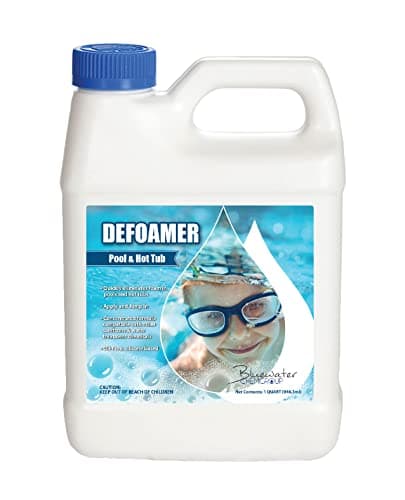 Bluewater Chemgroup Pool Defoamer, 32 ozTop pickA cosmetic fix, and honest about being one. It drops the foam in minutes and does nothing about whatever put it there. | Knocking foam down before guests arrive | Listing states a silicone-based concentrate that dissipates foam in pools and hot tubs, with no wait before swimming | |
| 2 | 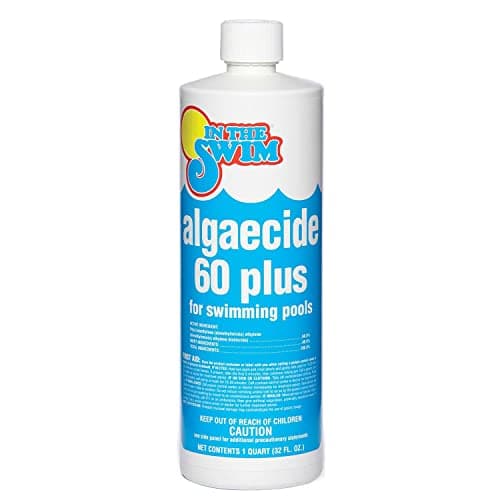 In The Swim Algaecide 60 Plus, 1 quartPolyquat at 60% concentration and no copper, which is the combination that prevents algae without the stain risk. | Prevention without staining | 60% polyquaternium, non-metallic, non-foaming | |
| 3 | 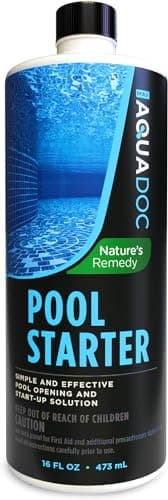 MAV AquaDoc Pool Opening Chemical, 16 oz enzymeNot a kit - one bottle that does the job shock does badly. Enzymes break down the oily film a closed pool grows, instead of burning chlorine on it. | The winter scum line a shock will not touch | Listing states a natural enzyme treatment for up to 15,000 gallons, compatible with cartridge, DE and sand filters and all sanitizers | |
| 4 | 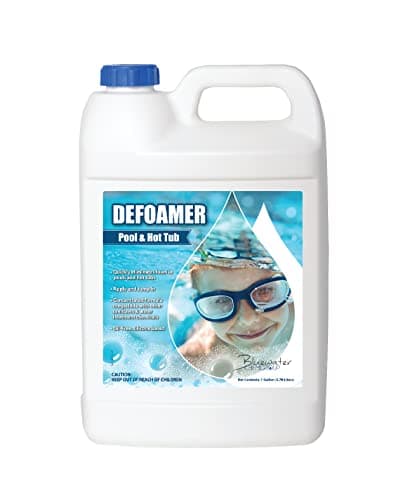 Bluewater Chemgroup Pool & Hot Tub Defoamer, 1 GallonThe bulk size of the same product. Buying it is a sign the cause has not been dealt with - which the page below is mostly about. | A pool that foams every weekend | Listing states an oil-free, silicone-based concentrate for pools and hot tubs, compatible with other sanitizers | |
| 5 | 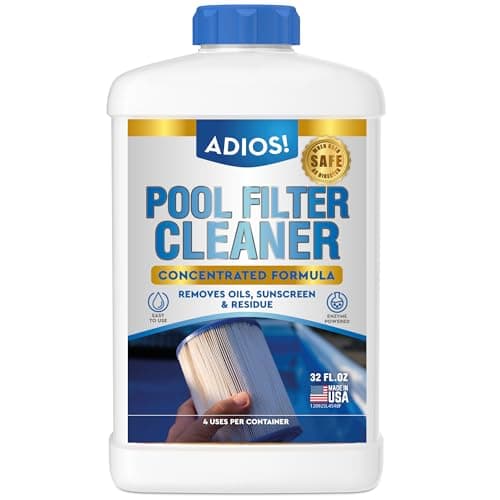 ADIOS! Pool Filter Cleaner, 4X Enzyme Soak, 32 ozThe small bottle of the same idea, for one cartridge rather than a season of them. | A single cartridge soak | 32 oz enzyme degreaser at 4X concentration, stated for cartridge, DE and sand media |
Foam is not aeration
Bubbles in a pool come from two completely different places, and telling them apart takes about five seconds.
| Foam | Air in the system | |
|---|---|---|
| Where it appears | Across the surface, thickest where water returns | Streaming from the return jets |
| How long it lasts | Sits there; rebuilds after it is skimmed off | Bubbles pop within seconds |
| Texture | Dense, soapy, holds together | Loose, separate bubbles |
| Pump basket | Normal | Air visible in the lid, pump may lose prime |
| Cause | A surfactant in the water | A suction-side leak drawing air |
If bubbles are streaming from the jets and dying fast, you have an air leak, not a foam problem - the usual suspects are a loose pump lid, a dry lid o-ring or a low water level uncovering the skimmer. Nothing on this page helps with that.
The causes, in order of likelihood
- A cheap algaecide. The most overlooked cause by a distance. Low-percentage polyquat algaecides foam badly by design - and the fix is a better one, not a defoamer. In The Swim's 60% product states non-foaming on the label, which is exactly the property you are paying the extra for.
- Lotions, sunscreen and body oils. A heavy bather load puts surfactants in the water faster than the filter removes them - cloudy from sunscreen and swimmers covers the same cause when it shows up as haze instead of foam.
- Detergent. Soap on swimsuits washed in a machine, a bucket rinsed out near the pool, or dish soap someone added to deal with water bugs. It does not filter out.
- Very soft water. Water low in calcium hardness foams more readily. If hardness is below the range on how to raise calcium hardness, that is worth correcting for several reasons and this is one of them.
- Old water at the end of a long season. Dissolved solids accumulate, and foam is one of the ways a pool signals that partial dilution is overdue.
What a defoamer does, honestly
A defoamer is a silicone-based product that breaks the surface tension holding the bubbles together. Bluewater states it dissipates foam quickly in pools and hot tubs, that you can swim immediately afterwards, and that it is compatible with other treatments.
All of that is true and none of it addresses why the water foamed. The surfactant is still in the pool. The bubbles come back the next time the water is agitated, which is why a bottle of defoamer a week is a subscription to a problem rather than a solution to it.
Buy it for the case it is good at: guests arriving in an hour, foam across the surface, no time to fix anything properly. Then fix the cause during the week.
The durable fixes
- Switch algaecide. If yours foams, replace it with a 60% non-foaming polyquat and use the old bottle on a pool you do not swim in.
- Use an enzyme. Enzyme treatments break down the oils and lotions a filter struggles with, which removes the surfactant rather than collapsing it.
- Clean the filter properly. A filter loaded with oil passes surfactant straight through - a deep clean with a degreasing cartridge cleaner is on how to clean a pool filter.
- Dilute. Partial drain and refill is the blunt answer for old water, and the only one that lowers dissolved solids.
- Shower before swimming, and rinse swimsuits without detergent. Unglamorous, free, and it works on the biggest recurring source.
Sequence it so you are not treating twice
- Identify the cause using the list above - algaecide label first, then bather load, then hardness, then water age.
- Clean or backwash the filter before adding anything. A loaded filter cannot remove what you are about to break down.
- Add an enzyme treatment and run the pump continuously for a day.
- Use a defoamer only if you need the surface clear before the enzyme has finished.
- Retest calcium hardness and correct it if it sits below range.
- If the foam returns with nothing changed, the algaecide is almost certainly the cause and the bottle is the fix.
The picks
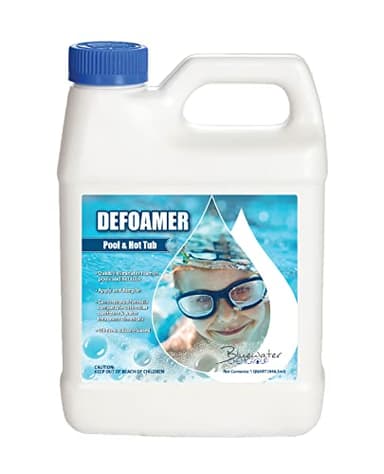
Top pick - Knocking foam down before guests arrive
Bluewater Chemgroup Pool Defoamer, 32 oz
A cosmetic fix, and honest about being one. It drops the foam in minutes and does nothing about whatever put it there.
The published figure
Listing states a silicone-based concentrate that dissipates foam in pools and hot tubs, with no wait before swimming
Bluewater states the concentrate quickly dissipates foam and that pools can be used immediately after application - useful when the foam appears an hour before people arrive.
It is stated to be silicone based and compatible with other pool and spa treatments, so it does not conflict with your sanitizer.
What no defoamer does is remove the cause. Foam is surfactant - body oils, lotions, detergent, or a polyquat algaecide dosed heavily - and a defoamer only collapses the bubbles.
What it does well
- Works in minutes, with no wait to swim
- Stated compatible with other treatments
- Smallest, cheapest bottle here
What it costs you
- Treats the symptom, not the cause
- Silicone based, which some owners avoid on principle
- 32 oz goes quickly on a recurring foam problem
Skip it if the foam keeps coming back. That is a filtration and surfactant problem, and a bottle a week is the expensive way to ignore it.
#ad · how this is funded · price as of October 9, 2026
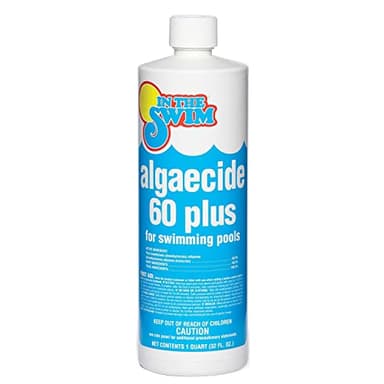
Pick 2 - Prevention without staining
In The Swim Algaecide 60 Plus, 1 quart
Polyquat at 60% concentration and no copper, which is the combination that prevents algae without the stain risk.
The published figure
60% polyquaternium, non-metallic, non-foaming
Polyquat 60 is the concentration standard in this category. Products sold as 'algaecide 30' or 'algaecide 10' are the same chemistry diluted, so compare the price per unit of active ingredient rather than per bottle.
No metal means no staining, which matters on plaster and on any pool that has already had a copper problem. It is also why polyquat is the algaecide to use after you have shocked, rather than during.
Polyquat prevents. It is not a rescue product for a pool that is already green, and any label that implies otherwise is selling you the wrong step.
What it does well
- 60% active, the top of the retail concentration range
- No copper, so no staining and no green-hair complaints
- Non-foaming, unlike the cheaper quat algaecides
What it costs you
- Prevention only — will not clear an existing bloom on its own
- Chlorine consumes it, so a heavy shock burns off what you just added
Skip it if your pool is green right now. Shock first, vacuum the dead algae, then dose polyquat to stop it coming back.
#ad · how this is funded · price as of October 9, 2026
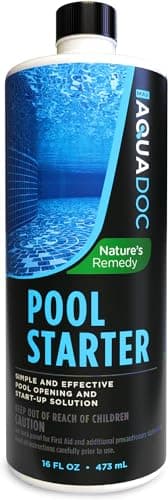
Pick 3 - The winter scum line a shock will not touch
MAV AquaDoc Pool Opening Chemical, 16 oz enzyme
Not a kit - one bottle that does the job shock does badly. Enzymes break down the oily film a closed pool grows, instead of burning chlorine on it.
The published figure
Listing states a natural enzyme treatment for up to 15,000 gallons, compatible with cartridge, DE and sand filters and all sanitizers
AquaDoc states the product contains natural enzymes that break down non-living organic debris, and is sized for pools up to 15,000 gallons.
That is a genuinely different job from shocking. Chlorine will oxidize the oils and waterline film a covered pool accumulates over winter, but it spends a lot of itself doing it - which is why a pool can swallow shock at opening and still look dull.
It is stated to work with cartridge, DE and sand filters and with chlorine, bromine or saltwater sanitizing.
What it does well
- Targets the organic film rather than the chlorine demand
- Stated compatible with all three filter types and all sanitizers
- Cheapest single addition to an opening routine
What it costs you
- Not a kit - no shock, algaecide or sequestrant included
- Sized for 15,000 gallons per bottle
- Enzyme products publish no measurable result you can test for
Skip it if your pool was closed clean and covered tightly. There may be little organic film to break down.
#ad · how this is funded · price as of October 9, 2026
Pick 4 - A pool that foams every weekend
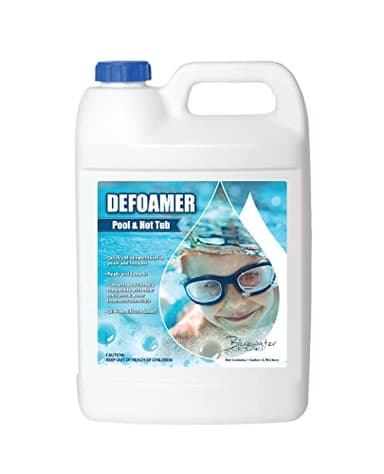
Bluewater Chemgroup Pool & Hot Tub Defoamer, 1 Gallon
The bulk size of the same product. Buying it is a sign the cause has not been dealt with - which the page below is mostly about.
The published figure
Listing states an oil-free, silicone-based concentrate for pools and hot tubs, compatible with other sanitizers
The listing states the same chemistry as the quart, described as oil free and silicone based, and states you can apply and get straight back in.
A gallon is a lot of defoamer. It suits a heavily used pool, a rental, or a spa that foams after every session, where the cause is bather load rather than a fault.
It is stated compatible with other sanitizers and treatments, so it can sit in the routine without disrupting chemistry.
What it does well
- Far cheaper per ounce than the quart
- Stated oil free
- Same immediate effect, no wait to swim
What it costs you
- Buying in bulk normalizes a symptom that has a cause
- Heavy bottle to store
- Third-party seller, so delivery varies
Skip it if your pool foams once a season. The 32 oz bottle will outlive the problem.
#ad · how this is funded · price as of October 9, 2026
Pick 5 - A single cartridge soak
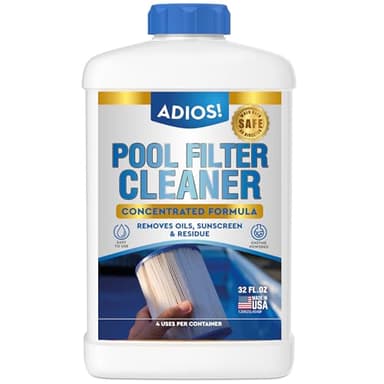
ADIOS! Pool Filter Cleaner, 4X Enzyme Soak, 32 oz
The small bottle of the same idea, for one cartridge rather than a season of them.
The published figure
32 oz enzyme degreaser at 4X concentration, stated for cartridge, DE and sand media
A single-element filter needs one soak at a time, and a 128 oz jug is a lot of shelf life to buy for that.
The concentration difference between the 4X and the 12X is exactly what it says, so compare on price per treatment rather than price per bottle.
Same limits as any enzyme soak: it dissolves oils, and it does nothing for torn pleats or a collapsed core.
What it does well
- Right size for a single-element housing
- Same enzyme chemistry as the larger bottle
What it costs you
- Worse value per treatment than the 12X if you have four elements
- Still an overnight job
Skip it if your housing takes four elements - buy the concentrate and save money per soak.
#ad · how this is funded · price as of October 9, 2026
What does not work
- More shock. Chlorine does eventually oxidize organic surfactants, but a shock dose aimed at foam usually just burns itself out on the oils and leaves you with the same bubbles.
- Adding dish soap for anything, ever. It is the cause of a share of the foam this page exists for.
- Skimming the foam off. It rebuilds as soon as the water moves, because the surfactant is dissolved rather than floating.
- Ignoring it. Foam is mild on its own, but it is a signal that the water is carrying organic load - the thing that also makes chlorine work harder and water look dull.
Questions people actually ask
Why is my pool foaming?
Does pool defoamer actually work?
Can algaecide cause foam in a pool?
Is foam in a pool dangerous?
What is the difference between pool foam and air bubbles?
Will low calcium hardness make my pool foam?
Sources
Every figure on this page traces to one of these. Where a number could not be sourced, the page says so rather than estimating.
- Skim & Soak methodology - the constants, formulas and worked examples behind every dose on this site
- Bluewater Chemgroup Pool Defoamer, 32 oz, silicone based - Amazon listing, read 2026-09-27
- Bluewater Chemgroup Pool & Hot Tub Defoamer, 1 gallon, oil free - Amazon listing, read 2026-09-27
- In The Swim Algaecide 60 Plus, 60% polyquaternium, stated non-foaming - Amazon listing, read 2026-09-27
- MAV AquaDoc pool enzyme treatment, up to 15,000 gallons - Amazon listing, read 2026-09-27
Read next
Cloudy From Sunscreen and Swimmers
Body oils, lotion and sunscreen do not filter out easily. Chitosan clarifier and a shock are the pair that clears them.
Top pick
AquaDoc Natural Pool Clarifier, chitosan, 32 oz
Oils and sunscreen
Best for prevention
Best Pool Algaecide
Polyquat 60 for prevention without staining, copper for black algae, and one combination product we would not buy.
Top pick
In The Swim Algaecide 60 Plus, 1 quart
Prevention without staining
#ad · how this is funded · price as of October 9, 2026
Best filter cleaners
How to Clean a Pool Filter
Debris and oils are two different problems needing two different treatments. Most people only ever do the first.
Top pick
ADIOS! Pool Filter Cleaner, 12X Enzyme Soak, 128 oz
Not buying a cartridge at all
#ad · how this is funded · price as of October 9, 2026
How to Raise Calcium Hardness
Why low calcium hardness attacks surfaces, the 200-400 ppm target the labels agree on, and the calcium chloride dose worked out in full.
Top pick
Pool Mate Premium Calcium Hardness Increaser, 25 lb
A real correction on a full-size pool
Water Bugs in a Pool
Water boatmen against backswimmers, why an algae bloom brings both, and the shock-brush-filter sequence that clears them without putting insecticide anywhere near a pool.
Top pick
HTH Pool Care Shock Advanced, cal hypo, 12 pack
Weekly maintenance shocking