Green Water & Algae
Best Pool Vacuum for Algae
Killing the bloom is chemistry. Getting the corpse out is filtration - and most vacuums put a good deal of it straight back.
We have not handled these products and we do not pretend to have. Here is what we did instead. Links to Amazon earn us a commission at no extra cost to you, and commission never decides a pick — disclosure.
| # | Product | Best for | The spec it turns on | Price |
|---|---|---|---|---|
| 1 | 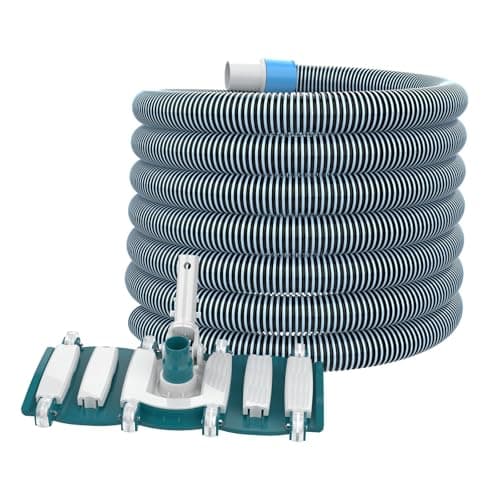 POOLWHALE Pool Vacuum Head and 36 ft Hose KitTop pickHead and hose together, which avoids the classic mistake of buying a head and discovering the hose is the expensive part. | The complete manual kit | Weighted vacuum head with wheels and 1.5 in x 36 ft hose | |
| 2 | 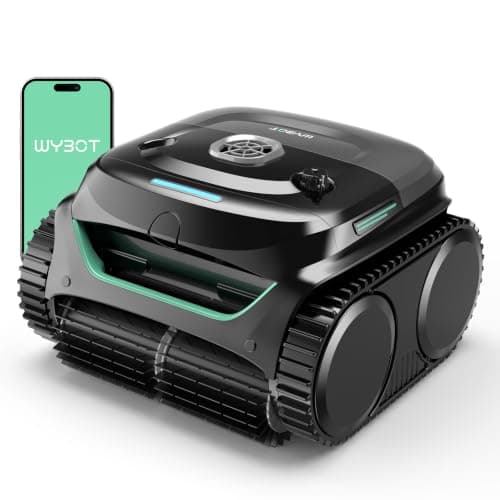 Wybot C2 Cordless Pool Vacuum for In-ground PoolsA 10 micron secondary filter is the finest figure published by any robot here, and it is the one that decides whether the water looks clean afterwards. | Finest published filtration | 180 min runtime, up to 2,152 sq ft per cycle, 10 micron ultra-fine plus 180 micron primary filter | |
| 3 | 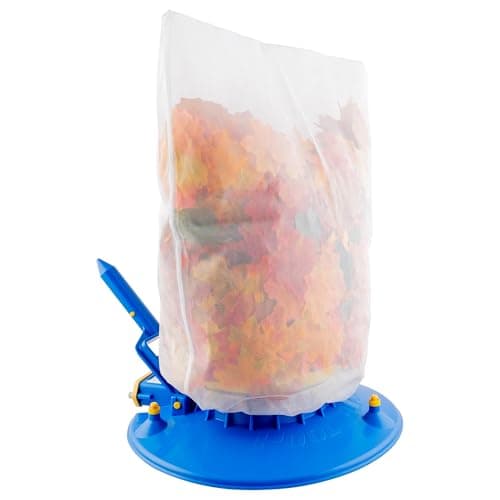 POOL BLASTER Leaf Vac, cordless hoseless pool leaf vacuumRuns off its own battery, so it works when the pump is off, the filter is dirty, or the debris would clog both. | No hose, no pump | Battery-powered, runs independently of the pool's pump and plumbing | |
| 4 | 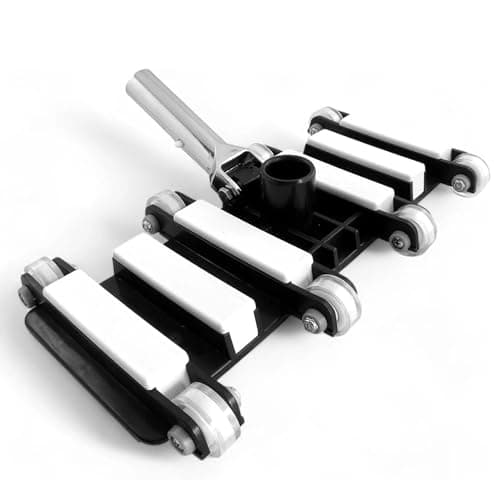 FibroPool Pool Vacuum Head, weighted flexible, 14.4 inThermoplastic body and urethane wheels, which is the combination that does not mark a vinyl liner. | Vinyl liners | 14.4 in thermoplastic head with urethane wheels and a 1.5 in hose port | |
| 5 | 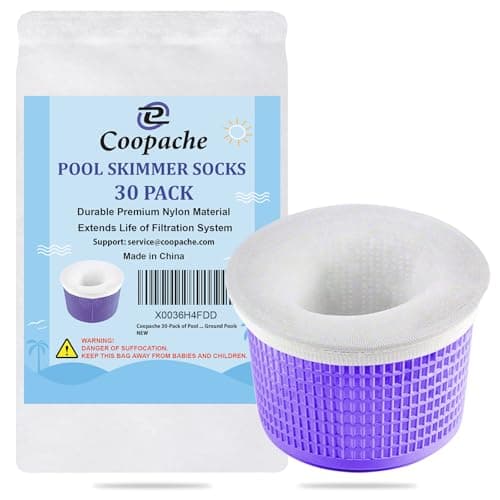 Coopache Pool Skimmer Socks, 30-packA few dollars of fine mesh over the skimmer basket removes more fine debris than any chemical on this site. | Catching what the net misses | Fine-mesh elastic liners for the skimmer basket, 30 per pack | |
| 6 | 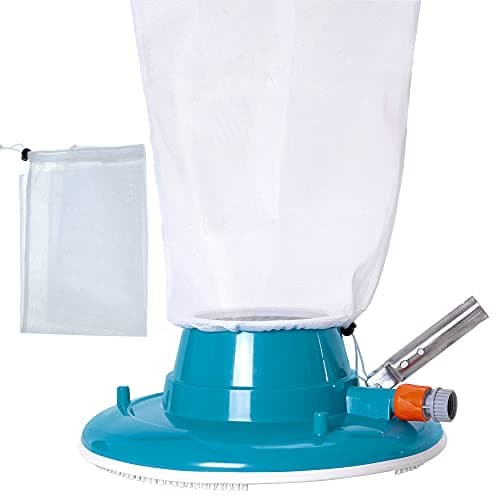 U.S. Pool Supply Professional Leaf Terminator Vacuum, 15 inEight jets on a garden hose, which lifts a full leaf load without touching the pool's own filtration at all. | Heavy leaf loads on a garden hose | 15 in head with eight pressure jets, driven from a garden hose |
Why this is a different job from vacuuming leaves
A leaf is enormous. Anything that lifts it will hold it, so a leaf vacuum is judged on capacity and lift.
Dead algae is the opposite problem. It is fine, light, neutrally buoyant, and far smaller than the rating of most filters - which is exactly why a pool goes gray-cloudy after a successful shock instead of clearing. Suck it up through a coarse filter and a good proportion of it comes straight back out of the returns, so you spend an hour stirring the pool rather than cleaning it.
The three routes, compared
| Method | Debris goes to | Removes it from the pool? | Cost |
|---|---|---|---|
| Manual head, vacuum to waste | Out of the pool, to the drain | Completely | Several inches of water, plus your time |
| Robot with fine filtration | The robot's own filter | Yes, if the micron rating is fine enough | More frequent filter cleaning |
| Manual head, vacuum on FILTER | Your sand or cartridge filter | Partly - the fines pass through | Blinds the filter fast |
| Battery vacuum | Its own chamber | Depends entirely on its filter media | Limited capacity per charge |
The first row is the honest answer for a real bloom, and it needs nothing more than a hose, a head and a multiport valve with a WASTE setting.
Vacuum to waste, if your valve allows it
Setting the multiport valve to WASTE bypasses the filter entirely and sends everything the vacuum lifts straight out of the pool. Nothing is asked to trap fines, so nothing passes through.
- Check the valve for a WASTE position. Cartridge filters usually have no valve and therefore no waste option.
- Top the pool up before you start - you will lose several inches and running a pump dry is expensive.
- Move slowly. Fast passes lift the settled layer into suspension and then you are waiting for it to settle again.
- Keep topping up as you go.
- Return to FILTER, run the pump, retest and rebalance.
If you have no waste option, the better route is usually to flocculate first so the debris is heavy and concentrated, or to let a fine-filtered robot do the work over several cycles.
The micron argument for robots
A robot never sends anything back through your returns, so the only question is whether its own filter holds what it picks up. A 180 micron filter catches leaves and grit; dead algae is well below that and passes - as does silt, which has its own page on vacuuming sand and fine dirt.
This is the one job where a published fine-filtration figure genuinely earns its price. Wybot publishes a 10 micron secondary filter behind a 180 micron primary on the C2, and Aiper publishes a 3 micron MicroMesh on the Scuba V3 - see our Aiper range review. Most makers publish nothing, and on this job that silence is disqualifying.
The picks
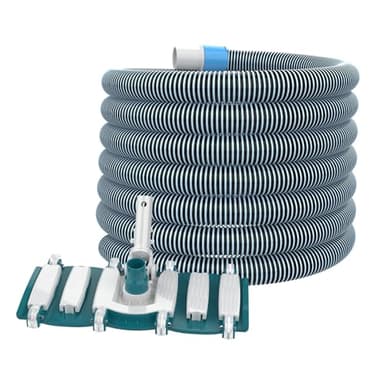
Top pick - The complete manual kit
POOLWHALE Pool Vacuum Head and 36 ft Hose Kit
Head and hose together, which avoids the classic mistake of buying a head and discovering the hose is the expensive part.
The published figure
Weighted vacuum head with wheels and 1.5 in x 36 ft hose
Manual vacuuming is slow, and it is also the only method that gets exactly where you point it. Nothing automatic clears one stubborn corner as reliably.
36 ft of hose covers most residential pools from a single skimmer. Measure from your skimmer to the far corner and add a third.
A weighted head with wheels stays down and rolls rather than skating, which is the difference between vacuuming and stirring.
What it does well
- Head and hose matched, so nothing else to buy
- Weighted with wheels, so it tracks rather than lifts
- Works with any standard telescopic pole
What it costs you
- Manual labor
- Debris goes through the pump basket and filter
Skip it if you already own a robot and only ever vacuum a small area — a handheld is enough.
#ad · how this is funded · price as of October 9, 2026
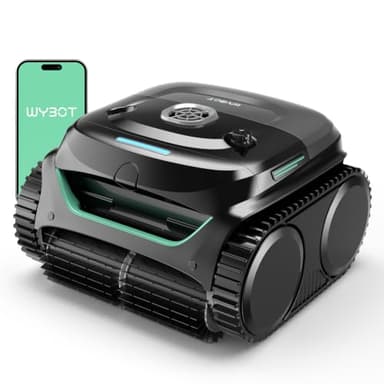
Pick 2 - Finest published filtration
Wybot C2 Cordless Pool Vacuum for In-ground Pools
A 10 micron secondary filter is the finest figure published by any robot here, and it is the one that decides whether the water looks clean afterwards.
The published figure
180 min runtime, up to 2,152 sq ft per cycle, 10 micron ultra-fine plus 180 micron primary filter
Wybot's own product page states a 10 micron ultra-fine filter behind a 180 micron primary. Most robots publish one number or none at all.
That matters because 180 micron catches leaves and grit while fine silt, pollen and dead algae pass straight through and go back into the water. The second stage is what stops that.
Wybot also publishes coverage per cycle — 2,152 sq ft — which is the honest way to compare against your own pool rather than against a runtime number in isolation.
What it does well
- 10 micron secondary filtration, the finest published figure in this roundup
- Coverage published per cycle, not just runtime
- Three brushless motors driving suction
What it costs you
- Fine filtration means more frequent filter cleaning
- 180 minutes is shorter than the longest-running units here
Skip it if your pool only ever collects leaves. You would be paying for filtration you never use.
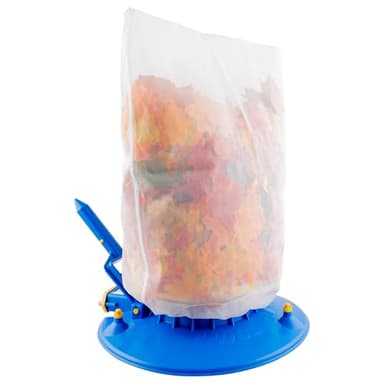
Pick 3 - No hose, no pump
POOL BLASTER Leaf Vac, cordless hoseless pool leaf vacuum
Runs off its own battery, so it works when the pump is off, the filter is dirty, or the debris would clog both.
The published figure
Battery-powered, runs independently of the pool's pump and plumbing
Every hose-driven leaf vacuum borrows suction or pressure from the pool's own system, which means it stops working exactly when the system is struggling — a clogged filter or a basket full of leaves.
A battery unit sidesteps that. It is also the only kind you can carry to a spa or a small above-ground pool that has no suction port worth using.
The trade is capacity and runtime. This is a tool for a specific pile of leaves, not a whole-pool clean.
What it does well
- Independent of pump, hose and filter condition
- Portable between pool, spa and above-ground
- No setup time — pick it up and use it
What it costs you
- Limited runtime and debris capacity per charge
- Slower than a garden-hose jet vacuum on a big pile
Skip it if you are clearing a full autumn drop. Battery capacity is the wrong tool for that volume.
#ad · how this is funded · price as of October 9, 2026
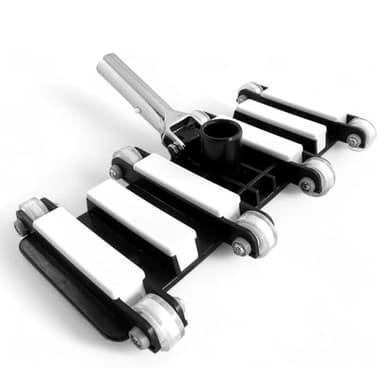
Pick 4 - Vinyl liners
FibroPool Pool Vacuum Head, weighted flexible, 14.4 in
Thermoplastic body and urethane wheels, which is the combination that does not mark a vinyl liner.
The published figure
14.4 in thermoplastic head with urethane wheels and a 1.5 in hose port
Metal-framed vacuum heads and hard plastic wheels are what put gray scuff lines on a light vinyl liner.
Urethane wheels are softer and do not transfer marks, which is why they cost more.
14.4 inches is narrower than the big kit heads, so it takes more passes but fits between steps and ladder legs.
What it does well
- Urethane wheels will not mark a vinyl liner
- Narrow enough for tight areas around steps
What it costs you
- Narrower means more passes on an open floor
- Hose sold separately
Skip it if you have a plaster pool and a wide open floor — a wider head is simply faster.
#ad · how this is funded · price as of October 9, 2026
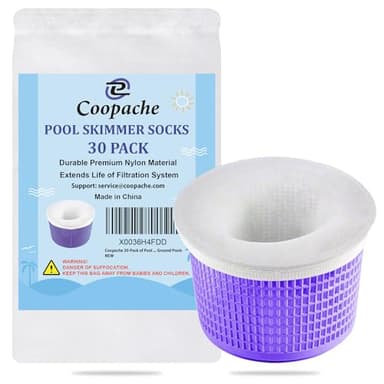
Pick 5 - Catching what the net misses
Coopache Pool Skimmer Socks, 30-pack
A few dollars of fine mesh over the skimmer basket removes more fine debris than any chemical on this site.
The published figure
Fine-mesh elastic liners for the skimmer basket, 30 per pack
A skimmer basket catches leaves. Everything smaller goes through it and into the pump, then into the filter, where it is your filter's problem.
A sock over the basket takes pollen, hair, insects and grit out before any of that happens, and it is the single cheapest upgrade to a pool's water clarity.
They restrict flow as they load. Check them at the same time you check the basket, not weekly.
What it does well
- Removes the fine debris that otherwise loads the filter
- Costs less per season than a single bottle of clarifier
- Extends the interval between filter cleans
What it costs you
- Restricts flow noticeably once loaded, and needs checking often
- Disposable, so there is a small ongoing cost
Skip it if your pump already runs at marginal flow. A loaded sock will starve it.
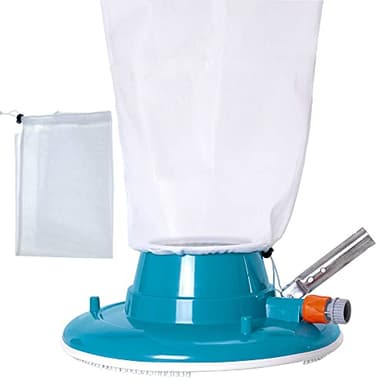
Pick 6 - Heavy leaf loads on a garden hose
U.S. Pool Supply Professional Leaf Terminator Vacuum, 15 in
Eight jets on a garden hose, which lifts a full leaf load without touching the pool's own filtration at all.
The published figure
15 in head with eight pressure jets, driven from a garden hose
A jet vacuum uses garden-hose pressure to lift debris into a mesh bag on the unit. The pool's pump, filter and plumbing stay entirely out of it, which is why this is the tool for pool opening.
The number of jets is the specification that matters, because it sets how much lift the head generates. Eight is at the high end for a residential unit.
It adds water to the pool while it runs. Over a long clean-up that is a real amount, so watch your level.
What it does well
- Handles a volume of leaves that would immediately clog the pump basket
- No load at all on the filter
- Nothing to charge or plug in
What it costs you
- Adds hose water to the pool the whole time it runs
- Needs decent mains pressure to work properly
Skip it if your mains pressure is low. Jet vacuums are entirely dependent on it.
#ad · how this is funded · price as of October 9, 2026
The cheap upgrade that helps most
A fine-mesh skimmer sock over the skimmer basket catches a meaningful share of suspended fines before they reach the pump, and it costs less than a bottle of clarifier. On a pool clearing after a bloom, it is doing continuous work while you are not there.
Check it often during the clear-up. It will load far faster than usual, and a loaded sock restricts flow.
The order that actually works
- **Kill the bloom first.** Vacuuming living algae accomplishes nothing - see how to clear a green pool fast.
- **Let it settle.** Turn the pump off and give it overnight. Settled debris is vacuumable; suspended debris is not.
- **Vacuum to waste,** slowly, without brushing first.
- **Then filter** what remains in suspension, with a clarifier if the haze persists.
- **Clean the filter properly** afterwards. It is holding a bloom.
Doing this in any other order is why people report vacuuming for hours and finishing with a cloudier pool than they started with.
Questions people actually ask
What is the best pool vacuum for algae?
Why does vacuuming algae make my pool cloudier?
Can I vacuum algae with a robotic cleaner?
Should I brush before vacuuming algae?
How long after shocking should I vacuum?
Sources
Every figure on this page traces to one of these. Where a number could not be sourced, the page says so rather than estimating.
- HTH Pool Care Shock Advanced - product page, cal hypo formulation, adds no cyanuric acid
- Skim & Soak methodology - the constants, formulas and worked examples behind every dose on this site
- POOLWHALE Pool Vacuum Head and 36 ft Hose - Amazon listing, read 2026-09-02
- Wybot C2, 10 micron secondary filtration - Amazon listing, read 2026-09-02
Read next
How to Clear a Green Pool Fast
The ordered fix: test, brush, shock by weight, filter continuously, clear the dead algae, then prevent the next one.
Cloudy Pool Water After Shock
Gray after a shock is dead algae in suspension. Filter it or floc it; do not re-shock.
Top pick
HTH Pool Care Drop Out Flocculant, 32 oz
Clearing a pool overnight
#ad · how this is funded · price as of October 9, 2026
Best for overnight clearing
Best Pool Flocculant
Four flocculants compared, plus the equipment check that decides whether you can use one at all.
Top pick
HTH Pool Care Drop Out Flocculant, 32 oz
Clearing a pool overnight
#ad · how this is funded · price as of October 9, 2026
Finest published filtration
Aiper Pool Cleaners
Scuba S1, S3, V3, Seagull SE and the EcoSurfer skimmer, compared on what Aiper actually publishes for each.
Top pick
Aiper Scuba V3 AI Vision Cordless Robotic Pool Cleaner
The finest published filtration