Cloudy Water
Best Pool Vacuum for Sand and Fine Dirt
Fine debris is a filtration problem wearing a vacuum's clothes. The filter rating decides it, and most makers publish none.
We have not handled these products and we do not pretend to have. Here is what we did instead. Links to Amazon earn us a commission at no extra cost to you, and commission never decides a pick — disclosure.
| # | Product | Best for | The spec it turns on | Price |
|---|---|---|---|---|
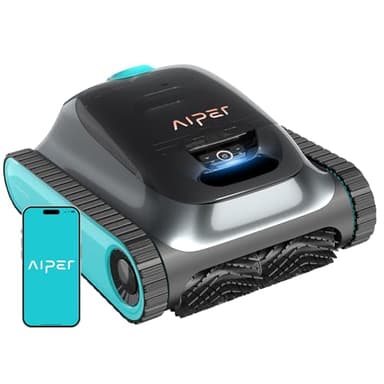
| 1 | 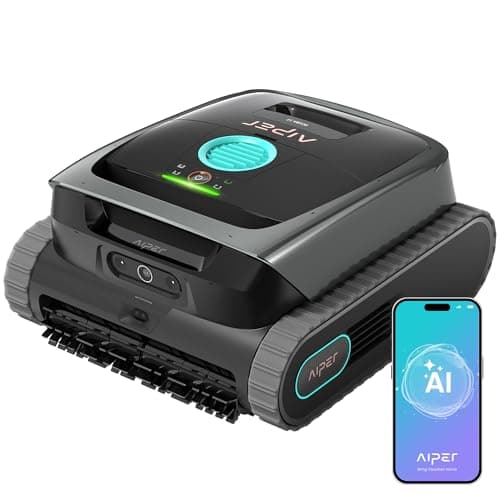 Aiper Scuba V3 AI Vision Cordless Robotic Pool CleanerTop pickA published 3 micron filter, which is the finest figure any robot on this site states and finer than most DE filters. | The finest published filtration | 3 micron MicroMesh filter, smart waterline parking, wireless charging dock, floor/wall/waterline cleaning | |
| 2 | 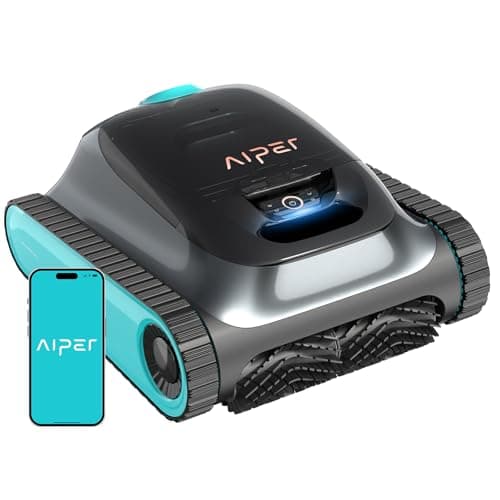 Aiper Scuba S1 Robotic Pool CleanerThe longest published runtime in this roundup, which is the specification that decides whether a cordless unit finishes a large pool in one charge. | Longest published runtime | Up to 270 minutes in Eco mode and up to 180 in Auto, Floor, Wall and Scheduled; floor, wall, waterline and shallow areas above 12 in; 180 plus 3 micron dual filtration | |
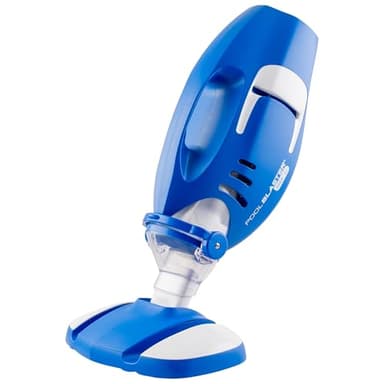
| 3 | 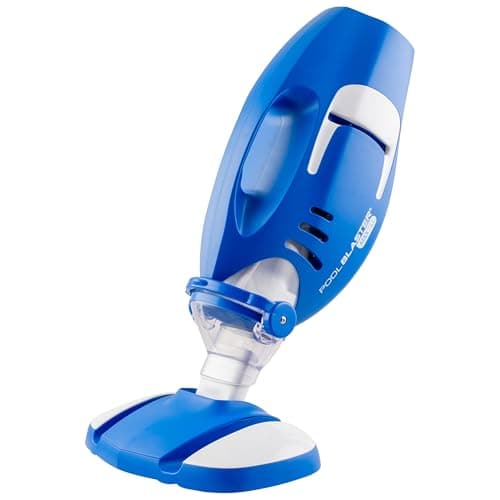 Pool Blaster Max Cordless Pool Vacuum, 2026A battery vacuum whose maker lists sand, silt and pollen among what it collects - the fine end most vacuums pass straight through. | Sand, silt and pollen | Lithium-ion with 60 minutes of stated runtime and about 4 hours to charge; 10.5 in head on omni-directional rollers; multilayer filter bag; fits a standard pole | |
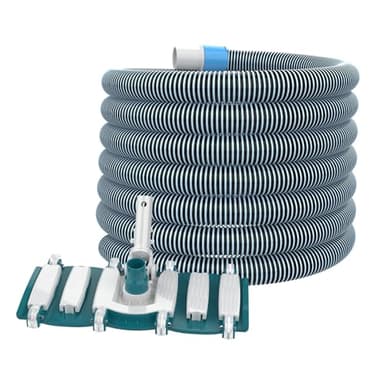
| 4 | 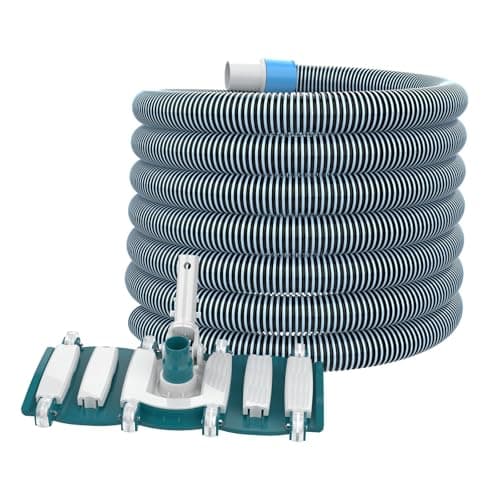 POOLWHALE Pool Vacuum Head and 36 ft Hose KitHead and hose together, which avoids the classic mistake of buying a head and discovering the hose is the expensive part. | The complete manual kit | Weighted vacuum head with wheels and 1.5 in x 36 ft hose | |
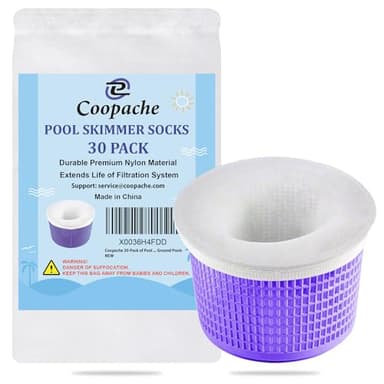
| 5 | 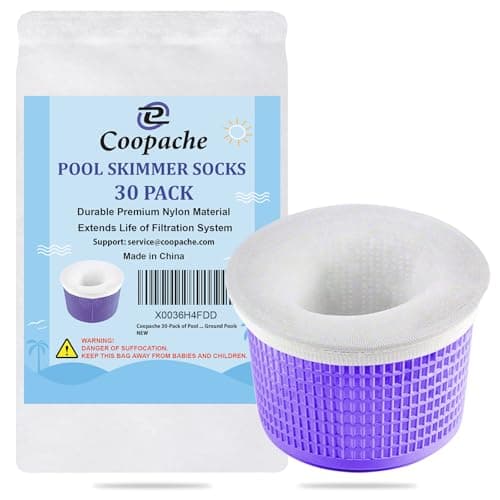 Coopache Pool Skimmer Socks, 30-packA few dollars of fine mesh over the skimmer basket removes more fine debris than any chemical on this site. | Catching what the net misses | Fine-mesh elastic liners for the skimmer basket, 30 per pack | |
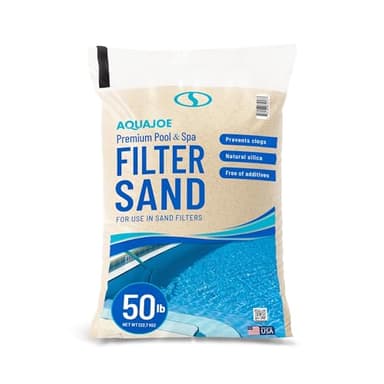
| 6 | 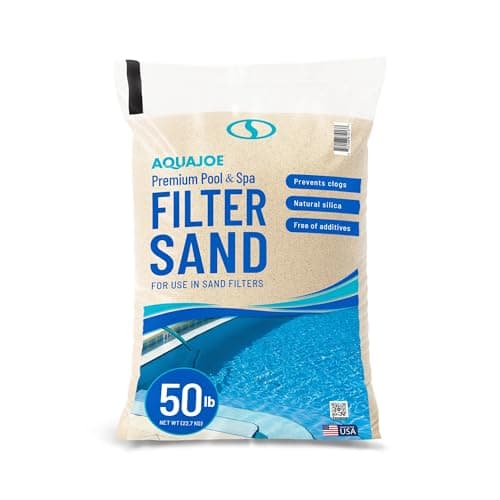 Aqua Joe Premium Pool & Spa Filter Sand, 50 lb, FLTSAND50Sand is the cheapest filter medium to run and the one most often left in far too long. | Recharging a sand filter | 50 lb bag of natural silica sand, stated for above-ground and in-ground filter systems |
First, where did it come from?
Sand on a pool floor arrives three ways, and only the first is something a vacuum fixes for good. Wind, feet and storms carry it in from outside. A sand filter with a cracked lateral or standpipe pumps its own media into the pool through the returns - the tell is a small fan of sand under each return jet that reappears a day after you vacuum. And a plaster pool that is etching sheds a fine gray grit that is the surface itself coming off.
Why this is a filter question, not a suction one
Any vacuum lifts sand. Sand is heavy and moves with modest flow. The problem is what happens next: it either leaves the pool, gets held in a filter, or passes through a coarse filter and settles again behind the vacuum you are pushing. The Udden-Wentworth scale, which geologists use to name grain sizes, puts real numbers on it.
| Material | Size | Held by 180 micron? | Held by 10 micron? | Held by 3 micron? |
|---|---|---|---|---|
| Medium sand, most beach and play sand | 250-500 microns | Yes | Yes | Yes |
| Fine sand | 125-250 microns | Mostly | Yes | Yes |
| Very fine sand | 62.5-125 microns | No - passes | Yes | Yes |
| Silt, the gray haze after a storm | 3.9-62.5 microns | No | Mostly | Yes |
| Clay and dead algae fines | Under 3.9 microns | No | No | Largely |
A standard robot basket is around 180 microns, and the row that matters is very fine sand: it passes straight through and comes out of the robot's exhaust behind it. That is why a pool can look worse after a robot cycle on a silty floor - the machine stirred the layer up and held almost none of it. The two makers on this site that publish a fine-filtration figure are Aiper at 3 microns and Wybot at 10, and on this one job that figure is the whole product.
The routes, and where the grit ends up
| Method | Where it ends up | Holds silt? | Best for |
|---|---|---|---|
| Manual head, vacuum to WASTE | Out of the pool via the drain | Yes - nothing is asked to filter it | A one-time heavy load; needs a multiport valve |
| Robot with a stated 3 or 10 micron filter | The robot's own filter | Yes, per the stated rating | Routine removal on a pool that keeps silting up |
| Battery vacuum with a fine filter bag | Its own bag | Pool Blaster states sand, silt and pollen for the Max | Above-ground pools and spot cleanup |
| Manual head on FILTER | Your sand or cartridge filter | Partly; blinds a cartridge quickly | Light loads only |
Vacuum to waste, for a heavy load
If a storm left a visible drift of sand across the shallow end, do not ask any filter to hold it. Set the multiport valve to WASTE, top the pool up first, and vacuum slowly with a manual head - the same sequence as for dead algae, for exactly the same reason. Everything the head lifts leaves through the backwash line and nothing is asked to trap it. Cartridge systems usually have no waste position, and on those a robot with fine filtration is the route.
Go slowly. Fast passes lift silt into suspension, and suspended silt is the cloudy pool you were trying to fix. Let it settle overnight with the pump off, then vacuum the settled layer in one unhurried pass.
The micron figure, and who publishes it
Aiper states a dual filter on the Scuba S1 - a 180 micron primary with a replaceable 3 micron ultra-fine layer - and a 3 micron MicroMesh on the V3, which it states traps sand and what it calls invisible contaminants. Wybot states 10 micron secondary filtration on the C2. Dolphin describes ultra-fine panels on the Nautilus CC Plus and states no number at all, which on this page is disqualifying, because a number is what lets you compare it against the table above.
A fine filter fills fast on a silty floor. Aiper describes the S1's fine layer as replaceable, which is the maker telling you it is a consumable. Rinse it after every cycle during a cleanup, and budget for replacements the way you would for any other wear part.
When the grit is the pool itself
A plaster pool held on the corrosive side - low pH, low alkalinity or low calcium, for long enough - gives up its own surface as a fine gray grit that settles everywhere rather than just near the returns. That grit is not sand and no vacuum stops it coming; it stops when the water stops being aggressive, which is a balancing job rather than a cleaning one. Two tells separate it from filter sand: it is gray-white rather than tan, and the plaster feels rougher underfoot than it used to.
Vacuum it anyway, because it is abrasive to a robot's tracks and it clouds the water whenever it is stirred - but fix the chemistry first, or it returns as fast as you remove it.
The picks
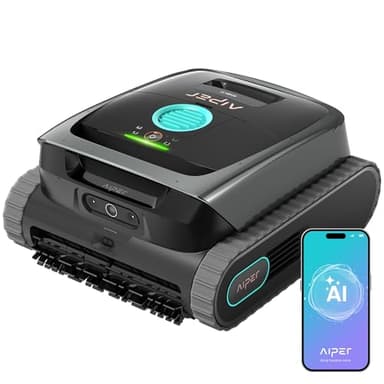
Top pick - The finest published filtration
Aiper Scuba V3 AI Vision Cordless Robotic Pool Cleaner
A published 3 micron filter, which is the finest figure any robot on this site states and finer than most DE filters.
The published figure
3 micron MicroMesh filter, smart waterline parking, wireless charging dock, floor/wall/waterline cleaning
3 micron is a genuinely unusual claim in this category. Most robots publish 180 micron or nothing at all, and 180 micron catches leaves while letting silt, pollen and fine dead algae straight back into the pool.
If your complaint is that the pool is leaf-free and still hazy, this is the specification that addresses it - and it is the same argument as choosing a DE filter over sand.
The cost is maintenance. A 3 micron filter fills faster than a coarse one by definition, because it is now catching material that used to pass through.
What it does well
- 3 micron published filtration, the finest of any robot on this site
- Wireless charging dock, so no cable to seat by hand
- Waterline parking as well as waterline cleaning
What it costs you
- Fine filtration means noticeably more frequent filter cleaning
- No published coverage-area figure, so sizing against your pool is guesswork
Skip it if your pool only ever collects leaves. You would be paying for filtration you never use and cleaning it more often.
Pick 2 - Longest published runtime
Aiper Scuba S1 Robotic Pool Cleaner
The longest published runtime in this roundup, which is the specification that decides whether a cordless unit finishes a large pool in one charge.
The published figure
Up to 270 minutes in Eco mode and up to 180 in Auto, Floor, Wall and Scheduled; floor, wall, waterline and shallow areas above 12 in; 180 plus 3 micron dual filtration
Runtime is the whole cordless argument. A 90-minute unit in a large pool means two cycles and a recharge between them, which is not what anyone buys a robot for.
270 minutes in Eco mode is at the top of the published range across the brands here. Compare it against your pool's area, not against other robots in the abstract.
Cordless means the battery is the wear part. Every cordless robot on this page will need a battery before it needs anything else.
What it does well
- 270 minutes in Eco mode is the longest published runtime of the cordless units here
- Covers floor, walls and waterline rather than floor only
- No cord to tangle or lift
What it costs you
- Battery is a consumable with a finite cycle life
- Recharge time between cycles on very large pools
Skip it if you have mains power at the pool edge and no cord objection — a corded unit removes the runtime question entirely.
Pick 3 - Sand, silt and pollen
Pool Blaster Max Cordless Pool Vacuum, 2026
A battery vacuum whose maker lists sand, silt and pollen among what it collects - the fine end most vacuums pass straight through.
The published figure
Lithium-ion with 60 minutes of stated runtime and about 4 hours to charge; 10.5 in head on omni-directional rollers; multilayer filter bag; fits a standard pole
Pool Blaster states 60 minutes of runtime, roughly a 4 hour charge and a 10.5 in head, and lists leaves, acorns, pebbles, sand, silt, pollen and bugs as what it is designed to collect. The multilayer filter bag is what makes the fine-debris claim plausible - coarse mesh cannot hold silt.
It attaches to a standard telescopic pole and runs independently of the pump and plumbing, which is why it works on any above-ground pool whatever its filter.
The omni-directional rollers are the 2026 revision, and the stated point of them is fewer repositions around steps and corners.
What it does well
- Fine-debris capability stated by the maker, not inferred
- No hose, no pump, no cord
- Crevice nozzle included for steps and spa seats
What it costs you
- 60 minutes suits a small pool, not a large one
- You push it; it is not a robot
- Filter bag capacity is not stated
Skip it if your pool takes more than an hour to vacuum by hand. Buy the Pulse XL 350 for its stated capacity, or a robot.
#ad · how this is funded · price as of October 9, 2026
Pick 4 - The complete manual kit
POOLWHALE Pool Vacuum Head and 36 ft Hose Kit
Head and hose together, which avoids the classic mistake of buying a head and discovering the hose is the expensive part.
The published figure
Weighted vacuum head with wheels and 1.5 in x 36 ft hose
Manual vacuuming is slow, and it is also the only method that gets exactly where you point it. Nothing automatic clears one stubborn corner as reliably.
36 ft of hose covers most residential pools from a single skimmer. Measure from your skimmer to the far corner and add a third.
A weighted head with wheels stays down and rolls rather than skating, which is the difference between vacuuming and stirring.
What it does well
- Head and hose matched, so nothing else to buy
- Weighted with wheels, so it tracks rather than lifts
- Works with any standard telescopic pole
What it costs you
- Manual labor
- Debris goes through the pump basket and filter
Skip it if you already own a robot and only ever vacuum a small area — a handheld is enough.
#ad · how this is funded · price as of October 9, 2026
Pick 5 - Catching what the net misses
Coopache Pool Skimmer Socks, 30-pack
A few dollars of fine mesh over the skimmer basket removes more fine debris than any chemical on this site.
The published figure
Fine-mesh elastic liners for the skimmer basket, 30 per pack
A skimmer basket catches leaves. Everything smaller goes through it and into the pump, then into the filter, where it is your filter's problem.
A sock over the basket takes pollen, hair, insects and grit out before any of that happens, and it is the single cheapest upgrade to a pool's water clarity.
They restrict flow as they load. Check them at the same time you check the basket, not weekly.
What it does well
- Removes the fine debris that otherwise loads the filter
- Costs less per season than a single bottle of clarifier
- Extends the interval between filter cleans
What it costs you
- Restricts flow noticeably once loaded, and needs checking often
- Disposable, so there is a small ongoing cost
Skip it if your pump already runs at marginal flow. A loaded sock will starve it.
Pick 6 - Recharging a sand filter
Aqua Joe Premium Pool & Spa Filter Sand, 50 lb, FLTSAND50
Sand is the cheapest filter medium to run and the one most often left in far too long.
The published figure
50 lb bag of natural silica sand, stated for above-ground and in-ground filter systems
Sand filters work because the grains have sharp edges that trap debris. Over three to five years those edges round off and channel, so water runs through the same worn paths and filtration quality falls without the pressure gauge changing much.
That slow, invisible decline is why a sand pool can be chemically perfect and still hazy. Replacing the sand is the fix, and it costs less than a season of clarifier.
Check your filter's stated sand capacity before ordering - it is on the housing label, and it is usually between 100 and 350 lb, so one bag is rarely the whole job.
What it does well
- Cheapest filter medium per season by a wide margin
- Natural silica, which is what the great majority of sand filters specify
- Nothing to fit - it pours in
What it costs you
- Only filters to roughly 20-40 micron, the coarsest of the three filter types
- Heavy, and changing it is a genuinely unpleasant job
- One bag rarely fills a housing - check the stated capacity
Skip it if your filter takes cartridges or DE grids. Sand is not interchangeable with either.
#ad · how this is funded · price as of October 9, 2026
The skimmer sock, and why it is on this page
Silt in suspension circulates through the skimmer, and a manual head on a long enough hose is what lifts what has already settled. A fine-mesh sock over the skimmer basket catches a share of it on every pass, continuously, while you are not there. It is the cheapest item on this page and it does more work per dollar than anything else on it, particularly on a pool that goes gray after wind - the same logic as on cloudy after a party. Check it often during a cleanup, because it loads far faster than usual.
If the sand is your filter's own
A cracked lateral is the commonest reason sand keeps reappearing. The laterals are the slotted arms at the bottom of the filter tank; one cracks, and the pump pushes media through the crack and out of the returns. The fix is to open the tank, scoop the old sand out, replace the broken lateral and refill with fresh filter sand - the graded silica sold for the purpose, not play sand, which is the wrong size and holds less. What sand and cartridge filters each catch is on sand filter vs cartridge.
While the tank is open, inspect the standpipe and the tops of the other laterals for further cracks. A filter that has passed sand once will do it again if the broken part goes back in.
After the sand: the haze
What is left once the sand is gone is silt in suspension, which is a cloudy-water problem with its own ordered fix. A clarifier makes silt filterable by your own filter; a flocculant drops it to the floor for a vacuum-to-waste pass. Either works. Neither works while the filter is still feeding sand back into the pool.
Questions people actually ask
What is the best pool vacuum for sand?
Why does sand keep coming back in my pool?
Why does my robot leave the pool cloudier than before?
Can I vacuum sand through my filter?
How small is silt?
Does a skimmer sock help with sand?
Sources
Every figure on this page traces to one of these. Where a number could not be sourced, the page says so rather than estimating.
- Skim & Soak methodology - the constants, formulas and worked examples behind every dose on this site
- WYBOT C2 - maker's product page, 180 minute runtime, up to 2,152 sq ft per cycle, 10 micron ultra-fine plus 180 micron primary filtration
- Wikipedia - Grain size, Udden-Wentworth scale: silt 3.9-62.5 microns, very fine sand 62.5-125, fine sand 125-250, medium sand 250-500
- AIPER Scuba V3, 3 micron MicroMesh filtration stated to trap sand - Amazon listing, read 2026-09-12
- Aiper Scuba S1, replaceable 3 micron ultra-fine layer behind a 180 micron primary - Amazon listing, read 2026-09-12
- Pool Blaster 2026 Max Cordless Pool Vacuum, stated for sand, silt and pollen - Amazon listing, read 2026-09-12
Read next
Best for vacuuming algae
Best Pool Vacuum for Algae
Dead algae is far finer than leaves. What matters is where it ends up, not how hard the vacuum pulls.
Top pick
POOLWHALE Pool Vacuum Head and 36 ft Hose Kit
The complete manual kit
#ad · how this is funded · price as of October 9, 2026
How to Clear Cloudy Pool Water Fast
Clean the filter, correct pH, run the pump continuously, then choose clarifier or flocculant based on your valve.
Top pick
Clorox Pool&Spa Super Water Clarifier, 1 quart
Sand filters
Sand Filter vs Cartridge Filter
Sand backwashes and filters coarse; cartridge filters fine and needs hand cleaning. Water cost and effort decide it.
Top pick
POOLPURE CCP420 Pool Filter Cartridge, 4-pack
Pentair Clean & Clear Plus 420
Best filter cleaners
How to Clean a Pool Filter
Debris and oils are two different problems needing two different treatments. Most people only ever do the first.
Top pick
ADIOS! Pool Filter Cleaner, 12X Enzyme Soak, 128 oz
Not buying a cartridge at all
#ad · how this is funded · price as of October 9, 2026
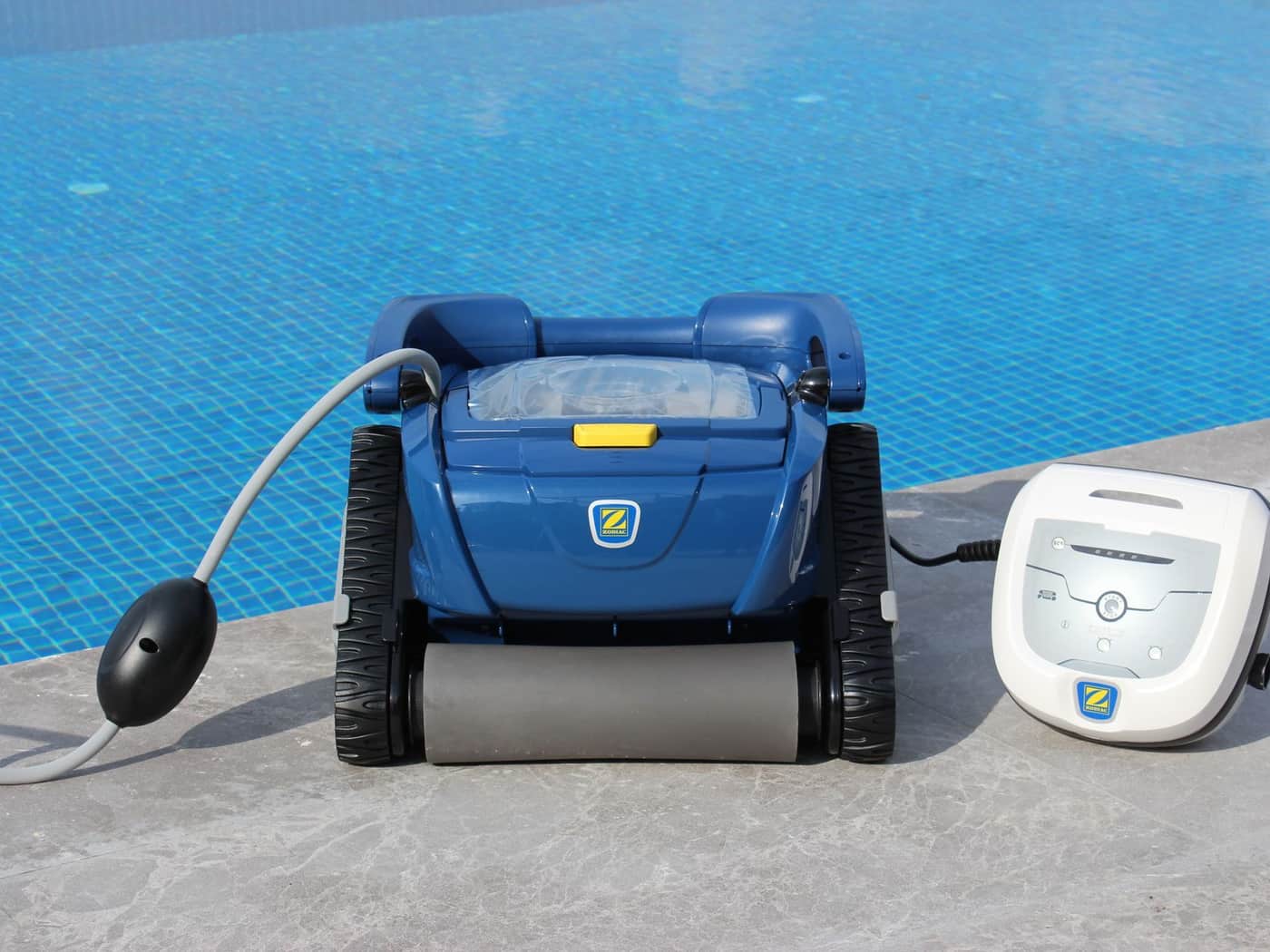
Aiper Scuba S1 Review
Aiper's mid-range cordless robot read off its own published figures: 270 minutes in Eco, 180 in the full modes, a 3 micron filter layer, four cleaning zones and no coverage rating.
Top pick
Aiper Scuba S1 Robotic Pool Cleaner
Longest published runtime