Leaves & Debris
Skimmer Net vs Leaf Rake
Listings use the two names interchangeably. The tools are genuinely different, and owning only one of them is why the daily job feels like work.

We have not handled these products and we do not pretend to have. Here is what we did instead. Links to Amazon earn us a commission at no extra cost to you, and commission never decides a pick — disclosure.
| # | Product | Best for | The spec it turns on | Price |
|---|---|---|---|---|
| 1 | 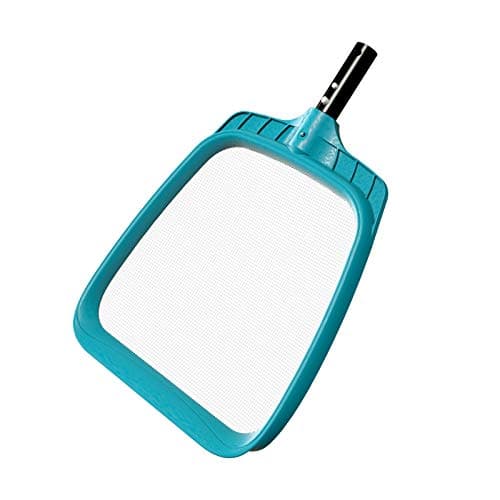 POOLWHALE Pool Leaf Skimmer, flat surface netTop pickThe everyday net. Flat, light and quick, for the two-minute pass that stops leaves sinking in the first place. | Daily surface skimming | Flat net for surface work, pole not included | |
| 2 | 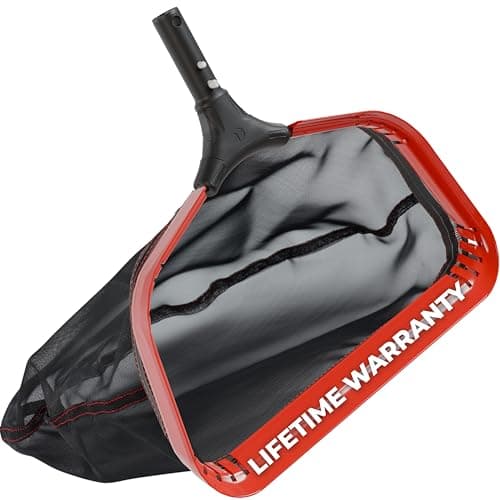 ProTuff 490 Promise Pro Pool Leaf Rake, 19.5 inA wide frame and a deep bag, which is the combination that decides how many passes a leaf drop takes. | Heavy leaf fall | 19.5 in frame with a deep bag; the widest opening in this roundup | |
| 3 | 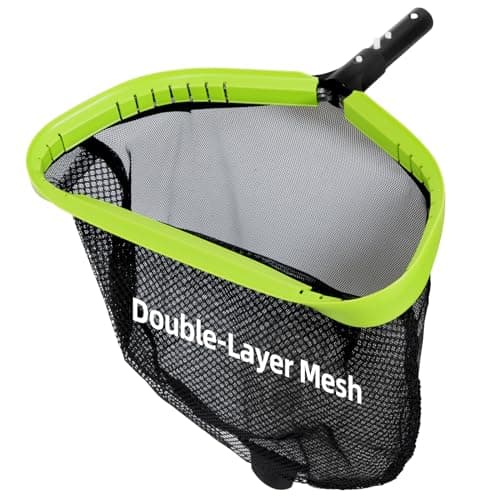 Sepetrel Professional Pool Leaf Skimmer Net, double-layer deep bagDouble-layer mesh catches the pollen and fine grit that a single coarse net drives straight through. | Fine debris and pollen | Double-layer mesh on a reinforced frame |
The difference, plainly
| Skimmer net (flat) | Leaf rake (deep bag) | |
|---|---|---|
| Bag | Shallow or flat | Deep, often 12-18 in |
| Job | Floating debris | Sunken debris and heavy loads |
| Capacity | A handful | A full sweep |
| Drag through water | Almost none | Significant when loaded |
| Weight on the pole | Light | Heavy when full |
| Reaches the floor? | No | Yes |
| Frequency of use | Daily, in two minutes | Weekly, or during leaf fall |
Why the naming is a mess
Search either term and you get both tools, often in the same listing title - 'pool skimmer net leaf rake' is a normal product name. The words have no agreed technical meaning in retail, so they tell you nothing.
What does tell you something is the photograph and the dimensions. Look at the bag: flat and shallow means surface tool, deep and tapered means rake. Look for a stated frame width; 17 to 20 inches is the residential range.
Own both, and here is why
The deep rake is the better tool and the flat net is the one that gets used. That is not a contradiction - it is the whole point.
A two-minute daily pass with a light net keeps leaves off the floor entirely, which prevents staining, chlorine consumption and phosphate release. A heavy deep rake makes that daily pass feel like a chore, and a chore that feels like work does not happen every day.
The third variable nobody prints
Mesh aperture. A coarse net passes pollen, fine sand and post-storm dust straight through, so you sweep the pool and it still looks dirty. No manufacturer in this category publishes a micron figure, which is why a stated double-layer construction is the best proxy available: coarse outer for leaves, fine inner for what the outer misses.
The cost of fine mesh is drag. It pushes more water, it is heavier to sweep, and it clogs and needs rinsing. That makes it a spring-pollen and post-storm tool rather than an everyday one - a third net, if you are being thorough.
What about the pole?
Both attach to the same one, and it matters more than either net. Length has to reach the middle of your pool from the edge; wall thickness decides whether it survives the season. Full detail on best pool skimmers and nets.
The picks
Top pick - Daily surface skimming
POOLWHALE Pool Leaf Skimmer, flat surface net
The everyday net. Flat, light and quick, for the two-minute pass that stops leaves sinking in the first place.
The published figure
Flat net for surface work, pole not included
A leaf that is still floating costs two minutes to remove. The same leaf on the floor two days later costs a vacuum cycle and has started releasing phosphate into the water.
That is the entire argument for owning a cheap flat net alongside a deep rake: you will actually use it daily, which is the only thing that matters.
Flat nets are wrong for anything on the bottom. Their whole design assumes the debris is on the surface.
What it does well
- Light enough that the daily pass actually happens
- Fast through the water with almost no drag
- Cheap enough to replace without thinking about it
What it costs you
- Useless for anything that has already sunk
- Small capacity
Skip it if you are clearing a heavy drop off the pool floor — that is a deep rake job.
#ad · how this is funded · price as of October 18, 2026
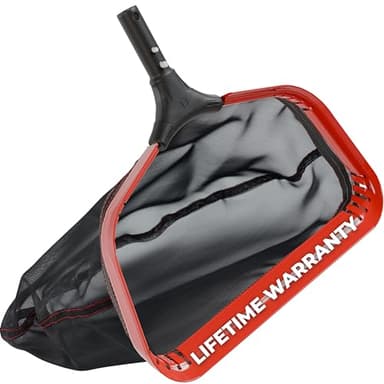
Pick 2 - Heavy leaf fall
ProTuff 490 Promise Pro Pool Leaf Rake, 19.5 in
A wide frame and a deep bag, which is the combination that decides how many passes a leaf drop takes.
The published figure
19.5 in frame with a deep bag; the widest opening in this roundup
Two numbers decide a leaf rake: the width of the opening and the depth of the bag. Width sets how much surface you sweep per pass; depth sets how much you can hold before you stop to empty it.
At 19.5 inches this is at the wide end of what fits comfortably down a standard skimmer throat and around a ladder.
A deep bag is what separates a leaf rake from a flat skimmer net. If you are scooping a heavy autumn drop, depth is the specification that matters.
What it does well
- Wide opening covers more surface per pass
- Deep bag holds a full sweep without emptying
- Reinforced frame, which is where cheap nets fail first
What it costs you
- A full deep bag is heavy on a long pole
- Too bulky for skimming a few surface leaves
Skip it if your daily job is a handful of floating leaves. A flat net is faster and lighter for that.
#ad · how this is funded · price as of October 18, 2026
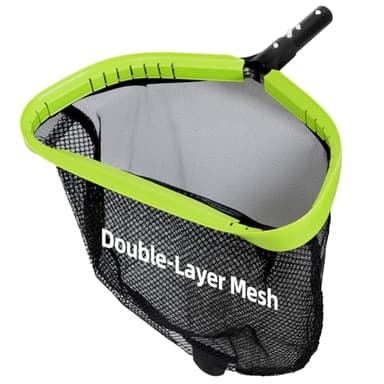
Pick 3 - Fine debris and pollen
Sepetrel Professional Pool Leaf Skimmer Net, double-layer deep bag
Double-layer mesh catches the pollen and fine grit that a single coarse net drives straight through.
The published figure
Double-layer mesh on a reinforced frame
Mesh aperture is the specification nobody prints and everybody needs. A coarse net passes pollen, fine sand and the dust that settles after a storm, so you sweep the pool and it still looks dirty.
A double-layer construction is the retail workaround: a coarse outer layer takes the leaves, a finer inner layer takes what the outer layer misses.
The trade is drag. A fine net pushes more water and is heavier to sweep, so this is a spring-pollen and post-storm tool rather than an everyday one.
What it does well
- Catches pollen and fine grit a single-layer net passes through
- Reinforced frame rather than molded plastic
What it costs you
- Noticeably more drag through the water than a coarse net
- Fine mesh clogs and needs rinsing more often
Skip it if your problem is leaves rather than dust. Fine mesh is slower for no benefit in that job.
#ad · how this is funded · price as of October 18, 2026
Questions people actually ask
What is the difference between a pool skimmer and a leaf rake?
Do I need both a skimmer net and a leaf rake?
What size pool net should I buy?
Which net catches pollen?
Sources
Every figure on this page traces to one of these. Where a number could not be sourced, the page says so rather than estimating.
Read next
Best for daily skimming
Best Pool Skimmers, Nets and Poles
Flat nets for the daily pass, deep rakes for a real drop, and the pole spec that decides whether it survives a season.
Top pick
POOLWHALE Pool Leaf Skimmer, flat surface net
Daily surface skimming
#ad · how this is funded · price as of October 18, 2026

How to Get Leaves Out of a Pool
Surface first, then the floor, then the baskets. Turning the pump off before you start is the step that saves the most time.
Top pick
ProTuff 490 Promise Pro Pool Leaf Rake, 19.5 in
Heavy leaf fall
#ad · how this is funded · price as of October 18, 2026
Best for heavy leaf loads
Best Pool Vacuum for Leaves
Garden-hose jet, battery, or the pool's own suction - each keeps a different part of your system out of the job.
Top pick
U.S. Pool Supply Professional Leaf Terminator Vacuum, 15 in
Heavy leaf loads on a garden hose
#ad · how this is funded · price as of October 18, 2026

Robot vs Manual Pool Vacuum
Manual, suction-side, pressure-side and robotic compared on cost, filter load and what each one actually cleans.
Top pick
POOLWHALE Pool Vacuum Head and 36 ft Hose Kit
The complete manual kit