Testing & Chemistry
Best Pool Salt
There is one real specification in this category, and half the bags on the shelf fail it for reasons that have nothing to do with quality.

We have not handled these products and we do not pretend to have. Here is what we did instead. Links to Amazon earn us a commission at no extra cost to you, and commission never decides a pick — disclosure.
| # | Product | Best for | The spec it turns on | Price |
|---|---|---|---|---|
| 1 | 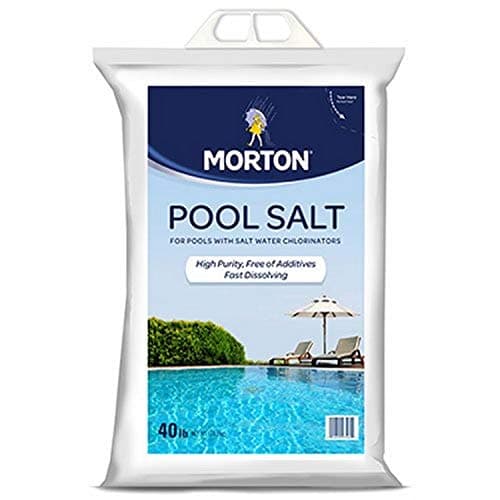 Morton Pool Salt, 40 lbTop pickSalt is salt, and this is the bag most chlorinator manufacturers assume you are buying. | Salt chlorinators | 40 lb bag of pool-grade sodium chloride | |
| 2 | 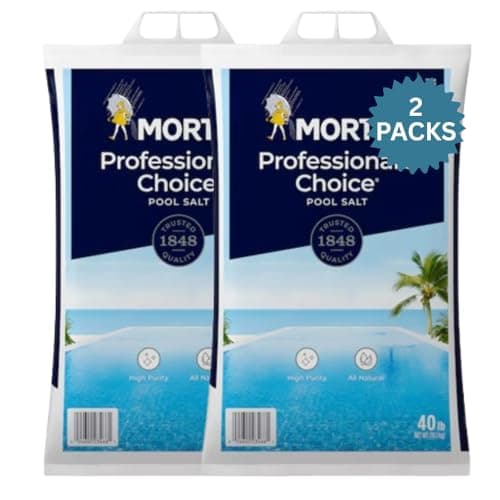 Morton Professional's Choice Pool Salt, 40 lbA finer grain that dissolves faster, which mostly matters on the day you are commissioning a chlorinator. | Faster dissolution | 40 lb; listing states an all-natural fast-dissolving formulation | Check price#ad |
| 3 | 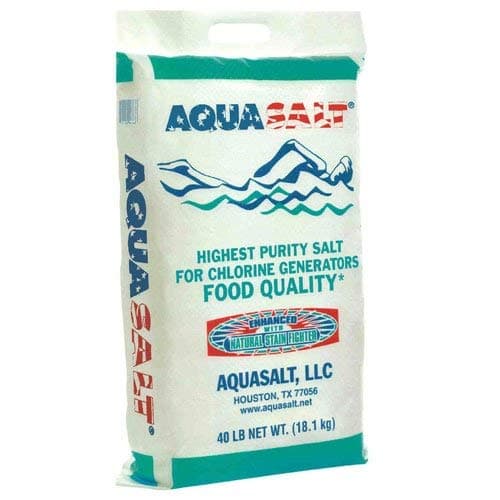 Pool Salt Chlorine Generator Salt, 40 lbSold for the job rather than adapted to it, which in a category where the only real spec is purity is the thing to buy on. | Topping up a salt cell | 40 lb bag sold specifically for chlorine generator systems | |
| 4 | 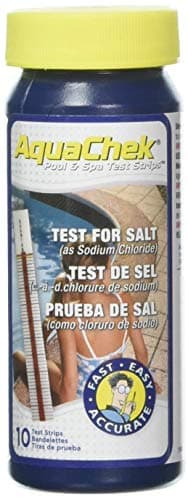 AquaChek Salt Test Strip Titrators, 10 stripsA second opinion on the number your chlorinator's own display is reporting, which is worth having when that display is what fails. | Checking salinity without the panel | Titrator-style strips reading sodium chloride concentration | |
| 5 | 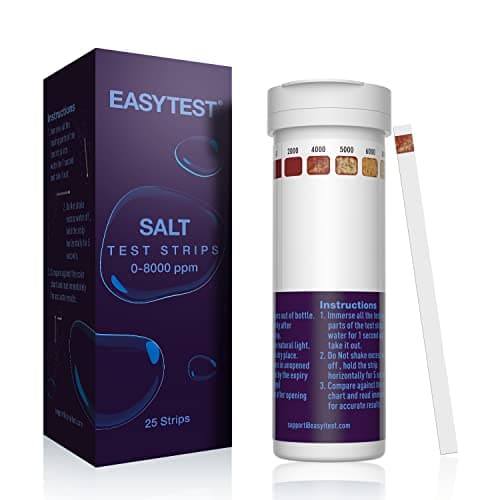 EASYTEST Saltwater Pool Test Strips, 0-8000 ppm, 25 countPublishes the range it reads across, which sounds obvious and is not - most salt strips do not. | A stated reading range | 25 strips reading sodium chloride across a stated 0-8,000 ppm range | |
| 6 | 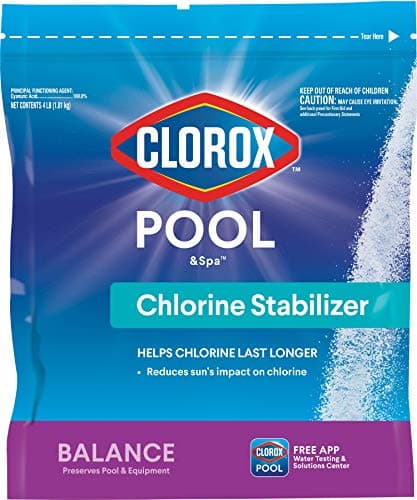 Clorox Pool&Spa Swimming Pool Chlorine StabilizerSaltwater pools burn through chlorine in sunlight faster than anything, and this is the correction, in a size that suits one. | Saltwater pools | Cyanuric acid stabilizer, stated as saltwater compatible |
How a salt pool actually uses salt
The most useful thing to understand before buying any is that the salt is not consumed. A chlorinator splits dissolved sodium chloride into chlorine, that chlorine sanitizes, and it reverts to salt. The same salt cycles indefinitely.
So you are not dosing on a schedule. You top up for what physically leaves the pool: splash-out, backwashing, filter cleaning, and rain overflow. A salt pool that loses no water needs almost no salt after commissioning.
That is also why over-salting is a genuine problem: nothing removes it except draining and diluting. Full background on salt water pool vs chlorine.
The one specification: purity
Salt for a chlorinator has exactly one requirement, and it is what to check every bag against. (The chlorinator itself is chosen on a different number - pounds of chlorine per day - on best salt water chlorinator.)
| Additive | Why it is in some salt | What it does in a pool |
|---|---|---|
| Anti-caking agents | Stops table and road salt clumping | Clouds water; some varieties stain |
| Iodine | Added to table salt as a nutrient | Stains surfaces |
| Yellow prussiate of soda | An anti-caking agent in some rock salt | Can stain |
| Minerals and grit | Present in unrefined rock salt | Loads the filter; can stain |
Salt sold as pool salt, or as water-softener salt, has none of these. Table salt and road salt generally do. That is the whole distinction, and it is why a bag of pool salt costs a little more than a bag of road salt that looks identical.
Grain size, the second-order choice
Finer salt dissolves faster. That is genuinely useful in two situations and irrelevant otherwise.
- **Commissioning a new system,** where you are adding several hundred pounds at once and want the cell running properly the same weekend.
- **After a heavy rain dilution,** where a large correction is needed quickly.
- **Routine top-ups** - here it makes no practical difference, and the coarser grade is cheaper per pound.
Whatever the grain, add it with the pump running, brush it across the floor rather than leaving it in a pile, and wait a full day before trusting a salinity reading. Same-day readings always read low, and that is how people over-salt.
How much you need
Your generator's manual states its own target salinity, and that figure is the one to work to - it varies by manufacturer and by cell. Most residential systems sit somewhere in the region of 2,700 to 3,400 ppm.
Under-dose deliberately. Coming up is a bag of salt; coming down is draining and refilling a portion of the pool.
The picks
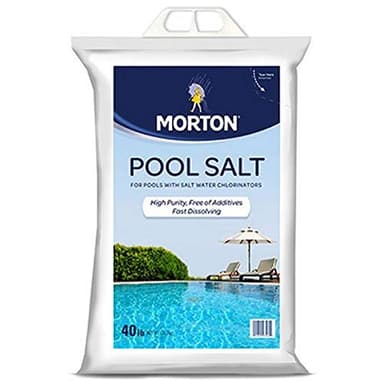
Top pick - Salt chlorinators
Morton Pool Salt, 40 lb
Salt is salt, and this is the bag most chlorinator manufacturers assume you are buying.
The published figure
40 lb bag of pool-grade sodium chloride
A salt chlorinator makes chlorine from dissolved salt by electrolysis. The salt is not consumed, so you top up for splash-out and rain dilution rather than dosing on a schedule.
Purity is the only spec: anything containing anti-caking agents or iodine will stain, and pool-grade salt has neither.
Add it with the pump running and give it a full day to dissolve before trusting a salinity reading.
What it does well
- Pool grade, so no anti-caking agents or iodine
- Widely stocked in general retail
- Not consumed by the chlorinator, so top-ups are infrequent
What it costs you
- 40 lb bags are heavy
- Slow to dissolve; a same-day reading will read low
Skip it if you do not have a salt chlorinator. Adding salt to a chlorine pool achieves nothing except a softer feel.
#ad · how this is funded · price as of October 10, 2026
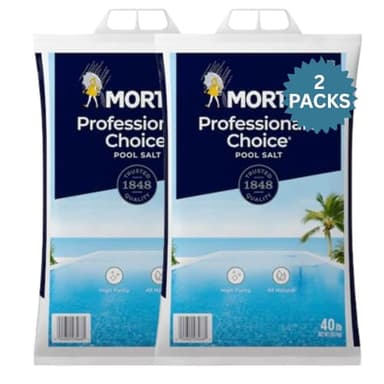
Pick 2 - Faster dissolution
Morton Professional's Choice Pool Salt, 40 lb
A finer grain that dissolves faster, which mostly matters on the day you are commissioning a chlorinator.
The published figure
40 lb; listing states an all-natural fast-dissolving formulation
Grain size is the difference between salt products. Finer dissolves faster; coarser is cheaper per pound and takes longer to disperse.
That only matters when you are adding a lot at once — start-up, or after a heavy rain dilution. For routine top-ups the difference disappears.
Same purity requirement and the same one-day wait before a salinity reading means anything.
What it does well
- Faster dissolution on a large addition
- Same pool-grade purity
What it costs you
- Costs more per pound
- No advantage for a small top-up
Skip it if you are topping up a few bags a season. The standard grade is the same salt.
Pick 3 - Topping up a salt cell
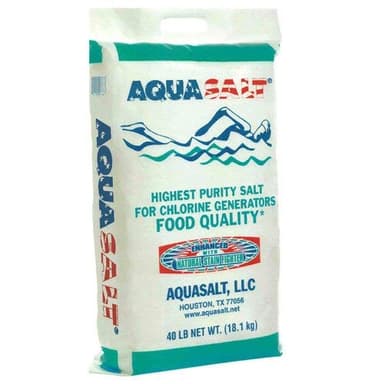
Pool Salt Chlorine Generator Salt, 40 lb
Sold for the job rather than adapted to it, which in a category where the only real spec is purity is the thing to buy on.
The published figure
40 lb bag sold specifically for chlorine generator systems
Salt for a chlorinator has exactly one requirement: nothing in the bag except sodium chloride. Anti-caking agents and iodine both stain, and both are standard in salt sold for other purposes.
It is not consumed by the generator - the chlorine it makes reverts to salt. You top up for splash-out, backwash and rain dilution, not on a schedule.
Add with the pump running and wait a full day before trusting a salinity reading. Same-day readings always read low.
What it does well
- Sold for chlorinators, so the purity question is already answered
- Not consumed, so top-ups are infrequent
- Widely available
What it costs you
- 40 lb bags are heavy and awkward
- No stated grain size, so dissolution speed is unknown until you open it
Skip it if you do not have a salt chlorinator. Adding salt to a chlorine pool changes how the water feels and nothing else.
#ad · how this is funded · price as of October 10, 2026
Pick 4 - Checking salinity without the panel
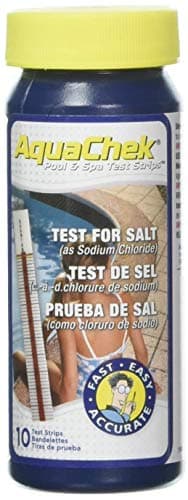
AquaChek Salt Test Strip Titrators, 10 strips
A second opinion on the number your chlorinator's own display is reporting, which is worth having when that display is what fails.
The published figure
Titrator-style strips reading sodium chloride concentration
A salt cell reports salinity from a sensor that ages. A cell reading low when the water is actually fine sends people out to buy salt they do not need, and over-salting is corrected only by draining water.
Titrator strips read by how far a color band travels rather than by matching a shade, which removes the judgment that makes ordinary strips imprecise.
Ten strips is a season of occasional checks, not a weekly test.
What it does well
- Independent check on the chlorinator's own reading
- Titrator format rather than color matching
- Catches a failing salinity sensor before you act on it
What it costs you
- Only ten strips
- Reads salt only - no other parameter
Skip it if you have a chlorine pool. There is no salt to measure and no reason to own these.
#ad · how this is funded · price as of October 10, 2026
Pick 5 - A stated reading range
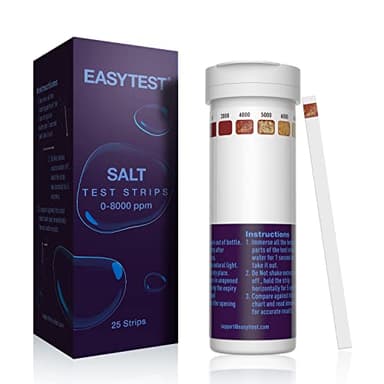
EASYTEST Saltwater Pool Test Strips, 0-8000 ppm, 25 count
Publishes the range it reads across, which sounds obvious and is not - most salt strips do not.
The published figure
25 strips reading sodium chloride across a stated 0-8,000 ppm range
Salt chlorinators typically want somewhere between 2,700 and 3,400 ppm, and your generator's manual states its own target. A strip that reads to 8,000 ppm covers every residential system with room either side.
Knowing the range matters because a strip that tops out near your target cannot tell you how far over you are, and over-salting is fixed only by diluting.
25 strips is enough for regular checking through a season rather than the occasional spot check.
What it does well
- States its reading range, unlike most of this category
- 25 strips supports regular rather than occasional testing
- Covers every residential chlorinator target with margin
What it costs you
- Color-matched rather than titrated, so less precise than the titrator strips
- Degrades once opened, faster in humidity
Skip it if you only test salinity twice a season. The titrator strips are more precise and you will not use 25.
#ad · how this is funded · price as of October 10, 2026
Pick 6 - Saltwater pools
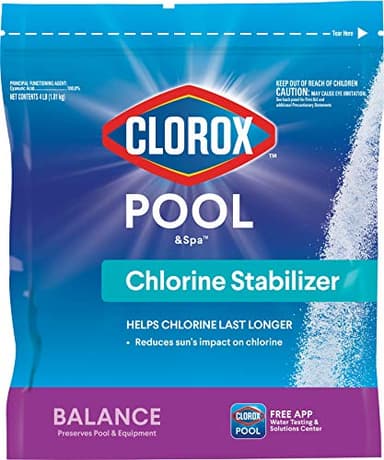
Clorox Pool&Spa Swimming Pool Chlorine Stabilizer
Saltwater pools burn through chlorine in sunlight faster than anything, and this is the correction, in a size that suits one.
The published figure
Cyanuric acid stabilizer, stated as saltwater compatible
A salt chlorinator generates chlorine continuously and adds no stabilizer, so a salt pool without cyanuric acid loses most of what it makes to UV.
HTH's stabilizer page puts the saltwater target at 60-80 ppm, higher than the 30-50 ppm for tablet pools, because the generation rate is steady rather than dosed.
Add it through the skimmer with the pump running and give it two days before retesting.
What it does well
- Explicitly stated as saltwater compatible
- Directly reduces the chlorine your generator has to make
What it costs you
- Very slow to dissolve
- Cannot be reduced except by draining
Skip it if you already read above 80 ppm — more will start suppressing the chlorine you generate.
#ad · how this is funded · price as of October 10, 2026
Test the salinity yourself
Your chlorinator displays a salinity reading, and that reading comes from a sensor which ages and drifts. A cell reporting low when the water is actually fine sends people out to buy salt they do not need - and over-salting is corrected only by draining.
An independent check costs a few dollars and catches a failing sensor before you act on it. Two formats:
| Titrator strips | Color-match strips | |
|---|---|---|
| How they read | A color band travels up the strip | Match a pad against a chart |
| Precision | Higher - it is a measured distance | Lower - it is a judgment |
| Typical count | 10 strips | 25 or more |
| Best for | Occasional accurate checks | Regular monitoring |
A stated reading range matters more than it sounds. A strip that tops out near your target cannot tell you how far over you are, and being over is the expensive direction.
The thing salt pool owners under-buy
Cyanuric acid, not salt. A generator produces chlorine at a steady modest rate, and without stabilizer ultraviolet light destroys it as fast as the cell can make it - so the generator runs flat out achieving very little.
HTH's stabilizer page gives 60 to 80 ppm as the saltwater target, higher than the 30 to 50 ppm for tablet pools precisely because the supply is steady rather than dosed. It is the most common thing new salt pool owners get wrong, and it costs far more in cell wear than the stabilizer would have cost.
Questions people actually ask
What kind of salt do I use in a pool?
How much salt does my pool need?
Can I use water softener salt in a pool?
How often do I add salt to a salt water pool?
Why does my salt cell say low salt when I just added some?
Can you add too much salt to a pool?
Sources
Every figure on this page traces to one of these. Where a number could not be sourced, the page says so rather than estimating.
- HTH Pool Care Chlorine Stabilizer - product page, states up to 90% chlorine loss from UV and CYA targets of 30-50 ppm for trichlor and dichlor pools, 60-80 ppm for saltwater
- Michigan EGLE, Maximum Disinfectant Residuals and Operational Ranges: Guidance for Michigan Licensed Pools (December 2025) - quotes CDC MAHC 5.7.3.1.1.5.0, the EPA FIFRA label rule and the NSF 10 ppm application ceiling
- Skim & Soak methodology - the constants, formulas and worked examples behind every dose on this site
- Morton Pool Salt, 40 lb - Amazon listing, read 2026-09-02
- Chlorine Generator Salt, 40 lb - Amazon listing, read 2026-09-02
- AquaChek Salt Test Strip Titrators - Amazon listing, read 2026-09-02
- EASYTEST Saltwater Pool Test Strips, 0-8000 ppm - Amazon listing, read 2026-09-02
Read next
Salt Water Pool vs Chlorine Pool
Same sanitizer, different delivery. What genuinely changes, and the cell replacement cost that decides the economics.
Top pick
Morton Pool Salt, 40 lb
Salt chlorinators
#ad · how this is funded · price as of October 10, 2026
Cyanuric Acid: Stabilizer, and Its Limit
How stabilizer works, the targets HTH publishes, and why the only way down is dilution.
Top pick
In The Swim Pool Stabilizer, 100% Cyanuric Acid, 25 lb
Stabilizing a liquid-chlorine or salt pool
#ad · how this is funded · price as of October 10, 2026
Best test kit
Best Pool Test Kits
Titration kits, color comparators, strips and a photometer compared on precision, speed and what each one cannot see.
Top pick
AquaChek Select Connect 7-Way Test Strips, complete kit
Weekly testing you will actually do
#ad · how this is funded · price as of October 10, 2026

How to Balance Pool Water
The correction order that stops you doing the same job twice, with computed dose tables and the formulas behind them.
Top pick
Pool Mate Premium Alkalinity Increaser, 10 lb
Raising total alkalinity
#ad · how this is funded · price as of October 10, 2026