Cloudy Water
Best Pool Tile Cleaner
Two different deposits form in the same place, and buying the wrong product for yours is why the last bottle did nothing.
We have not handled these products and we do not pretend to have. Here is what we did instead. Links to Amazon earn us a commission at no extra cost to you, and commission never decides a pick — disclosure.
| # | Product | Best for | The spec it turns on | Price |
|---|---|---|---|---|
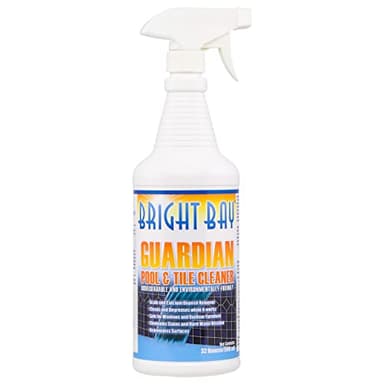
| 1 | 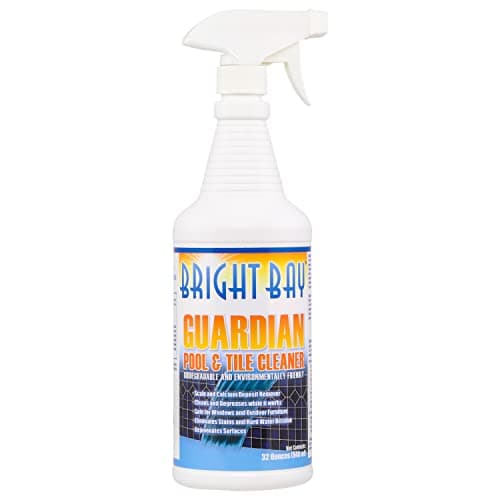 Guardian Pool & Tile Cleaner, 1 quartTop pickA spray that dissolves deposits chemically instead of grinding them off. The right first try on tile you would rather not scratch. | Scale above the waterline without scrubbing | Listing states a non-acid, non-abrasive spray for calcium and scum above the waterline; not for natural stone or cement tile | |
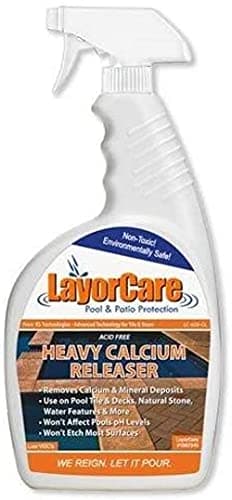
| 2 | 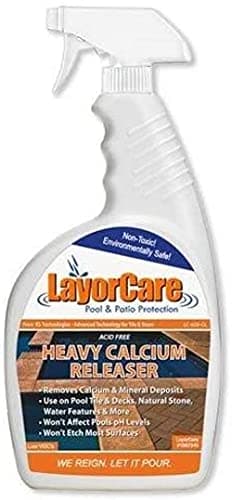 LayorCare Heavy Calcium Releaser, 32 ozThe only one here that publishes a coverage figure, which is what lets you work out whether one bottle does your waterline or four do. | Heavy buildup on tile, stone and decks | Listing states one quart covers up to 75 sq ft, used at full strength, and will not alter water pH | |
| 3 | 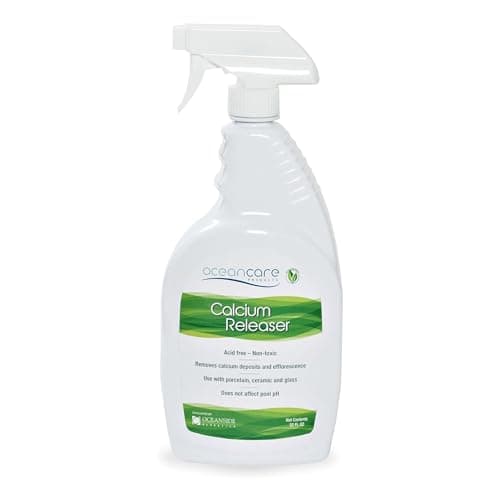 Oceancare Calcium Releaser, 32 oz trigger sprayMineral acid-free and aimed squarely at tile finishes that other products warn you about. A short listing, but the claims it makes are the relevant ones. | Delicate tile finishes | Listing states mineral acid-free, for porcelain, ceramic and glass tile, removes calcium and efflorescence | |
| 4 | 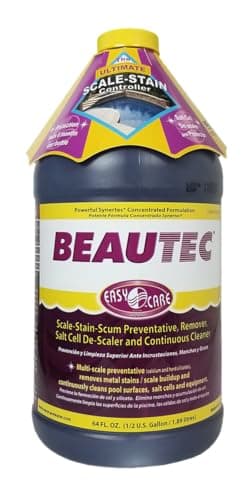 EasyCare BeauTec Salt Cell and Tile Cleaner, 64 ozThe crossover product: a descaler the maker sells for both the salt cell and the waterline, which is sensible because the deposit is the same calcium either way. | One bottle for the cell and the tile | Listing states it removes existing scale, stain and scum buildup and descales salt cells | |
| 5 | 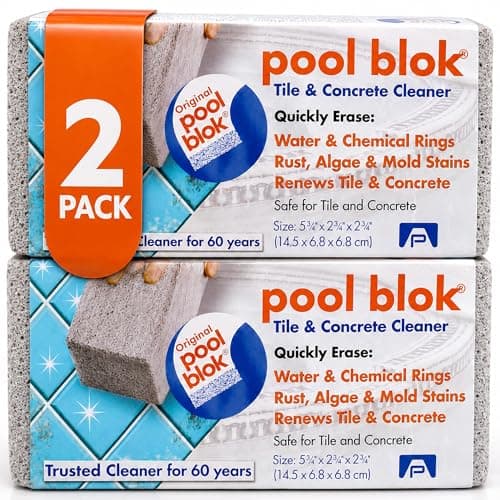 Pumie Pool Blok Pumice Stone, 2-packThe cheapest thing on this page and the one with the clearest limits. It abrades deposits off hard surfaces and will damage soft ones. | Spot-removing scale by hand | Listing states natural pumice that floats; for ceramic tile, grout, concrete and gunite; not for vinyl, fiberglass or wood |
Scale or scum: they are not the same band
Two things collect at the waterline and people call both of them the tile line. They come from opposite directions and nothing removes both well.
| Calcium scale | Oily scum line | |
|---|---|---|
| Looks like | White or gray crust, sometimes crystalline | Gray-brown band, dull, slightly greasy |
| Feels like | Hard, gritty, resists a fingernail | Soft, smears when rubbed |
| Comes from | Hard water, high pH or high calcium hardness | Sunscreen, body oil, lotions, hair product |
| Removed by | Calcium releaser, or a pumice stone on hard tile | Enzyme, oil absorber, or a tile surface cleaner |
| Comes back if | Water chemistry stays scale-forming | The pool is used and nothing absorbs the oils |
If your band smears under a thumb, do not buy a calcium releaser - it is an oil problem, and cloudy from sunscreen and swimmers covers what actually removes it. The rest of this page is about scale.
Why scale forms in exactly that band
Scale is calcium carbonate coming out of solution. It happens where evaporation concentrates the water and where the surface is warm and agitated, which is precisely the waterline. High calcium hardness makes it likelier, and so does high pH - the two readings that decide whether your water is scale-forming or corrosive.
That is why cleaning tile is a treatment rather than a cure. If the chemistry that laid the scale down has not changed, the band returns. Pool pH too high covers the reading that drives it most often, and the hardness side sits on how to raise calcium hardness - where the same chemistry runs the other way.
How we compared them
- Which surfaces the listing rules out. This is the one that causes damage, and every product here names something it must not touch.
- Whether it needs draining. Everything on this page works above or at the waterline with the pool full, which is the difference between an afternoon and a project.
- What it publishes. Coverage area, acid content, and whether it affects water chemistry.
- How much scrubbing is still involved. A chemical that dissolves deposits and a stone that grinds them off are different amounts of your Saturday.
What each listing states
| Product | Acid | Stated safe on | Stated not for | Coverage |
|---|---|---|---|---|
| Guardian Pool & Tile Cleaner | None stated - 'no harsh acid' | Tile, grout, glass block, chrome, sealed decks | Natural stone, cement tile | Not stated |
| LayorCare Heavy Calcium Releaser | Not stated | Tile, stone, decks, rock features | Test a hidden area first | 75 sq ft per quart |
| Oceancare Calcium Releaser | Mineral acid-free | Porcelain, ceramic and glass tile | Not stated | Not stated |
| EasyCare BeauTec | Not stated | Surfaces and equipment, and salt cells | Not stated | Not stated |
| Pumie Pool Blok | None - abrasive | Ceramic tile, grout, concrete, gunite | Vinyl, fiberglass, wood | Not applicable |
The 'stated not for' column is the one to read twice. A pumice stone on a fiberglass step or a vinyl liner leaves permanent scratching, and its own listing says so.
How much you need for your waterline
Only LayorCare publishes a coverage figure, and it is enough to size the job for the others by comparison.
The non-acid sprays
Three of the five here are sprays that break deposits down chemically. Guardian states it contains no harsh acid, is non-abrasive, will not scratch tile, grout, glass or chrome, and will not affect pool water chemistry - and that it contains no phosphates, which matters because phosphate is algae food.
Oceancare states its formula is mineral acid-free and names porcelain, ceramic and glass tile. LayorCare states its product is non-toxic, will not alter water pH, and generally will not etch most surfaces, while still advising a hidden-area test.
All three are honest about one thing: heavy buildup takes repeat applications. Guardian states heavier deposits may need weekly repeats until fully dissolved. A single bottle is not going to remove five years of scale in an afternoon.
The pumice route, and its one hard limit
A pumice block is the cheapest thing here by a wide margin and it does work. Pumie states it breaks up lime, rust and mineral deposits, that the block floats so you can work without draining, and that it adds no chemicals to the water.
The limit is in the same listing: ceramic tile, grout, concrete and gunite only - not vinyl, not fiberglass, not wood. Abrasion does not distinguish between scale and a soft surface underneath it. On a vinyl-lined pool this is the wrong tool at any price.
It is also slow. A full waterline by hand is an afternoon on your knees at the edge of the pool, which is exactly what the sprays are sold to avoid.
The salt pool case
Salt pools scale more than most, because chlorine generation drives pH up at the cell plates and high pH is what deposits calcium. That is why EasyCare sells one product for both jobs: the same deposit forms on the waterline and inside the generator cell.
If your pool is salt and your tile is scaling, check the cell at the same time - it is almost certainly scaled as well, and a scaled cell quietly stops producing chlorine. Best salt cell cleaner covers that side of the same problem.
The picks
Top pick - Scale above the waterline without scrubbing
Guardian Pool & Tile Cleaner, 1 quart
A spray that dissolves deposits chemically instead of grinding them off. The right first try on tile you would rather not scratch.
The published figure
Listing states a non-acid, non-abrasive spray for calcium and scum above the waterline; not for natural stone or cement tile
Guardian states you spray it directly on calcium buildup and scum lines above the waterline, and that it breaks deposits down chemically rather than by abrasion.
The listing states the formula is non-corrosive, non-abrasive and contains no harsh acid, and that it will not scratch tile, grout, glass or chrome the way a pumice stone can. It also states it will not affect pool water chemistry and contains no phosphates.
Two limits are stated plainly: heavier deposits may need repeat weekly applications, and it is not for natural stone or cement tile. Read that second one before you spray a stone waterline.
What it does well
- Stated non-acid and non-abrasive, so it will not scratch tile or glass
- Stated not to affect water chemistry, and phosphate-free
- Works above the waterline with no draining
What it costs you
- Stated not for natural stone or cement tile
- Heavy buildup may need repeated weekly applications
- Costs more than a pumice stone that does the job by hand
Skip it if your waterline is natural stone. The listing rules that out.
#ad · how this is funded · price as of October 9, 2026
Pick 2 - Heavy buildup on tile, stone and decks
LayorCare Heavy Calcium Releaser, 32 oz
The only one here that publishes a coverage figure, which is what lets you work out whether one bottle does your waterline or four do.
The published figure
Listing states one quart covers up to 75 sq ft, used at full strength, and will not alter water pH
LayorCare states one quart covers up to 75 square feet. A 16 x 32 ft pool has roughly 96 linear feet of waterline; at a 6 inch band that is about 48 square feet, so one bottle covers it with margin - the arithmetic is on the page.
It is stated to be used at full strength with no dilution, and the listing states it is non-toxic, will not alter water pH, and generally will not etch most surfaces - with the sensible caveat to test a hidden area first.
The stated method is scrub, apply, let it sit, scrub again, rinse, repeat as needed. This is a product that still expects a brush.
What it does well
- Publishes a coverage figure, 75 sq ft per quart
- Stated not to alter pH
- Stated for stone and decks as well as tile
What it costs you
- Still requires scrubbing before and after application
- Its own listing advises a hidden-area test first
- Full-strength use means a bottle empties quickly
Skip it if the buildup is light. A gentler spray or a pumice stone will clear a thin scum line for less.
#ad · how this is funded · price as of October 9, 2026
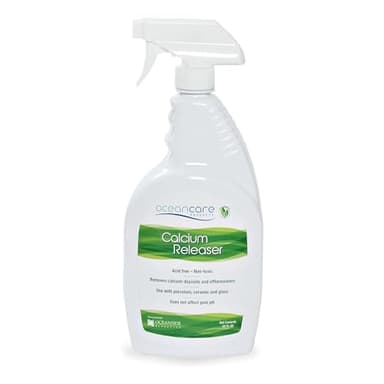
Pick 3 - Delicate tile finishes
Oceancare Calcium Releaser, 32 oz trigger spray
Mineral acid-free and aimed squarely at tile finishes that other products warn you about. A short listing, but the claims it makes are the relevant ones.
The published figure
Listing states mineral acid-free, for porcelain, ceramic and glass tile, removes calcium and efflorescence
Oceancare states the formula is mineral acid-free and safe on sensitive tile finishes, for use on porcelain, ceramic and glass tile.
It states removal of calcium and efflorescence - the white bloom that forms as water moves through grout and masonry and leaves its minerals behind.
The listing is brief and publishes no coverage area or dwell time, so plan on testing a small patch and working out your own routine.
What it does well
- Stated mineral acid-free
- Named for porcelain, ceramic and glass tile
- Trigger spray suits spot work on a scum line
What it costs you
- No coverage area or dwell time published
- 32 oz does not go far on a full waterline
- Third-party seller, so delivery varies
Skip it if you have a whole pool's waterline to do. Price the quart against the gallon before buying spray bottles.
#ad · how this is funded · price as of October 9, 2026
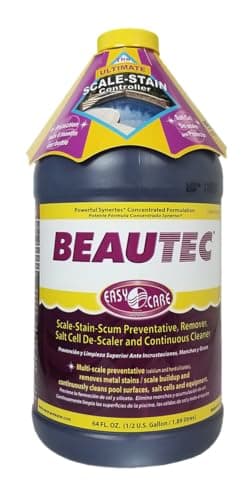
Pick 4 - One bottle for the cell and the tile
EasyCare BeauTec Salt Cell and Tile Cleaner, 64 oz
The crossover product: a descaler the maker sells for both the salt cell and the waterline, which is sensible because the deposit is the same calcium either way.
The published figure
Listing states it removes existing scale, stain and scum buildup and descales salt cells
EasyCare states it aggressively prevents scale, stain and scum buildup, removes existing buildup on surfaces and equipment, and acts as a salt cell descaler that prolongs cell lifespan.
A salt pool builds scale in both places for the same reason: chlorine generation drives pH up at the cell plates, and hard water leaves calcium behind wherever the water line sits.
The listing publishes no dilution ratio or soak time, so follow your cell maker's cleaning instructions rather than improvising one.
What it does well
- Stated for both salt cell descaling and tile cleaning
- 64 oz covers repeated cell soaks
- Prevention as well as removal, per the listing
What it costs you
- No dilution ratio or soak time published
- Costs more than a single-purpose cell cleaner
- Third-party seller, so delivery varies
Skip it if you only need one job done. A dedicated cell cleaner or a tile spray will be cheaper.
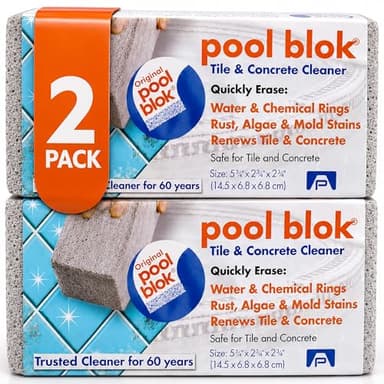
Pick 5 - Spot-removing scale by hand
Pumie Pool Blok Pumice Stone, 2-pack
The cheapest thing on this page and the one with the clearest limits. It abrades deposits off hard surfaces and will damage soft ones.
The published figure
Listing states natural pumice that floats; for ceramic tile, grout, concrete and gunite; not for vinyl, fiberglass or wood
Pumie states it breaks up lime, rust and mineral deposits at the waterline, that the block floats so you can work without draining, and that it adds no chemicals to the water.
The listing names the surfaces: ceramic tile, grout, concrete and gunite - and states it is not for vinyl, fiberglass or wood. That exclusion is the whole decision. On a vinyl liner this is the wrong tool.
It is hand work. A full waterline with a pumice stone is an afternoon, which is exactly what the spray products are sold to avoid.
What it does well
- Adds nothing to the water
- Floats, so it works without draining the pool
- Costs a fraction of any chemical here
What it costs you
- Stated unsuitable for vinyl, fiberglass and wood
- Slow hand work on a full waterline
- Abrasive by design, so it can dull a glazed finish if you lean on it
Skip it if your pool is vinyl-lined or fiberglass. The listing rules both out.
#ad · how this is funded · price as of October 9, 2026
Stopping it coming back
- Keep pH in the 7.2 to 7.6 range. High pH is the single biggest driver of scale, and it is the cheapest thing on this list to fix.
- Test calcium hardness rather than assuming it. Above roughly 400 ppm the water is scale-forming whatever you do at the tile.
- Brush the waterline weekly. A soft deposit brushes off; the same deposit next month does not.
- Keep the water level steady. A fluctuating level lays scale in a band the width of the fluctuation.
- On a salt pool, inspect the cell when you clean the tile. Both surfaces are scaling for the same reason.
Questions people actually ask
What removes calcium from pool tile?
Can I clean pool tile without draining the pool?
Will a pumice stone scratch my pool tile?
What is the difference between scale and a scum line?
Why does my pool tile keep scaling?
Is tile cleaner safe for the pool water?
Sources
Every figure on this page traces to one of these. Where a number could not be sourced, the page says so rather than estimating.
- Skim & Soak methodology - the constants, formulas and worked examples behind every dose on this site
- Guardian Pool & Tile Cleaner, non-acid, 1 quart - Amazon listing, read 2026-09-20
- LayorCare Heavy Calcium Releaser, 75 sq ft per quart - Amazon listing, read 2026-09-20
- Oceancare Calcium Releaser, mineral acid-free, 32 oz - Amazon listing, read 2026-09-20
- EasyCare BeauTec Salt Cell and Tile Cleaner, 64 oz - Amazon listing, read 2026-09-20
- Pumie Pool Blok pumice stone, 2-pack, not for vinyl or fiberglass - Amazon listing, read 2026-09-20
Read next
Pool pH Too High
High pH blunts chlorine and clouds water. Correct it with acid, then find the cause - usually alkalinity or aeration.
Top pick
HTH Pool Care pH Down, 5 lb
Lowering pH
How to Raise Calcium Hardness
Why low calcium hardness attacks surfaces, the 200-400 ppm target the labels agree on, and the calcium chloride dose worked out in full.
Top pick
Pool Mate Premium Calcium Hardness Increaser, 25 lb
A real correction on a full-size pool
Best salt cell cleaner
Best Salt Cell Cleaner
Salt cell cleaners compared on published dilution, soak time and which scales they remove - plus why the acid method is the expensive one.
Top pick
BioGuard Mineral Springs Cell Cleaner, 1 quart
A fast, stated soak time
#ad · how this is funded · price as of October 9, 2026

Cloudy From Sunscreen and Swimmers
Body oils, lotion and sunscreen do not filter out easily. Chitosan clarifier and a shock are the pair that clears them.
Top pick
AquaDoc Natural Pool Clarifier, chitosan, 32 oz
Oils and sunscreen
Best pool brush
Best Pool Brush
Bristle material is the entire decision, and it is set by your pool surface rather than your budget. Get it wrong in one direction and you leave the algae; wrong in the other and you cut the liner.
Top pick
Sepetrel 17.5-Inch Hemispherical Pool Brush Head
Most pools, most surfaces
#ad · how this is funded · price as of October 9, 2026