Testing & Chemistry
How Long After Adding Pool Chemicals Can You Swim?
Three labels in the same shed give three different answers. Only one of them is about safety, and it is a number rather than a clock.

We have not handled these products and we do not pretend to have. Here is what we did instead. Links to Amazon earn us a commission at no extra cost to you, and commission never decides a pick — disclosure.
| # | Product | Best for | The spec it turns on | Price |
|---|---|---|---|---|
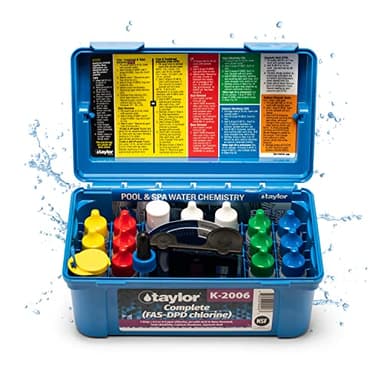
| 1 | 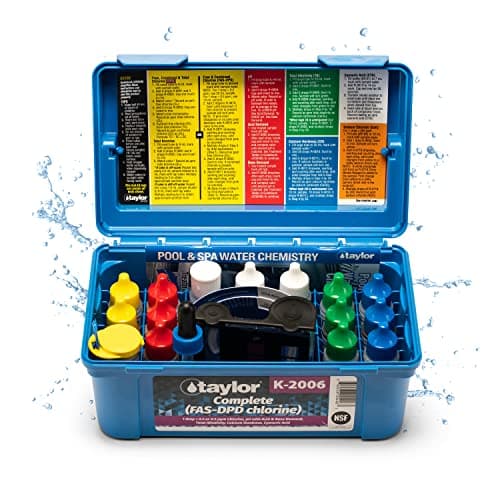 Taylor K-2006 Complete FAS-DPD Pool Test KitTop pickThe kit every pool forum names, and for once the consensus is right - because titration is the one chlorine method that does not saturate exactly when you need it. | The reference residential kit | FAS-DPD titration for free and combined chlorine, plus pH, acid and base demand, total alkalinity, calcium hardness and cyanuric acid; 3/4 oz reagents | |
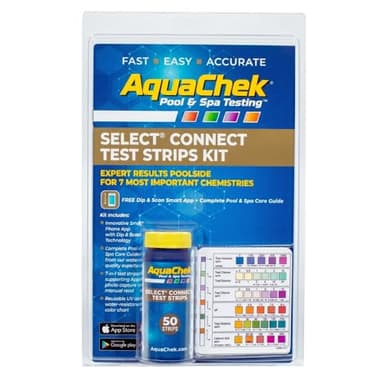
| 2 | 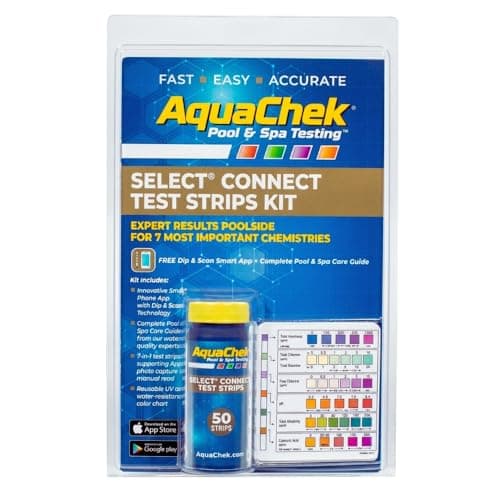 AquaChek Select Connect 7-Way Test Strips, complete kitThe kit that gets used. Seven readings in fifteen seconds beats a laboratory-grade kit that stays in the shed. | Weekly testing you will actually do | Seven parameters per strip: pH, total and free chlorine, bromine, alkalinity, hardness, cyanuric acid | |
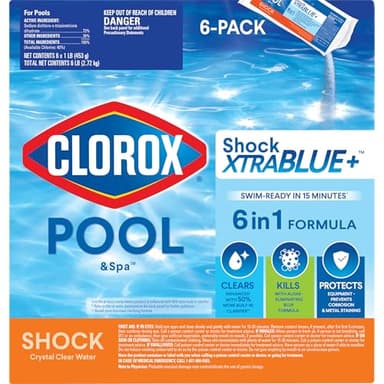
| 3 | 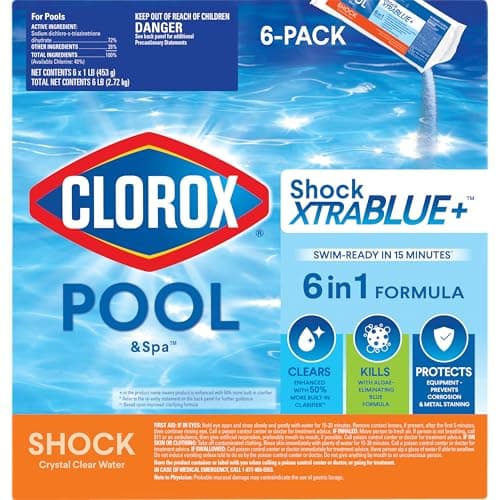 Clorox Pool&Spa Shock XtraBlue PlusDichlor, which dissolves fast and is pH neutral, at the cost of adding cyanuric acid with every dose. | Swimming again the same afternoon | Stabilized dichlor shock; label states swim-ready in 15 minutes | |
| 4 |  In The Swim Chlorine-Free Pool Shock, 12 x 1 lb BagsAn oxidizer, not a sanitizer. It burns off the organic load that makes water dull without putting free chlorine where you then have to wait for it to fall. | Oxidizing between swims without raising free chlorine | Listing states a quick-dissolving chlorine-free shock-oxidizer that does not raise or alter pH, for standard chlorine, salt chlorinated, mineral and bromine pools, spas and hot tubs | |
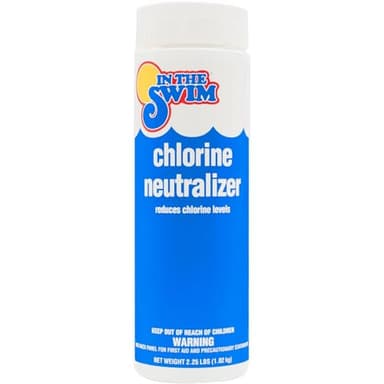
| 5 | 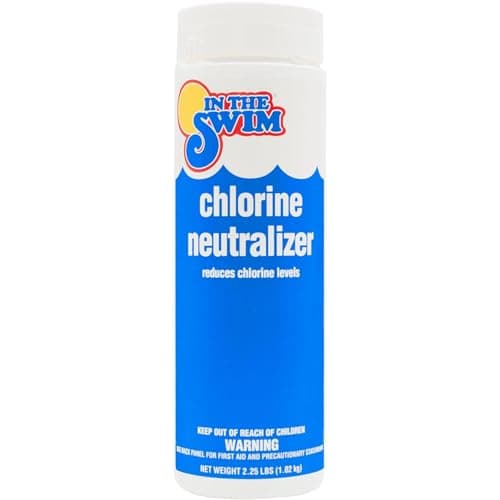 In The Swim Chlorine Neutralizer, 2.25 lbPublishes its purity, which is the only figure that lets you dose it rather than guess at it. | Bringing an over-shocked pool back | Listing states 90% sodium thiosulfate | |
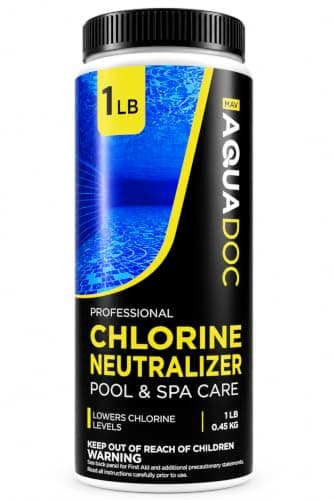
| 6 | 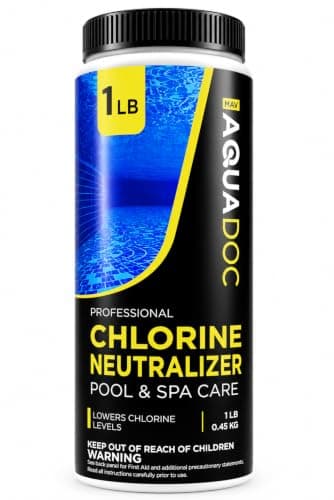 AquaDoc Chlorine Neutralizer, Sodium Thiosulfate, 1 lbThe small bottle, for the once-a-season case where you shocked too hard and want to swim tomorrow. | A one-off correction | 1 lb of sodium thiosulfate granules, for pools and hot tubs |
What the labels actually say
These are not our numbers. Each one is read off the maker's own product page, and the disagreement between them is the real answer to the question.
| What you added | What the label states | What the wait is really about |
|---|---|---|
| Cal-hypo shock (HTH Shock Advanced) | Do not enter the pool until free available chlorine returns to 1-4 ppm; typically 8-24 hours; never swim above 5 ppm | Free chlorine is far above the safe swimming range |
| Dichlor shock (Clorox Shock XtraBlue) | Treat and swim in 15 minutes | A maintenance dose, not a shock dose - it is not aimed at pushing chlorine high |
| Quat algaecide (HTH Algae Guard Advanced) | Add it and swim immediately; separately, wait 24 hours after shocking before adding it | Nothing about swimmer safety - the 24 hours is so chlorine does not destroy the algaecide |
| Clarifier (HTH Clarifier Advanced) | Keep swimmers out while adding; at least 8 hours of filtration, 24-48 hours of continuous pumping to clear | Letting the coagulant work undisturbed, not chemistry risk |
| Non-chlorine shock (In The Swim Chlorine-Free) | An oxidizer that adds no free chlorine and is stated not to move pH | Nothing is pushed out of range, so nothing has to come back |
| pH Down after shocking (HTH) | Wait 4-6 hours after shocking before adding acid | Sequencing between two chemicals, not a swim wait |
Two patterns fall out of that table. Products that push free chlorine up have a wait, and it is expressed as a level rather than a time. Products that do not touch free chlorine have no safety wait at all - their instructions are about circulation and sequencing.
The number that overrides the clock
HTH prints the rule plainly: never swim if free chlorine is above 5 ppm. That is consistent with the standards. The Michigan EGLE guidance cited below quotes CDC MAHC 5.7.3.1.1.5.0 for operational residuals and the NSF 10 ppm ceiling for an application, and the operating band for a residential pool sits far below the latter.
So the honest answer to "how long" is: until the number comes down. On a hot, sunny, heavily stabilized pool that can be a few hours. On a cool overcast day after a heavy dose it can be more than a day. Both are normal, and neither is predictable from the calendar.
Why a test strip cannot answer this
This is the specific failure that sends people back into a pool too early. Color-matching methods - strips and the yellow OTO comparator in a cheap kit - saturate at around 5 ppm free chlorine. Past that, the pad is as dark as it gets, so 6 ppm and 25 ppm look identical.
That saturation point is exactly the threshold you are trying to cross from above. A strip reading "high" is not a number; it is the test telling you it has run out of range. A FAS-DPD titration counts drops instead of matching colors, so it keeps resolving all the way up - which is why the Taylor K-2006 is the pick on this page rather than a strip, and why test strips vs liquid kits ends with owning both.
The sequence that gets you back in soonest
- Write down what you actually added and read that product's own label. It is the only authority for its own wait, and the five labels above do not agree with each other.
- Run the pump. Every wait time on every label assumes the water is circulating; a dose sitting in a dead corner is both slower and more concentrated than the label assumed.
- Wait for the first realistic window rather than testing every ten minutes. After a shock dose, that is hours, not minutes.
- Test free chlorine with a FAS-DPD kit. If you only have strips and they read high, you have no number and cannot make this decision yet.
- Get back in at 4 ppm or below. Never at 5 ppm or above, which is HTH's own stated limit.
- Retest if anyone else is getting in later in the day, because the level will have moved again.
If you need the pool back faster next time
There are two legitimate routes, and one of them is a trap.
- Oxidize without chlorinating. A non-chlorine shock adds no free chlorine, so there is no level to wait out. In The Swim's chlorine-free shock states it does not raise or alter pH, and SpaChoice publishes both 3.76% oxygen and a dose of 1 lb per 10,000 gallons. It will not clear algae and it is not a sanitizer, so this is for routine oxidizing rather than for a rescue.
- Dose smaller and more often. Most over-shocked pools were over-shocked because a whole bag went in regardless of volume. How to balance pool water has the arithmetic.
- Neutralize - carefully, and this is the trap. Sodium thiosulfate drops free chlorine fast, and it is very easy to take the pool to zero, which is how a clear pool becomes a green one by the weekend. If you use it, add a fraction of what you think you need, circulate, and retest before adding more.
The picks
Top pick - The reference residential kit
Taylor K-2006 Complete FAS-DPD Pool Test Kit
The kit every pool forum names, and for once the consensus is right - because titration is the one chlorine method that does not saturate exactly when you need it.
The published figure
FAS-DPD titration for free and combined chlorine, plus pH, acid and base demand, total alkalinity, calcium hardness and cyanuric acid; 3/4 oz reagents
The chlorine test is FAS-DPD: you add reagent drop by drop until a pink sample turns clear, and count the drops. Each drop is a fixed amount of chlorine, so 20 ppm reads as more drops rather than as an impossible shade of pink. Every color-match method tops out around 5 ppm - the range you are in during a shock.
The other six tests are the same reagents as the cheaper K-2005. What you pay extra for is the chlorine method and nothing else.
The 3/4 oz reagent bottles are what separate it from the K-2006C. They run out in a season of frequent testing on one pool; the C's 2 oz bottles do not.
What it does well
- Reads chlorine accurately at shock levels, which no strip can
- Covers all seven residential parameters
- Reagents are sold individually, so the case lasts for years
What it costs you
- 3/4 oz bottles empty quickly if you test more than weekly
- A full run takes minutes rather than seconds
- Several times the price of a strip bottle
Skip it if you never shock and test once a week. A strip kit gets used, and this one might not.
#ad · how this is funded · price as of October 30, 2026
Pick 2 - Weekly testing you will actually do
AquaChek Select Connect 7-Way Test Strips, complete kit
The kit that gets used. Seven readings in fifteen seconds beats a laboratory-grade kit that stays in the shed.
The published figure
Seven parameters per strip: pH, total and free chlorine, bromine, alkalinity, hardness, cyanuric acid
The best test kit is the one you run. A strip takes fifteen seconds, which is the difference between testing weekly and testing when something looks wrong.
Seven parameters on one strip includes cyanuric acid, which most cheaper strips omit and which is the reading that explains chlorine that will not hold.
Strips are less precise than either Taylor kit and they degrade once the bottle has been opened. Note the date you opened it on the lid.
What it does well
- Fast enough that weekly testing actually happens
- Includes cyanuric acid, unlike most cheap strips
- No reagents to mix or spill
What it costs you
- Less precise than a drop kit, particularly on alkalinity
- Degrades after the bottle is opened, especially in humidity
Skip it if you are diagnosing a problem rather than monitoring. Precision matters when you are about to dose.
#ad · how this is funded · price as of October 30, 2026
Pick 3 - Swimming again the same afternoon
Clorox Pool&Spa Shock XtraBlue Plus
Dichlor, which dissolves fast and is pH neutral, at the cost of adding cyanuric acid with every dose.
The published figure
Stabilized dichlor shock; label states swim-ready in 15 minutes
Sodium dichlor is roughly 56% available chlorine and dissolves without pre-mixing, which is why the label can promise a 15-minute swim window.
The catch is structural, not a flaw in this product: dichlor is stabilized, so every dose adds cyanuric acid. Roughly 0.6 ppm of CYA rides along with each 1 ppm of chlorine. Shock a pool ten times in a season and you have added enough stabilizer to blunt the chlorine you are adding.
That makes dichlor a genuinely good occasional shock and a bad weekly habit.
What it does well
- Dissolves without pre-dissolving, so it is liner-safe straight from the bag
- pH neutral, so it does not drag pH up the way cal-hypo does
- Short swim-wait window stated on the label
What it costs you
- Every dose adds cyanuric acid, which accumulates and cannot be filtered out
- Lower available chlorine than cal-hypo, so you carry more product per ppm
Skip it if your cyanuric acid is already at or above 50 ppm — you would be making the next problem while solving this one.

Pick 4 - Oxidizing between swims without raising free chlorine
In The Swim Chlorine-Free Pool Shock, 12 x 1 lb Bags
An oxidizer, not a sanitizer. It burns off the organic load that makes water dull without putting free chlorine where you then have to wait for it to fall.
The published figure
Listing states a quick-dissolving chlorine-free shock-oxidizer that does not raise or alter pH, for standard chlorine, salt chlorinated, mineral and bromine pools, spas and hot tubs
The useful property is in the name: no chlorine added means no wait for free chlorine to fall back into range before anyone swims.
It is not a substitute for chlorine. The listing calls it an oxidizer and says it enhances the effectiveness of the chlorine already in the pool, which is the correct framing.
Stated not to move pH, which matters because the common alternative, a cal-hypo shock, pushes pH up and needs an acid correction afterwards.
What it does well
- No free chlorine added, so no chlorine wait before swimming
- Stated not to raise or alter pH
- Pre-measured 1 lb bags, so dosing is by pool volume rather than by scoop
What it costs you
- Does not sanitize, and will not clear algae
- Not a substitute for the breakpoint chlorine dose that clears combined chlorine
- 12 bags is a season's commitment to a weekly habit
Skip it if the problem is a chlorine smell. That is combined chlorine, and the fix is more chlorine, not a chlorine-free oxidizer.
#ad · how this is funded · price as of October 30, 2026
Pick 5 - Bringing an over-shocked pool back
In The Swim Chlorine Neutralizer, 2.25 lb
Publishes its purity, which is the only figure that lets you dose it rather than guess at it.
The published figure
Listing states 90% sodium thiosulfate
Sodium thiosulfate reduces free chlorine directly. It is the tool for a pool that has been over-shocked to the point where nobody can swim and waiting is not acceptable.
A stated 90% purity is unusual in this category and it is the reason to prefer this one - a product that does not state its concentration cannot be dosed to a target, only added and re-tested.
Under-dose deliberately and re-test. Overshooting takes free chlorine to zero, which leaves the pool unsanitized and is a worse problem than the one you started with.
What it does well
- States 90% purity, so the dose is computable rather than guessed
- Acts quickly - the reading moves within an hour or so of circulation
- Sized for several corrections rather than one
What it costs you
- Very easy to overshoot to zero chlorine
- Treats the symptom; it does not stop you over-shocking next time
Skip it if you can simply wait. Sunlight and normal demand bring chlorine down on their own within a day or two, and that costs nothing.
#ad · how this is funded · price as of October 30, 2026
Pick 6 - A one-off correction
AquaDoc Chlorine Neutralizer, Sodium Thiosulfate, 1 lb
The small bottle, for the once-a-season case where you shocked too hard and want to swim tomorrow.
The published figure
1 lb of sodium thiosulfate granules, for pools and hot tubs
Neutralizer is a product most pools need once or twice ever. Buying 15 lb of it is buying a decade of shelf life.
One pound is the sensible quantity for a correction on a residential pool.
Same caution as any neutralizer: go under, circulate, re-test. Zero chlorine is not the goal.
What it does well
- Right quantity for an occasional correction
- Works in pools and spas alike
What it costs you
- The listing does not state a purity percentage, so dosing is by label rather than calculation
- Worse value per pound than the larger tubs
Skip it if you over-shock regularly. That is a dosing problem worth fixing rather than repeatedly correcting.
The cases that are not about chlorine at all
- Flocculant. You are not waiting on chemistry, you are waiting to vacuum a layer of settled material off the floor - to waste, not through the filter. Clarifier vs flocculant explains why the two have completely different timelines.
- Cloudy water. The limit here is visibility rather than chemistry: if you cannot see the bottom of the deep end, a swimmer in difficulty is invisible. Treat that as a hard line regardless of what the test kit says.
- Metal sequestrant at opening. It goes in before the shock, not after - see pool opening chemicals for the order that protects the plaster.
Questions people actually ask
How long after shocking a pool can you swim?
Can you swim right after adding algaecide?
How long after adding clarifier can you swim?
Is 5 ppm of chlorine safe to swim in?
My strips just read high - how do I know when it is safe?
Can I speed up the wait after shocking?
Sources
Every figure on this page traces to one of these. Where a number could not be sourced, the page says so rather than estimating.
- Michigan EGLE, Maximum Disinfectant Residuals and Operational Ranges: Guidance for Michigan Licensed Pools (December 2025) - quotes CDC MAHC 5.7.3.1.1.5.0, the EPA FIFRA label rule and the NSF 10 ppm application ceiling
- HTH Pool Care Shock Advanced - product page, read 2026-10-30, states "Do not enter the pool until free available chlorine levels return to 1-4 ppm", typically 8-24 hours after treatment, "never swim if chlorine is above 5 ppm", and 1 lb per 13,500 gallons at 56.44% calcium hypochlorite
- HTH Pool Care Algae Guard Advanced - product page, read 2026-10-30, states "Add it directly to your pool water and swim immediately" and separately to "wait 24 hours after shocking before adding" it; initial dose 4 fl oz per 10,000 gallons
- HTH Pool Care Clarifier Advanced - product page, read 2026-10-30, states 2 fl oz per 10,000 gallons weekly (4 fl oz when extremely cloudy), at least eight hours of filtration, keeping swimmers out while adding, and 24-48 hours of continuous pumping to clear
- Clorox Pool&Spa Shock XtraBlue - product page, read 2026-10-30, states "Fast dissolving formula works quickly so you can treat and swim in just 15 minutes"
- HTH Pool Care pH Down - product page, sodium bisulfate, states a 7.2-7.6 target and a 4-6 hour wait after shocking
- Skim & Soak methodology - the constants, formulas and worked examples behind every dose on this site
- In The Swim Chlorine-Free Pool Shock - oxidizer that adds no free chlorine - Amazon listing, read 2026-10-30
- SpaChoice Re-Energize non-chlorine shock, 3.76% oxygen, 1 lb per 10,000 gallons - Amazon listing, read 2026-10-30
Read next

Best test kit
Best Pool Test Kits
Titration kits, color comparators, strips and a photometer compared on precision, speed and what each one cannot see.
Top pick
AquaChek Select Connect 7-Way Test Strips, complete kit
Weekly testing you will actually do
#ad · how this is funded · price as of October 30, 2026

Taylor K-2006 Review
Taylor's FAS-DPD kit explained from the method up: why counting drops reads chlorine above 5 ppm when color matching cannot, and which of the four versions to buy.
Top pick
Taylor K-2006 Complete FAS-DPD Pool Test Kit
The reference residential kit
#ad · how this is funded · price as of October 30, 2026

Cloudy Water With High Chlorine
High chlorine plus cloudiness points at dead algae, a calcium reaction, a saturated test, or a filter that cannot keep up.
Top pick
Taylor Technologies K-2006-SALT FAS-DPD 9-in-1 Test Kit
Knowing the number rather than the color
#ad · how this is funded · price as of October 30, 2026

Best for green water
Best Pool Shock for a Green Pool
Cal-hypo, dichlor and liquid chlorine compared on available chlorine percentage, with a dose table computed for six pool sizes.
Top pick
In The Swim Pool Shock, 68% Cal-Hypo Granular, 25 lb
Clearing an algae bloom
#ad · how this is funded · price as of October 30, 2026

How to Balance Pool Water
The correction order that stops you doing the same job twice, with computed dose tables and the formulas behind them.
Top pick
Pool Mate Premium Alkalinity Increaser, 10 lb
Raising total alkalinity
#ad · how this is funded · price as of October 30, 2026